

12/31/10
when the talent exceeds craft design......
 stand up surfing the sponge.
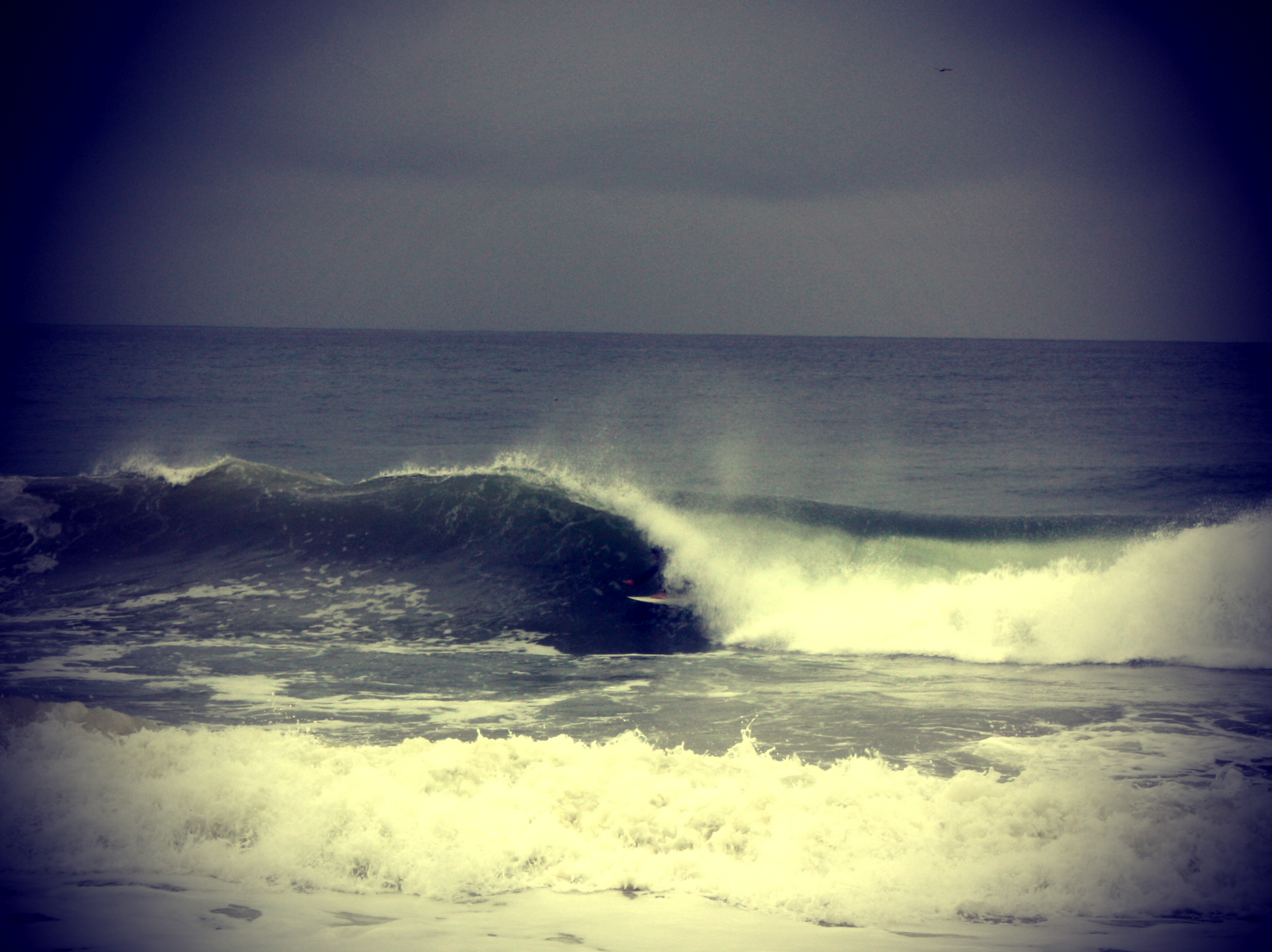
 coffins in the barrel and making 'em.
 these guys can do most anything on anything.
r. burch is a perfect example.
he is certainly not alone, as seen here.
this town is littered with talent. i will miss it when i'm gone.
damn, i've seen many a ghetto chopped down longboard into a ugly 5'6" twin thing that looks like i did it. the kid proceeded to rip harder than most.
these guys can do most anything on anything.
r. burch is a perfect example.
he is certainly not alone, as seen here.
this town is littered with talent. i will miss it when i'm gone.
damn, i've seen many a ghetto chopped down longboard into a ugly 5'6" twin thing that looks like i did it. the kid proceeded to rip harder than most.

Matmos
This pair of electronic collage artists stands out as innovators in a field noted for innovation.Matmos’s Drew Daniel and M.C. Schmidt have intriguing backgrounds which help explain their brainy, decentered approach to electronica. Daniel is a UC Berkeley graduate student in Renaissance Literature and a longtime radio and club DJ who has collaborated on both film scores and hip hop projects with Louisville musicians Jason Noble (Rachel’s) and Jeff Mueller (June of 44). Schmidt manages the conceptual art department of the San Francisco Art Institute and has pursued a number of experimental and/or electronic projects in the past.
In their spare time Daniel and Schmidt work to change our perceptions of what music means and where it comes from, creating whimsical and peculiar electronic sound assemblages that often feel like musical versions of Alexander Calder’s playful mobiles. Most striking about Matmos, perhaps, are their unique choices for sound sources; over their career, the adventuresome duo has employed the sound of amplified crayfish nerve tissue, human hair, plastic surgery, frozen steam thawing in the sun, latex clothing, a steel guitar recorded in a sewer, and a whole heckuva lot more. Yeah, they’re brainiacs. Or maniacs? The fact is, while Matmos has been enthusiastically embraced by the left field electronic music community, their work displays a degree of originality and willingness to experiment rarely found in any music today, aligning Matmos with the great musical academicians of the last century as much as with any of their peers.
 The duo conducted some of their boldest sound experiments on their first two albums, Matmos (1997) and Quasi-Objects (1998), both released on their own Vague Terrain label, but these recordings got limited attention outside the Bay Area. Their fascinating 1999 project The West generated significant critical attention, however. Not imitating but transforming rock, country, and folk stylistic elements, The West roams the territory of later John Fahey and Gastr del Sol, but arrives there from a very different starting point: instead of making organic music that uses electronic textures, The West is electronic music that feels organic (organica, perhaps?), both in its sound sources and in its construction. Instead of the bizarre sound sources of the previous two albums, The West features musique concrete elements with a more everyday quality: a phone ringing, a car starting, pages turning, water dripping. The West also draws from a remarkably diverse group of friends, including members of Tortoise, Slint, Papa M, Lesser, Acetone, Palace, Cars Get Crushed, Amber Asylum, The Radar Bros., Neurosis, Cul de Sac, and The For Carnation. “Sun on 5 at 152″ is an ode to a favorite strip of freeway, flickering between gentle repetitions of Mark Lightcap’s (Acetone) acoustic guitar and discrete, unnerving digital edits, before bursting into full drums/banjo/violin/cello orchestration and peaking with thirty seconds of drum and bass.
In the spring of 2001, Bjork invited Matmos into the studio to create her album Vespertine and later asked the duo to join her (along with Lesser) for her world tour. Around the same time, Matmos released their fourth and possibly most macabre album, A Chance To Cut Is a Chance To Cure. Leaving behind the bucolic bricollage of The West, A Chance To Cut employs sounds from the operating room, constructing snippety rhythms from the sound of slicing scalpels, breaking bones, the buzz of laser eye surgery, the hum of muscle tissue being cauterized during rhinoplasty, and lots more. Creepy though these sound sources may be, the music is anything but, tending towards upbeat, accessible techno-pop, with plenty of Matmos’s trademark whimsy. “Lipostudio…And So On,” the album’s opener, starts as a snickety glitchfest that makes prominent use of the squelch and squish of sucking fat during liposuction surgery, before shifting midway through into a more ambient piece.
http://brainwashed.com/matmos/bio/
The following people have either played on a Matmos recording, performed onstage as a member of Matmos, been in another band with Drew Daniel and/or M.C. Schmidt, collaborated with, toured with, commissioned a remix from, or released a recording by Matmos:
Adam Ansell • Johannes Ayres • Tim Barnes • Darcy Bartoletti • Vicki Bennett • Bevin Blectum • Richard Board • Don Bolles • Justin Bond aka Kiki • Mark Boswell • Carl Bronson • Michael Brown • Bubble Core Records • Erik Carlson • Joseph Chang • Richard Chartier • Will Chatham • Anthony Child • Erika Clowes • Kyle Crabtree • Miranda Cuckson • Robbie D. • Romolo Del Castillo • Drew Daniel • Miguel De Pedro • Richard Devine • Leif Fairfield • Bridget Fitzgerald • Kris Force • Christian Frederickson • Jefferson Friedman • Matthew Fuerst • Tim Furnish • Joseph Ghosn • Barbara Golden • Steve Goodfriend • Jackie Gratz • Rachel Grimes • David Grubbs • Bjork Gudmundsdottir • Chris Guttmacher • Antony Hegarty • Matthew Herbert • Seth Horvitz • Ned Howey • John Hughes III • Clarice Jensen • Josh Kay • Felix Kubin • Yalie Kumara • Tony Labat • Keenan Lawler • Jay Lesser • Mark Lightcap • Lissy’s • Mike Martinez • Matador Records • Matador Europe • Rose McKereghan • Kalonica McQueston • Mille Plateaux • Nico Muhly • Jason Noble • Anna Novakov • Brian O’Reilly • Zeena Parkins • Douglas Perkins • David Pajo • Mike Paradinas • Jim Putnam • Quarterstick Records • Maja Ratkje • Wiebke Ratzeburg • Rex Ray • M. C. Schmidt • Werner Phillip Schmidt • Markus Schmickler • Adam Sliwinski • Laetitia Sonami • Source Research • Mathew Sussman • John Talaga • Stephen Thrower • Jason Treuting • Amy Vaillancourt • Katerin von Ledersteger-Goodfriend • Lawson White • Keith Fullerton Whitman • Katherine Williams • Otomo Yoshihide • Lev Zhurbin
note; do not miss there shows. always good.
The duo conducted some of their boldest sound experiments on their first two albums, Matmos (1997) and Quasi-Objects (1998), both released on their own Vague Terrain label, but these recordings got limited attention outside the Bay Area. Their fascinating 1999 project The West generated significant critical attention, however. Not imitating but transforming rock, country, and folk stylistic elements, The West roams the territory of later John Fahey and Gastr del Sol, but arrives there from a very different starting point: instead of making organic music that uses electronic textures, The West is electronic music that feels organic (organica, perhaps?), both in its sound sources and in its construction. Instead of the bizarre sound sources of the previous two albums, The West features musique concrete elements with a more everyday quality: a phone ringing, a car starting, pages turning, water dripping. The West also draws from a remarkably diverse group of friends, including members of Tortoise, Slint, Papa M, Lesser, Acetone, Palace, Cars Get Crushed, Amber Asylum, The Radar Bros., Neurosis, Cul de Sac, and The For Carnation. “Sun on 5 at 152″ is an ode to a favorite strip of freeway, flickering between gentle repetitions of Mark Lightcap’s (Acetone) acoustic guitar and discrete, unnerving digital edits, before bursting into full drums/banjo/violin/cello orchestration and peaking with thirty seconds of drum and bass.
In the spring of 2001, Bjork invited Matmos into the studio to create her album Vespertine and later asked the duo to join her (along with Lesser) for her world tour. Around the same time, Matmos released their fourth and possibly most macabre album, A Chance To Cut Is a Chance To Cure. Leaving behind the bucolic bricollage of The West, A Chance To Cut employs sounds from the operating room, constructing snippety rhythms from the sound of slicing scalpels, breaking bones, the buzz of laser eye surgery, the hum of muscle tissue being cauterized during rhinoplasty, and lots more. Creepy though these sound sources may be, the music is anything but, tending towards upbeat, accessible techno-pop, with plenty of Matmos’s trademark whimsy. “Lipostudio…And So On,” the album’s opener, starts as a snickety glitchfest that makes prominent use of the squelch and squish of sucking fat during liposuction surgery, before shifting midway through into a more ambient piece.
http://brainwashed.com/matmos/bio/
The following people have either played on a Matmos recording, performed onstage as a member of Matmos, been in another band with Drew Daniel and/or M.C. Schmidt, collaborated with, toured with, commissioned a remix from, or released a recording by Matmos:
Adam Ansell • Johannes Ayres • Tim Barnes • Darcy Bartoletti • Vicki Bennett • Bevin Blectum • Richard Board • Don Bolles • Justin Bond aka Kiki • Mark Boswell • Carl Bronson • Michael Brown • Bubble Core Records • Erik Carlson • Joseph Chang • Richard Chartier • Will Chatham • Anthony Child • Erika Clowes • Kyle Crabtree • Miranda Cuckson • Robbie D. • Romolo Del Castillo • Drew Daniel • Miguel De Pedro • Richard Devine • Leif Fairfield • Bridget Fitzgerald • Kris Force • Christian Frederickson • Jefferson Friedman • Matthew Fuerst • Tim Furnish • Joseph Ghosn • Barbara Golden • Steve Goodfriend • Jackie Gratz • Rachel Grimes • David Grubbs • Bjork Gudmundsdottir • Chris Guttmacher • Antony Hegarty • Matthew Herbert • Seth Horvitz • Ned Howey • John Hughes III • Clarice Jensen • Josh Kay • Felix Kubin • Yalie Kumara • Tony Labat • Keenan Lawler • Jay Lesser • Mark Lightcap • Lissy’s • Mike Martinez • Matador Records • Matador Europe • Rose McKereghan • Kalonica McQueston • Mille Plateaux • Nico Muhly • Jason Noble • Anna Novakov • Brian O’Reilly • Zeena Parkins • Douglas Perkins • David Pajo • Mike Paradinas • Jim Putnam • Quarterstick Records • Maja Ratkje • Wiebke Ratzeburg • Rex Ray • M. C. Schmidt • Werner Phillip Schmidt • Markus Schmickler • Adam Sliwinski • Laetitia Sonami • Source Research • Mathew Sussman • John Talaga • Stephen Thrower • Jason Treuting • Amy Vaillancourt • Katerin von Ledersteger-Goodfriend • Lawson White • Keith Fullerton Whitman • Katherine Williams • Otomo Yoshihide • Lev Zhurbin
note; do not miss there shows. always good.
 The duo conducted some of their boldest sound experiments on their first two albums, Matmos (1997) and Quasi-Objects (1998), both released on their own Vague Terrain label, but these recordings got limited attention outside the Bay Area. Their fascinating 1999 project The West generated significant critical attention, however. Not imitating but transforming rock, country, and folk stylistic elements, The West roams the territory of later John Fahey and Gastr del Sol, but arrives there from a very different starting point: instead of making organic music that uses electronic textures, The West is electronic music that feels organic (organica, perhaps?), both in its sound sources and in its construction. Instead of the bizarre sound sources of the previous two albums, The West features musique concrete elements with a more everyday quality: a phone ringing, a car starting, pages turning, water dripping. The West also draws from a remarkably diverse group of friends, including members of Tortoise, Slint, Papa M, Lesser, Acetone, Palace, Cars Get Crushed, Amber Asylum, The Radar Bros., Neurosis, Cul de Sac, and The For Carnation. “Sun on 5 at 152″ is an ode to a favorite strip of freeway, flickering between gentle repetitions of Mark Lightcap’s (Acetone) acoustic guitar and discrete, unnerving digital edits, before bursting into full drums/banjo/violin/cello orchestration and peaking with thirty seconds of drum and bass.
In the spring of 2001, Bjork invited Matmos into the studio to create her album Vespertine and later asked the duo to join her (along with Lesser) for her world tour. Around the same time, Matmos released their fourth and possibly most macabre album, A Chance To Cut Is a Chance To Cure. Leaving behind the bucolic bricollage of The West, A Chance To Cut employs sounds from the operating room, constructing snippety rhythms from the sound of slicing scalpels, breaking bones, the buzz of laser eye surgery, the hum of muscle tissue being cauterized during rhinoplasty, and lots more. Creepy though these sound sources may be, the music is anything but, tending towards upbeat, accessible techno-pop, with plenty of Matmos’s trademark whimsy. “Lipostudio…And So On,” the album’s opener, starts as a snickety glitchfest that makes prominent use of the squelch and squish of sucking fat during liposuction surgery, before shifting midway through into a more ambient piece.
http://brainwashed.com/matmos/bio/
The following people have either played on a Matmos recording, performed onstage as a member of Matmos, been in another band with Drew Daniel and/or M.C. Schmidt, collaborated with, toured with, commissioned a remix from, or released a recording by Matmos:
Adam Ansell • Johannes Ayres • Tim Barnes • Darcy Bartoletti • Vicki Bennett • Bevin Blectum • Richard Board • Don Bolles • Justin Bond aka Kiki • Mark Boswell • Carl Bronson • Michael Brown • Bubble Core Records • Erik Carlson • Joseph Chang • Richard Chartier • Will Chatham • Anthony Child • Erika Clowes • Kyle Crabtree • Miranda Cuckson • Robbie D. • Romolo Del Castillo • Drew Daniel • Miguel De Pedro • Richard Devine • Leif Fairfield • Bridget Fitzgerald • Kris Force • Christian Frederickson • Jefferson Friedman • Matthew Fuerst • Tim Furnish • Joseph Ghosn • Barbara Golden • Steve Goodfriend • Jackie Gratz • Rachel Grimes • David Grubbs • Bjork Gudmundsdottir • Chris Guttmacher • Antony Hegarty • Matthew Herbert • Seth Horvitz • Ned Howey • John Hughes III • Clarice Jensen • Josh Kay • Felix Kubin • Yalie Kumara • Tony Labat • Keenan Lawler • Jay Lesser • Mark Lightcap • Lissy’s • Mike Martinez • Matador Records • Matador Europe • Rose McKereghan • Kalonica McQueston • Mille Plateaux • Nico Muhly • Jason Noble • Anna Novakov • Brian O’Reilly • Zeena Parkins • Douglas Perkins • David Pajo • Mike Paradinas • Jim Putnam • Quarterstick Records • Maja Ratkje • Wiebke Ratzeburg • Rex Ray • M. C. Schmidt • Werner Phillip Schmidt • Markus Schmickler • Adam Sliwinski • Laetitia Sonami • Source Research • Mathew Sussman • John Talaga • Stephen Thrower • Jason Treuting • Amy Vaillancourt • Katerin von Ledersteger-Goodfriend • Lawson White • Keith Fullerton Whitman • Katherine Williams • Otomo Yoshihide • Lev Zhurbin
note; do not miss there shows. always good.
The duo conducted some of their boldest sound experiments on their first two albums, Matmos (1997) and Quasi-Objects (1998), both released on their own Vague Terrain label, but these recordings got limited attention outside the Bay Area. Their fascinating 1999 project The West generated significant critical attention, however. Not imitating but transforming rock, country, and folk stylistic elements, The West roams the territory of later John Fahey and Gastr del Sol, but arrives there from a very different starting point: instead of making organic music that uses electronic textures, The West is electronic music that feels organic (organica, perhaps?), both in its sound sources and in its construction. Instead of the bizarre sound sources of the previous two albums, The West features musique concrete elements with a more everyday quality: a phone ringing, a car starting, pages turning, water dripping. The West also draws from a remarkably diverse group of friends, including members of Tortoise, Slint, Papa M, Lesser, Acetone, Palace, Cars Get Crushed, Amber Asylum, The Radar Bros., Neurosis, Cul de Sac, and The For Carnation. “Sun on 5 at 152″ is an ode to a favorite strip of freeway, flickering between gentle repetitions of Mark Lightcap’s (Acetone) acoustic guitar and discrete, unnerving digital edits, before bursting into full drums/banjo/violin/cello orchestration and peaking with thirty seconds of drum and bass.
In the spring of 2001, Bjork invited Matmos into the studio to create her album Vespertine and later asked the duo to join her (along with Lesser) for her world tour. Around the same time, Matmos released their fourth and possibly most macabre album, A Chance To Cut Is a Chance To Cure. Leaving behind the bucolic bricollage of The West, A Chance To Cut employs sounds from the operating room, constructing snippety rhythms from the sound of slicing scalpels, breaking bones, the buzz of laser eye surgery, the hum of muscle tissue being cauterized during rhinoplasty, and lots more. Creepy though these sound sources may be, the music is anything but, tending towards upbeat, accessible techno-pop, with plenty of Matmos’s trademark whimsy. “Lipostudio…And So On,” the album’s opener, starts as a snickety glitchfest that makes prominent use of the squelch and squish of sucking fat during liposuction surgery, before shifting midway through into a more ambient piece.
http://brainwashed.com/matmos/bio/
The following people have either played on a Matmos recording, performed onstage as a member of Matmos, been in another band with Drew Daniel and/or M.C. Schmidt, collaborated with, toured with, commissioned a remix from, or released a recording by Matmos:
Adam Ansell • Johannes Ayres • Tim Barnes • Darcy Bartoletti • Vicki Bennett • Bevin Blectum • Richard Board • Don Bolles • Justin Bond aka Kiki • Mark Boswell • Carl Bronson • Michael Brown • Bubble Core Records • Erik Carlson • Joseph Chang • Richard Chartier • Will Chatham • Anthony Child • Erika Clowes • Kyle Crabtree • Miranda Cuckson • Robbie D. • Romolo Del Castillo • Drew Daniel • Miguel De Pedro • Richard Devine • Leif Fairfield • Bridget Fitzgerald • Kris Force • Christian Frederickson • Jefferson Friedman • Matthew Fuerst • Tim Furnish • Joseph Ghosn • Barbara Golden • Steve Goodfriend • Jackie Gratz • Rachel Grimes • David Grubbs • Bjork Gudmundsdottir • Chris Guttmacher • Antony Hegarty • Matthew Herbert • Seth Horvitz • Ned Howey • John Hughes III • Clarice Jensen • Josh Kay • Felix Kubin • Yalie Kumara • Tony Labat • Keenan Lawler • Jay Lesser • Mark Lightcap • Lissy’s • Mike Martinez • Matador Records • Matador Europe • Rose McKereghan • Kalonica McQueston • Mille Plateaux • Nico Muhly • Jason Noble • Anna Novakov • Brian O’Reilly • Zeena Parkins • Douglas Perkins • David Pajo • Mike Paradinas • Jim Putnam • Quarterstick Records • Maja Ratkje • Wiebke Ratzeburg • Rex Ray • M. C. Schmidt • Werner Phillip Schmidt • Markus Schmickler • Adam Sliwinski • Laetitia Sonami • Source Research • Mathew Sussman • John Talaga • Stephen Thrower • Jason Treuting • Amy Vaillancourt • Katerin von Ledersteger-Goodfriend • Lawson White • Keith Fullerton Whitman • Katherine Williams • Otomo Yoshihide • Lev Zhurbin
note; do not miss there shows. always good.
bryan ferry- in your mind
 With Roxy Music set aside for the time being, Ferry took the solo plunge with an album of totally original material. As such, the underrated In Your Mind makes a logical follow-on from Roxy's Siren, especially since usual suspects -- Thompson, Manzanera, Wetton, and many more -- assist him in the brief eight-song effort. While lacking early Roxy's long-gone freakouts In Your Mind still burns more fiercely than both the later solo and group albums, at least on certain tracks - like Siren, it balances between rockier and smoother paths, most often favoring the former. Ferry's lyrics remain in his own realm of intelligent, romantic dissipation, and are some of his best efforts. The strong opener "This Is Tomorrow" starts with Ferry and keyboards before moving into a big, chugging full band arrangement and a wistful chorus: "This is tomorrow callin'/Wish you were here." When Ferry aims for a calmer mood, rather than stripped-down melancholia, he lets everyone play along. Sometimes the arrangements almost swamp the songs, but "One Kiss'" combination of female backing vocals, sax, and straight-up rock for instance, make it a great woozy, end-of-the-night singalong before the bars close. There are a few blatant misfires -- "Tokyo Joe" has the chugging, dark funk/rock beat down cold, but the lyrics play around too much with Asian stereotypes (and let's not mention the opening gong and all too obvious attempts at "atmosphere" via the strings). On balance, though, In Your Mind remains the secret highlight of Ferry's musical career, an energetic album that would have received far more attention as a full Roxy release.
-all music-
01 - Bryan Ferry - This is tomorrow
02 - Bryan Ferry - All night operator
03 - Bryan Ferry - One kiss
04 - Bryan Ferry - Love me madly again
05 - Bryan Ferry - Tokyo Joe
06 - Bryan Ferry - Party doll
07 - Bryan Ferry - Rock of ages
08 - Bryan Ferry - In your mind
...
With Roxy Music set aside for the time being, Ferry took the solo plunge with an album of totally original material. As such, the underrated In Your Mind makes a logical follow-on from Roxy's Siren, especially since usual suspects -- Thompson, Manzanera, Wetton, and many more -- assist him in the brief eight-song effort. While lacking early Roxy's long-gone freakouts In Your Mind still burns more fiercely than both the later solo and group albums, at least on certain tracks - like Siren, it balances between rockier and smoother paths, most often favoring the former. Ferry's lyrics remain in his own realm of intelligent, romantic dissipation, and are some of his best efforts. The strong opener "This Is Tomorrow" starts with Ferry and keyboards before moving into a big, chugging full band arrangement and a wistful chorus: "This is tomorrow callin'/Wish you were here." When Ferry aims for a calmer mood, rather than stripped-down melancholia, he lets everyone play along. Sometimes the arrangements almost swamp the songs, but "One Kiss'" combination of female backing vocals, sax, and straight-up rock for instance, make it a great woozy, end-of-the-night singalong before the bars close. There are a few blatant misfires -- "Tokyo Joe" has the chugging, dark funk/rock beat down cold, but the lyrics play around too much with Asian stereotypes (and let's not mention the opening gong and all too obvious attempts at "atmosphere" via the strings). On balance, though, In Your Mind remains the secret highlight of Ferry's musical career, an energetic album that would have received far more attention as a full Roxy release.
-all music-
01 - Bryan Ferry - This is tomorrow
02 - Bryan Ferry - All night operator
03 - Bryan Ferry - One kiss
04 - Bryan Ferry - Love me madly again
05 - Bryan Ferry - Tokyo Joe
06 - Bryan Ferry - Party doll
07 - Bryan Ferry - Rock of ages
08 - Bryan Ferry - In your mind
...
12/30/10


12/29/10


an igloo, umbrella and.....
 a great tamale recipe make the rainy mornings just that much better.
support your local vendor.
a great tamale recipe make the rainy mornings just that much better.
support your local vendor.
Defining Surfing’s Role Models
by
Paul Anderson
Deciding what stance in life we are going to take is more complicated than simply deciding if we are putting a goofy foot forward or a natural foot forward.
And as we decide how to approach our futures we choose role models to copy.
As a teenager, getting the latest copy of SURFER magazine meant more to me than getting tips on how to surf or ideas on where to travel when I grew up. I was looking for role models. At fifteen, I sat in school here in Wales, UK, in a German class, struggling to concentrate with a hot sun outside, sneaking glimpses of the new magazine and coming across the full-page spread of Skip Frye knee-paddling out at the Ranch. This photo later achieved iconic status. This photo also inspired me, and I dropped out of school to travel and surf in the age of Flower Power and hippies. Surfing actually kept me away from the drugs that many were exploring.
I drank in the role models the magazines offered. Nat, the Animal, Young – aggressive with a skilled, light touch as a power surfer. Wayne Lynch, gifted and ambivalent towards contests (today’s Dane Reynolds equivalent?).
Now that I’m older and have children of my own who surf, I think Kelly Slater’s professionalism and the general low-key behavior has influenced the image of surfers for the better. This clean-cut image has been built on the new professionalism that broke down the doors. It’s mitigated the Australian heavy charging, heavy drinking “animal” image and produced a new paradigm: the professional surfer, clean cut and well-behaved, who travels the world as an ambassador. It’s a bit clinical and not very full-bodied, but it’s a prototype lots of the young folks here emulate.
Back in the day the role model was less formed and a bit rougher – more about the search for nirvana on some new, undiscovered island of dreams. I guess most of the islands are discovered and relatively short plane rides away now. There are some alternative role models, non-contest surfers, lifestyle guys. There are also the darker role models.
I first became aware of the conflict between different role models when I heard Fred Hemmings, the 1968 World champion who became a State Governor of Hawaii, wondering why on earth surfers would use a petty thief as a role model. Fred was describing Miki Dora. As a young man myself, still searching, and as someone who’d been confused by the Miki Dora model, attracted and unattracted to it, Fred Hemmings’ comment gave me a line. I realized, perhaps a bit late, that I could pick and choose who to idolize and who to relegate.
As an older and more discerning person, I now wonder how much the surfing industry and particularly the surf clothing industry influences and creates new role models – and especially how many of these men and women are actually role models, and how much is just marketing. It’s worrisome how far companies will go to close down adverse publicity that tarnishes the image they want people to buy (usually a clean cut one).
For instance, while watching the World Tour event from Portugal I was shocked to see a confrontation between the late Andy Irons and a water cameraman. Irons, with a recent victory under his belt, had just lost his heat and was exiting the water. The camera panned across and caught Andy thrusting the nose of his board angrily at the cameraman. It looked, without any explanation, like a fit of pique because he’d lost. The cameraman had crossed Andy’s path earlier as he tried for the score he needed. The camera panned away quickly and the commentators clammed up after one or two “Oh’s.” It occurred to me then that what the panning camera caught didn’t fit the image that the overall broadcast wanted to portray. Of course, since then a lot has been written about image over substance, and how a stronger emphasis on substance might do some good.
Looking back, I realize how vulnerable I was as a teenager. I wasn’t very discerning as I searched for role models. I’d bought the dream of freedom in that photo of Skip Frye at the Ranch. Anyone SURFER Magazine highlighted was a legitimate role model. Very naïve of course – but teenagers are gullible.
Who is going to protect them today? It doesn’t appear that surf companies with their squeaky clean marketing campaigns and pathological avoidance of adversity can be trusted to do it. Widening out the market, with Nike and Target and other non-endemics can help open the discourse by spreading advertiser risk – offending and losing one advertiser is not such a problem if the market for advertising space is broader and more competitive.
Secondly, and more importantly I think, it comes down to the regulatory body. The Association of Surfing Professionals sets the standard here. When Sunny Garcia runs up the beach chasing Neco Padaratz, or a frustrated surfer is aggressive towards a water cameraman it should not be hushed up in any way for appearances’ sake. The United States Tax authorities didn’t hush up Sunny’s conviction and jail sentence; they let the system make an example of him. In other sports if a player attacks an onlooker, a referee or a fellow competitor it’s dealt with publicly and thoroughly, and openly, in front of the press.
If a surfer wants to be in the public eye, he needs to be willing to be publicly disciplined. This can help the surfer. Sports stars who get disciplined by the sports authority, dropped and sent to rehab by their club are likely to be grateful in the end, and it can save lives. It’s worth repeating and thinking about those few words: it can save lives. And not just the athlete’s, but also by sending a message to kids about the dangers of such a lifestyle.
I think the ASP should test surfers for drugs at every major contest. Aberrant behavior should be highlighted and dealt with seriously. Sanctions and offenders should be publicized.
Would we want to cover up a surfing celebrity who took part in a jihadi bombing? Or what about a big name surfer who was caught, like too many Catholic Priests, manhandling little children in the villages of Indonesia?
Could the ASP make the mistakes that the Catholic Church made and cover up for the sake of appearances? I suggest pulling in an Eliott Ness type character from another sport – maybe long distance cycling or Olympic field events.
And why do all of this? Because surfing is more than a sport, It’s a lifestyle. And if our surfing media are going to model lifestyles with heroes to suit, they need to be genuine heroes, because the young will always be impressionable. We need to make sure the role models we present are genuine, effective and real, just like surfing itself.
via; http://www.theinertia.com/business-media/surfing-role-models/
note; this is not my story yet there is a lot i agree with yet some i don't.
the video says 0 to me. there is context to consider.
12/28/10


off grid update
 see details and Price: $22.65
(i am unsure about this co.background. and a lil suspect it could be china made)
This Solar Powered Portable Charger is a multi-function solar emergency power source with built in 1350mAh high capacity rechargeable polymer battery. You can charge you mobile phone, digital cameras, PDA, MP3, MP4 whenever and wherever you go. Reduce your carbon footprint by using these popular, energy efficient, solar charger for you small portable electronic devices. With three ways to charge you portable solar power solar you will never need experience a dead battery again. You can charge this device with the AC wall adapter, USB cable by plug-in into a computer or use the Sun's energy to recharge the powerful 1350 mAh rechargeable battery. The green LED light will show you when you Solar Charger is being charge, just leave it in direct sunlight to take advantage of its solar charging capabilities.
Charging time is about 60 minutes for most cell phones and other small portable items. Charger may be replenished using the sun in about 8-10 hours or for quick charge in 60 minutes using the standard AC adapter and laptops computers or a USB power source.
see details and Price: $22.65
(i am unsure about this co.background. and a lil suspect it could be china made)
This Solar Powered Portable Charger is a multi-function solar emergency power source with built in 1350mAh high capacity rechargeable polymer battery. You can charge you mobile phone, digital cameras, PDA, MP3, MP4 whenever and wherever you go. Reduce your carbon footprint by using these popular, energy efficient, solar charger for you small portable electronic devices. With three ways to charge you portable solar power solar you will never need experience a dead battery again. You can charge this device with the AC wall adapter, USB cable by plug-in into a computer or use the Sun's energy to recharge the powerful 1350 mAh rechargeable battery. The green LED light will show you when you Solar Charger is being charge, just leave it in direct sunlight to take advantage of its solar charging capabilities.
Charging time is about 60 minutes for most cell phones and other small portable items. Charger may be replenished using the sun in about 8-10 hours or for quick charge in 60 minutes using the standard AC adapter and laptops computers or a USB power source.
 and these bigger generators made in usa; and are not only a great safety net but the right thing to do now.
 Portable - Powerful - Clean - Silent - Rugged and MADE IN USA
A SUNRNR renewable energy generator is the solution for your off grid, supplemental, backup electricity needs
Although we most often use the term "solar generator", we have also been referred to as "entry-level residential solar", "solar electric system", "microgrid", "backup power supply", "solar kit", "off grid power system", "disaster response equipment", "preparedness asset", etc. In any case, we appreciate your time in exploring this site.
Portable - Powerful - Clean - Silent - Rugged and MADE IN USA
A SUNRNR renewable energy generator is the solution for your off grid, supplemental, backup electricity needs
Although we most often use the term "solar generator", we have also been referred to as "entry-level residential solar", "solar electric system", "microgrid", "backup power supply", "solar kit", "off grid power system", "disaster response equipment", "preparedness asset", etc. In any case, we appreciate your time in exploring this site.
 customer review;
I really do love Off grid cabana powered by a SUNRNRhaving the Sunrnr..It really is great..a great design.Perfect for its intended use. .I am running a couple of led lights ( direct dc with a home made switch panel) , a ceiling fan, 32" tv, small stereo, laptop etc.. Only problem is that as I see how great it works I want to keep adding loads to it. more lights, more ceiling fans, landscape lights etc.......It is such a great feeling being off grid and and just seeing things work...magical really...
- Charles C, Coconut Grove, FL
customer review;
I really do love Off grid cabana powered by a SUNRNRhaving the Sunrnr..It really is great..a great design.Perfect for its intended use. .I am running a couple of led lights ( direct dc with a home made switch panel) , a ceiling fan, 32" tv, small stereo, laptop etc.. Only problem is that as I see how great it works I want to keep adding loads to it. more lights, more ceiling fans, landscape lights etc.......It is such a great feeling being off grid and and just seeing things work...magical really...
- Charles C, Coconut Grove, FL
12/27/10
Quiet emotional peaks and valleys of sound
Well, a bit of this IS included in the Royal Opera House DVD, but this is most definitely a documentary on making, recording, touring, etc. Björk's album Vespertine.
Concerning the Royal Opera House DVD, it contains a few early clips from this final product. Those on that DVD have a few snips of video not on this.
But this isn't some MTV or VH1 documentary. Directed by Ragnheiður Gestsdóttir and very well edited with clips of miniature sets and train sets (the camera for some short scenes was tied to a train set & hauled through tiny, beautiful handmade sets of just about everything), this film proves very entertaining. You absorb it (clear your head or something... I'm not sure what advice to give) and you learn all about Matmos's programming Björk's songs, see clips from other Vespertine touring venues you haven't seen before (but congratulations if you made it to those!), and you get to see all sorts of science videos of tiny microorganisms floating around. I think that's one of the coolest parts.
buy cheap
Energy Gates in Space and Time via Vortex
 All around you, in every place, there exist Energy Gates---portals in time and space---through which a person can pass to new life and experiences. Some are visible, and some are of the mind and heart. All of them are real.
 A vortex draws the individual in, and certain "changes" are effected, so that transport to an adjacent universe can occur.
http://www.reconnections.net/trans_portals1.htm
A vortex draws the individual in, and certain "changes" are effected, so that transport to an adjacent universe can occur.
http://www.reconnections.net/trans_portals1.htm
The City (Feat. Carole King/Danny Kortchmar-Fugs)
 Gerry Goffin and Carole King, even in 1968 were already established songwriters, but it wasn't until Carole's 1971 classic "Tapestry" release that she came to be fully recognised as one of the great American singer/songwriters. In 1968, Carole King and her then husband Charles Larkey, formed the short lived The City, with Danny Kortchmar on guitar and vocals, and Jim Gordon on drums. "Now That Everything's Been Said" was originally issued as a limited edition album in 1968 by Ode records. It's an excellent album with some terrific songs. "Snow Queen" is a beautifully written track. "That Old Sweet Roll (Hi De Ho)", was covered, by the Byrds and Blood, Sweat And Tears, and is also a great song. Danny Kortchmar sings "A Man Without a Dream" and "Sweet Home" on this album, which really hasn't a dud track. "Now That Everything's Been Said" is now available on a remastered CD, and is well worth buying. The post here is a vinyl rip, and sound quality is only average.
TRACKS / COMPOSERS
SIDE 1
1.) Snow Queen (Gerry Goffin - Carole King) - 4:11
2.) I Was Not Born to Follow (Gerry Goffin - Carole King) - 3:45
3.) Now That Everything's Been Said (Carole King - Stern) - 2:20
4.) Paradise Alley (Carole King - Palmer) - 3:04
5.) A Man Without a Dream (Gerry Goffin - Carole King) - 3:50
6.) Victim of Circumstance (Carole King - Palmer) - 2:35
SIDE 2
1.) Why Are You Leaving (Carole King - Stern) - 3:37
2.) Lady (Gerry Goffin - Carole King) - 2:59
3.) My Sweet Home (Allison) - 3:12
4.) I Don't Believe It (Carole King) - 2:42
5.) Hi-De-Ho (That Old Sweet Roll) (Gerry Goffin - Carole King) - 3:22
6.) All My Time (Gerry Goffin - Carole King) - 3:17
sample listen and buy here or...
...
password= aoofc
MUSICIANS
Carole King - Synthesizer, Guitar, Piano, Keyboards, Vocals
Danny Kortchmar - Guitar, Vocals
Charles Larkey - Bass
Jim Gordon - Drums
The 1999 Ode/Epic/Legacy CD reissue of this album marks its first appearance in the American catalog since 1969, when a switch of distributors by Ode, from Columbia to A&M, ended up getting it deleted prematurely. The original LP became a collector's item with a triple-digit price and was even bootlegged with a bad black-and-white reproduction of the original jacket. It was briefly in print on CD in Japan during the early 1990s, but this reissue is an improvement — King lacked some confidence, and this remastering captures the subtle, deep, expressive aspect of King's singing, which was easy to lose, especially because King sometimes sounds a little outnumbered, trying to work within a "group" context. The City has more of an integrated ensemble sound, and less prominence to King, than her subsequent records, even though she used bigger backing groups on most of her solo sides. The new CD squeezes the best out of her voice (and piano, which sounds gloriously resonant) as it existed then. The soft but clear, gently tapped percussion in the opening seconds of "Snow Queen," and the close-up twang and crunch of Danny Kortchmar's guitar on "Wasn't Born to Follow," also enhance the listening. King wasn't yet filling her albums wall-to-wall with memorable songs, and there's some material here that might better have been held back at the time, but this release is the best way to hear this record. © Bruce Eder, allmusic.com
"hidee Ho" just ok.
"born to follow" (inferior byrds version. can't fin the city version which its TOP)
Gerry Goffin and Carole King, even in 1968 were already established songwriters, but it wasn't until Carole's 1971 classic "Tapestry" release that she came to be fully recognised as one of the great American singer/songwriters. In 1968, Carole King and her then husband Charles Larkey, formed the short lived The City, with Danny Kortchmar on guitar and vocals, and Jim Gordon on drums. "Now That Everything's Been Said" was originally issued as a limited edition album in 1968 by Ode records. It's an excellent album with some terrific songs. "Snow Queen" is a beautifully written track. "That Old Sweet Roll (Hi De Ho)", was covered, by the Byrds and Blood, Sweat And Tears, and is also a great song. Danny Kortchmar sings "A Man Without a Dream" and "Sweet Home" on this album, which really hasn't a dud track. "Now That Everything's Been Said" is now available on a remastered CD, and is well worth buying. The post here is a vinyl rip, and sound quality is only average.
TRACKS / COMPOSERS
SIDE 1
1.) Snow Queen (Gerry Goffin - Carole King) - 4:11
2.) I Was Not Born to Follow (Gerry Goffin - Carole King) - 3:45
3.) Now That Everything's Been Said (Carole King - Stern) - 2:20
4.) Paradise Alley (Carole King - Palmer) - 3:04
5.) A Man Without a Dream (Gerry Goffin - Carole King) - 3:50
6.) Victim of Circumstance (Carole King - Palmer) - 2:35
SIDE 2
1.) Why Are You Leaving (Carole King - Stern) - 3:37
2.) Lady (Gerry Goffin - Carole King) - 2:59
3.) My Sweet Home (Allison) - 3:12
4.) I Don't Believe It (Carole King) - 2:42
5.) Hi-De-Ho (That Old Sweet Roll) (Gerry Goffin - Carole King) - 3:22
6.) All My Time (Gerry Goffin - Carole King) - 3:17
sample listen and buy here or...
...
password= aoofc
MUSICIANS
Carole King - Synthesizer, Guitar, Piano, Keyboards, Vocals
Danny Kortchmar - Guitar, Vocals
Charles Larkey - Bass
Jim Gordon - Drums
The 1999 Ode/Epic/Legacy CD reissue of this album marks its first appearance in the American catalog since 1969, when a switch of distributors by Ode, from Columbia to A&M, ended up getting it deleted prematurely. The original LP became a collector's item with a triple-digit price and was even bootlegged with a bad black-and-white reproduction of the original jacket. It was briefly in print on CD in Japan during the early 1990s, but this reissue is an improvement — King lacked some confidence, and this remastering captures the subtle, deep, expressive aspect of King's singing, which was easy to lose, especially because King sometimes sounds a little outnumbered, trying to work within a "group" context. The City has more of an integrated ensemble sound, and less prominence to King, than her subsequent records, even though she used bigger backing groups on most of her solo sides. The new CD squeezes the best out of her voice (and piano, which sounds gloriously resonant) as it existed then. The soft but clear, gently tapped percussion in the opening seconds of "Snow Queen," and the close-up twang and crunch of Danny Kortchmar's guitar on "Wasn't Born to Follow," also enhance the listening. King wasn't yet filling her albums wall-to-wall with memorable songs, and there's some material here that might better have been held back at the time, but this release is the best way to hear this record. © Bruce Eder, allmusic.com
"hidee Ho" just ok.
"born to follow" (inferior byrds version. can't fin the city version which its TOP)
12/26/10


Beyond Fossil Fuels
 Ed Ou/The New York Times
via south willard
Thanks to this solar panel, Sara Ruto no longer takes a three-hour taxi ride to a town with electricity to recharge her cellphone.
By ELISABETH ROSENTHAL
NY Times Published: December 24, 2010
KIPTUSURI, Kenya — For Sara Ruto, the desperate yearning for electricity began last year with the purchase of her first cellphone, a lifeline for receiving small money transfers, contacting relatives in the city or checking chicken prices at the nearest market.
Charging the phone was no simple matter in this farming village far from Kenya’s electric grid.
Every week, Ms. Ruto walked two miles to hire a motorcycle taxi for the three-hour ride to Mogotio, the nearest town with electricity. There, she dropped off her cellphone at a store that recharges phones for 30 cents. Yet the service was in such demand that she had to leave it behind for three full days before returning.
That wearying routine ended in February when the family sold some animals to buy a small Chinese-made solar power system for about $80. Now balanced precariously atop their tin roof, a lone solar panel provides enough electricity to charge the phone and run four bright overhead lights with switches.
“My main motivation was the phone, but this has changed so many other things,” Ms. Ruto said on a recent evening as she relaxed on a bench in the mud-walled shack she shares with her husband and six children.
As small-scale renewable energy becomes cheaper, more reliable and more efficient, it is providing the first drops of modern power to people who live far from slow-growing electricity grids and fuel pipelines in developing countries. Although dwarfed by the big renewable energy projects that many industrialized countries are embracing to rein in greenhouse gas emissions, these tiny systems are playing an epic, transformative role.
Since Ms. Ruto hooked up the system, her teenagers’ grades have improved because they have light for studying. The toddlers no longer risk burns from the smoky kerosene lamp. And each month, she saves $15 in kerosene and battery costs — and the $20 she used to spend on travel.
In fact, neighbors now pay her 20 cents to charge their phones, although that business may soon evaporate: 63 families in Kiptusuri have recently installed their own solar power systems.
“You leapfrog over the need for fixed lines,” said Adam Kendall, head of the sub-Saharan Africa power practice for McKinsey & Company, the global consulting firm. “Renewable energy becomes more and more important in less and less developed markets.”
The United Nations estimates that 1.5 billion people across the globe still live without electricity, including 85 percent of Kenyans, and that three billion still cook and heat with primitive fuels like wood or charcoal.
There is no reliable data on the spread of off-grid renewable energy on a small scale, in part because the projects are often installed by individuals or tiny nongovernmental organizations.
But Dana Younger, senior renewable energy adviser at the International Finance Corporation, the World Bank Group’s private lending arm, said there was no question that the trend was accelerating. “It’s a phenomenon that’s sweeping the world; a huge number of these systems are being installed,” Mr. Younger said.
With the advent of cheap solar panels and high-efficiency LED lights, which can light a room with just 4 watts of power instead of 60, these small solar systems now deliver useful electricity at a price that even the poor can afford, he noted. “You’re seeing herders in Inner Mongolia with solar cells on top of their yurts,” Mr. Younger said.
In Africa, nascent markets for the systems have sprung up in Ethiopia, Uganda, Malawi and Ghana as well as in Kenya, said Francis Hillman, an energy entrepreneur who recently shifted his Eritrea-based business, Phaesun Asmara, from large solar projects financed by nongovernmental organizations to a greater emphasis on tiny rooftop systems.
In addition to these small solar projects, renewable energy technologies designed for the poor include simple subterranean biogas chambers that make fuel and electricity from the manure of a few cows, and “mini” hydroelectric dams that can harness the power of a local river for an entire village.
Yet while these off-grid systems have proved their worth, the lack of an effective distribution network or a reliable way of financing the start-up costs has prevented them from becoming more widespread.
“The big problem for us now is there is no business model yet,” said John Maina, executive coordinator of Sustainable Community Development Services, or Scode, a nongovernmental organization based in Nakuru, Kenya, that is devoted to bringing power to rural areas.
Just a few years ago, Mr. Maina said, “solar lights” were merely basic lanterns, dim and unreliable.
“Finally, these products exist, people are asking for them and are willing to pay,” he said. “But we can’t get supply.” He said small African organizations like his do not have the purchasing power or connections to place bulk orders themselves from distant manufacturers, forcing them to scramble for items each time a shipment happens to come into the country.
Part of the problem is that the new systems buck the traditional mold, in which power is generated by a very small number of huge government-owned companies that gradually extend the grid into rural areas. Investors are reluctant to pour money into products that serve a dispersed market of poor rural consumers because they see the risk as too high.
“There are many small islands of success, but they need to go to scale,” said Minoru Takada, chief of the United Nations Development Program’s sustainable energy program. “Off-grid is the answer for the poor. But people who control funding need to see this as a viable option.”
Even United Nations programs and United States government funds that promote climate-friendly energy in developing countries hew to large projects like giant wind farms or industrial-scale solar plants that feed into the grid. A $300 million solar project is much easier to finance and monitor than 10 million home-scale solar systems in mud huts spread across a continent.
As a result, money does not flow to the poorest areas. Of the $162 billion invested in renewable energy last year, according to the United Nations, experts estimate that $44 billion was spent in China, India and Brazil collectively, and $7.5 billion in the many poorer countries.
Only 6 to 7 percent of solar panels are manufactured to produce electricity that does not feed into the grid; that includes systems like Ms. Ruto’s and solar panels that light American parking lots and football stadiums.
Still, some new models are emerging. Husk Power Systems, a young company supported by a mix of private investment and nonprofit funds, has built 60 village power plants in rural India that make electricity from rice husks for 250 hamlets since 2007.
In Nepal and Indonesia, the United Nations Development Program has helped finance the construction of very small hydroelectric plants that have brought electricity to remote mountain communities. Morocco provides subsidized solar home systems at a cost of $100 each to remote rural areas where expanding the national grid is not cost-effective.
What has most surprised some experts in the field is the recent emergence of a true market in Africa for home-scale renewable energy and for appliances that consume less energy. As the cost of reliable equipment decreases, families have proved ever more willing to buy it by selling a goat or borrowing money from a relative overseas, for example.
The explosion of cellphone use in rural Africa has been an enormous motivating factor. Because rural regions of many African countries lack banks, the cellphone has been embraced as a tool for commercial transactions as well as personal communications, adding an incentive to electrify for the sake of recharging.
M-Pesa, Kenya’s largest mobile phone money transfer service, handles an annual cash flow equivalent to more than 10 percent of the country’s gross domestic product, most in tiny transactions that rarely exceed $20.
The cheap renewable energy systems also allow the rural poor to save money on candles, charcoal, batteries, wood and kerosene. “So there is an ability to pay and a willingness to pay,” said Mr. Younger of the International Finance Corporation.
In another Kenyan village, Lochorai, Alice Wangui, 45, and Agnes Mwaforo, 35, formerly subsistence farmers, now operate a booming business selling and installing energy-efficient wood-burning cooking stoves made of clay and metal for a cost of $5. Wearing matching bright orange tops and skirts, they walk down rutted dirt paths with cellphones ever at their ears, edging past goats and dogs to visit customers and to calm those on the waiting list.
Hunched over her new stove as she stirred a stew of potatoes and beans, Naomi Muriuki, 58, volunteered that the appliance had more than halved her use of firewood. Wood has become harder to find and expensive to buy as the government tries to limit deforestation, she added.
In Tumsifu, a slightly more prosperous village of dairy farmers, Virginia Wairimu, 35, is benefiting from an underground tank in which the manure from her three cows is converted to biogas, which is then pumped through a rubber tube to a gas burner.
“I can just get up and make breakfast,” Ms. Wairimu said. The system was financed with a $400 loan from a demonstration project that has since expired.
In Kiptusuri, the Firefly LED system purchased by Ms. Ruto is this year’s must-have item. The smallest one, which costs $12, consists of a solar panel that can be placed in a window or on a roof and is connected to a desk lamp and a phone charger. Slightly larger units can run radios and black-and-white television sets.
Of course, such systems cannot compare with a grid connection in the industrialized world. A week of rain can mean no lights. And items like refrigerators need more, and more consistent, power than a panel provides.
Still, in Kenya, even grid-based electricity is intermittent and expensive: families must pay more than $350 just to have their homes hooked up.
“With this system, you get a real light for what you spend on kerosene in a few months,” said Mr. Maina, of Sustainable Community Development Services. “When you can light your home and charge your phone, that is very valuable.”
Ed Ou/The New York Times
via south willard
Thanks to this solar panel, Sara Ruto no longer takes a three-hour taxi ride to a town with electricity to recharge her cellphone.
By ELISABETH ROSENTHAL
NY Times Published: December 24, 2010
KIPTUSURI, Kenya — For Sara Ruto, the desperate yearning for electricity began last year with the purchase of her first cellphone, a lifeline for receiving small money transfers, contacting relatives in the city or checking chicken prices at the nearest market.
Charging the phone was no simple matter in this farming village far from Kenya’s electric grid.
Every week, Ms. Ruto walked two miles to hire a motorcycle taxi for the three-hour ride to Mogotio, the nearest town with electricity. There, she dropped off her cellphone at a store that recharges phones for 30 cents. Yet the service was in such demand that she had to leave it behind for three full days before returning.
That wearying routine ended in February when the family sold some animals to buy a small Chinese-made solar power system for about $80. Now balanced precariously atop their tin roof, a lone solar panel provides enough electricity to charge the phone and run four bright overhead lights with switches.
“My main motivation was the phone, but this has changed so many other things,” Ms. Ruto said on a recent evening as she relaxed on a bench in the mud-walled shack she shares with her husband and six children.
As small-scale renewable energy becomes cheaper, more reliable and more efficient, it is providing the first drops of modern power to people who live far from slow-growing electricity grids and fuel pipelines in developing countries. Although dwarfed by the big renewable energy projects that many industrialized countries are embracing to rein in greenhouse gas emissions, these tiny systems are playing an epic, transformative role.
Since Ms. Ruto hooked up the system, her teenagers’ grades have improved because they have light for studying. The toddlers no longer risk burns from the smoky kerosene lamp. And each month, she saves $15 in kerosene and battery costs — and the $20 she used to spend on travel.
In fact, neighbors now pay her 20 cents to charge their phones, although that business may soon evaporate: 63 families in Kiptusuri have recently installed their own solar power systems.
“You leapfrog over the need for fixed lines,” said Adam Kendall, head of the sub-Saharan Africa power practice for McKinsey & Company, the global consulting firm. “Renewable energy becomes more and more important in less and less developed markets.”
The United Nations estimates that 1.5 billion people across the globe still live without electricity, including 85 percent of Kenyans, and that three billion still cook and heat with primitive fuels like wood or charcoal.
There is no reliable data on the spread of off-grid renewable energy on a small scale, in part because the projects are often installed by individuals or tiny nongovernmental organizations.
But Dana Younger, senior renewable energy adviser at the International Finance Corporation, the World Bank Group’s private lending arm, said there was no question that the trend was accelerating. “It’s a phenomenon that’s sweeping the world; a huge number of these systems are being installed,” Mr. Younger said.
With the advent of cheap solar panels and high-efficiency LED lights, which can light a room with just 4 watts of power instead of 60, these small solar systems now deliver useful electricity at a price that even the poor can afford, he noted. “You’re seeing herders in Inner Mongolia with solar cells on top of their yurts,” Mr. Younger said.
In Africa, nascent markets for the systems have sprung up in Ethiopia, Uganda, Malawi and Ghana as well as in Kenya, said Francis Hillman, an energy entrepreneur who recently shifted his Eritrea-based business, Phaesun Asmara, from large solar projects financed by nongovernmental organizations to a greater emphasis on tiny rooftop systems.
In addition to these small solar projects, renewable energy technologies designed for the poor include simple subterranean biogas chambers that make fuel and electricity from the manure of a few cows, and “mini” hydroelectric dams that can harness the power of a local river for an entire village.
Yet while these off-grid systems have proved their worth, the lack of an effective distribution network or a reliable way of financing the start-up costs has prevented them from becoming more widespread.
“The big problem for us now is there is no business model yet,” said John Maina, executive coordinator of Sustainable Community Development Services, or Scode, a nongovernmental organization based in Nakuru, Kenya, that is devoted to bringing power to rural areas.
Just a few years ago, Mr. Maina said, “solar lights” were merely basic lanterns, dim and unreliable.
“Finally, these products exist, people are asking for them and are willing to pay,” he said. “But we can’t get supply.” He said small African organizations like his do not have the purchasing power or connections to place bulk orders themselves from distant manufacturers, forcing them to scramble for items each time a shipment happens to come into the country.
Part of the problem is that the new systems buck the traditional mold, in which power is generated by a very small number of huge government-owned companies that gradually extend the grid into rural areas. Investors are reluctant to pour money into products that serve a dispersed market of poor rural consumers because they see the risk as too high.
“There are many small islands of success, but they need to go to scale,” said Minoru Takada, chief of the United Nations Development Program’s sustainable energy program. “Off-grid is the answer for the poor. But people who control funding need to see this as a viable option.”
Even United Nations programs and United States government funds that promote climate-friendly energy in developing countries hew to large projects like giant wind farms or industrial-scale solar plants that feed into the grid. A $300 million solar project is much easier to finance and monitor than 10 million home-scale solar systems in mud huts spread across a continent.
As a result, money does not flow to the poorest areas. Of the $162 billion invested in renewable energy last year, according to the United Nations, experts estimate that $44 billion was spent in China, India and Brazil collectively, and $7.5 billion in the many poorer countries.
Only 6 to 7 percent of solar panels are manufactured to produce electricity that does not feed into the grid; that includes systems like Ms. Ruto’s and solar panels that light American parking lots and football stadiums.
Still, some new models are emerging. Husk Power Systems, a young company supported by a mix of private investment and nonprofit funds, has built 60 village power plants in rural India that make electricity from rice husks for 250 hamlets since 2007.
In Nepal and Indonesia, the United Nations Development Program has helped finance the construction of very small hydroelectric plants that have brought electricity to remote mountain communities. Morocco provides subsidized solar home systems at a cost of $100 each to remote rural areas where expanding the national grid is not cost-effective.
What has most surprised some experts in the field is the recent emergence of a true market in Africa for home-scale renewable energy and for appliances that consume less energy. As the cost of reliable equipment decreases, families have proved ever more willing to buy it by selling a goat or borrowing money from a relative overseas, for example.
The explosion of cellphone use in rural Africa has been an enormous motivating factor. Because rural regions of many African countries lack banks, the cellphone has been embraced as a tool for commercial transactions as well as personal communications, adding an incentive to electrify for the sake of recharging.
M-Pesa, Kenya’s largest mobile phone money transfer service, handles an annual cash flow equivalent to more than 10 percent of the country’s gross domestic product, most in tiny transactions that rarely exceed $20.
The cheap renewable energy systems also allow the rural poor to save money on candles, charcoal, batteries, wood and kerosene. “So there is an ability to pay and a willingness to pay,” said Mr. Younger of the International Finance Corporation.
In another Kenyan village, Lochorai, Alice Wangui, 45, and Agnes Mwaforo, 35, formerly subsistence farmers, now operate a booming business selling and installing energy-efficient wood-burning cooking stoves made of clay and metal for a cost of $5. Wearing matching bright orange tops and skirts, they walk down rutted dirt paths with cellphones ever at their ears, edging past goats and dogs to visit customers and to calm those on the waiting list.
Hunched over her new stove as she stirred a stew of potatoes and beans, Naomi Muriuki, 58, volunteered that the appliance had more than halved her use of firewood. Wood has become harder to find and expensive to buy as the government tries to limit deforestation, she added.
In Tumsifu, a slightly more prosperous village of dairy farmers, Virginia Wairimu, 35, is benefiting from an underground tank in which the manure from her three cows is converted to biogas, which is then pumped through a rubber tube to a gas burner.
“I can just get up and make breakfast,” Ms. Wairimu said. The system was financed with a $400 loan from a demonstration project that has since expired.
In Kiptusuri, the Firefly LED system purchased by Ms. Ruto is this year’s must-have item. The smallest one, which costs $12, consists of a solar panel that can be placed in a window or on a roof and is connected to a desk lamp and a phone charger. Slightly larger units can run radios and black-and-white television sets.
Of course, such systems cannot compare with a grid connection in the industrialized world. A week of rain can mean no lights. And items like refrigerators need more, and more consistent, power than a panel provides.
Still, in Kenya, even grid-based electricity is intermittent and expensive: families must pay more than $350 just to have their homes hooked up.
“With this system, you get a real light for what you spend on kerosene in a few months,” said Mr. Maina, of Sustainable Community Development Services. “When you can light your home and charge your phone, that is very valuable.”
12/25/10


santa campbell and the moonlight elves

 pix from the north pole shaping venue of santa campbell.
the original "duncan '71" 5'6" on right and the stretched new version at 5'8".
1st test= speed, speed speed.
for a 3 gear, she certainly is a lively one.
moonie elves nailed the colors of butter and sugar on wonder bread sandwich.
pix from the north pole shaping venue of santa campbell.
the original "duncan '71" 5'6" on right and the stretched new version at 5'8".
1st test= speed, speed speed.
for a 3 gear, she certainly is a lively one.
moonie elves nailed the colors of butter and sugar on wonder bread sandwich.
12/24/10


12/23/10


12/22/10
Blood on the Tracks - New York Sessions
 I've been listening to Blood On The Tracks for the past few days, so it seemed like the perfect time to shine some light on one of the greatest albums ever, bar none. Amazingly, I don't know if I'd say that it's Bob Dylan's greatest album, which should indicate the level of esteem I have for the man and the heights that he has reached in his career. Blood On The Tracks is an amazing collection of songs that deal with the pain and anguish caused by the breakup of his first marriage, or so it is said. It's dark, angry, nostalgic, sad, all of that over the course of 51 minutes, a work that still sounds amazing and overwhelming 30 years later.
What we have here is the original version of Blood On The Tracks, the tracks recorded in New York City that were scheduled to be released as the album. However, Dylan decided to re-do the album, heading to Minneapolis to record with a band of local musicians. He came up with 5 new versions of 10 of the tracks, and that would give us the album that we all know and love. This CD comes from the original test pressing of the New York sessions, giving us a chance to hear the album that Dylan and Columbia Records originally expected to release.
For me, "Idiot Wind" most clearly distinguishes the two sessions, as this NYC version is somber, more sad than bitter. The official release, which was cut in Minneapolis, is angry, bitter, acidic. I cannot choose the better version, they both seem perfect and fitting, the different feelings mirroring the tumult of a failed relationship. Then, there is the changed line in "If You See Her, Say Hello", as he originally says to the new man, "If you're making love to her/Kiss her for the kid." This becomes "If you get close to her, kiss her once for me" in the official version, a subtle, but telling, difference. The original line seems so much more human, unable to not ponder the worst possibilities for the woman he once loved no matter how painful. G-d, what a song, for real.
Make sure to listen to the opening of "Shelter from the Storm", as you can hear the buttons from Dylan's jacket hitting the guitar strings. Ellen Bernstein says of the recording of this album, "There were certain ones where you can hear the sound of his fingernails on the guitar. That didn't matter to him. None of that stuff was important to him. What was important was the overall weight of the song." I always come back to this with Dylan, that sense of imperfection, whether its his voice or the sound or the lyrics, his music revelled in the ugly, the dirt, the ignored. It's something that I fear we've lost in this digital age of music, where imperfections are taken out, are abhorred.
I don't think that I am knowledgeable enough to discuss the differences between the two recording sessions. If you do not own the official release, you have to go and buy it ASAP. There is no excuse not to have this album in your life. You can get more info on the recording at Bob's Boots. Read this amazing essay by Pete Hamill that was on the back of the original LP. After that, read this Wikipedia entry on the making of the album. I hope that a knowledgeable Dylan fan can correct any errors in that entry, or tell us more about the whole story behind the music.
via/ listen to mp3s and also
source: Original test pressing Tracks:
Tangled Up In Blue (Alternate Take)
Simple Twist Of Fate
You're A Big Girl Now (Alternate Take)
Idiot Wind (Alternate Take)
You're Gonna Make Me Lonesome
Meet Me In The Morning
Lily Rosemary / Jack Of Hearts (A.T.)
If You See Her, Say Hello (Alternate Take)
Shelter From The Storm
Buckets Of Rain
get...blood on the TRACKS NYC
also came across a file described as the "demos for blood..." with a different track list and no info. check it out. could be different. such a great era of dylan it's worth hearing it all.
I've been listening to Blood On The Tracks for the past few days, so it seemed like the perfect time to shine some light on one of the greatest albums ever, bar none. Amazingly, I don't know if I'd say that it's Bob Dylan's greatest album, which should indicate the level of esteem I have for the man and the heights that he has reached in his career. Blood On The Tracks is an amazing collection of songs that deal with the pain and anguish caused by the breakup of his first marriage, or so it is said. It's dark, angry, nostalgic, sad, all of that over the course of 51 minutes, a work that still sounds amazing and overwhelming 30 years later.
What we have here is the original version of Blood On The Tracks, the tracks recorded in New York City that were scheduled to be released as the album. However, Dylan decided to re-do the album, heading to Minneapolis to record with a band of local musicians. He came up with 5 new versions of 10 of the tracks, and that would give us the album that we all know and love. This CD comes from the original test pressing of the New York sessions, giving us a chance to hear the album that Dylan and Columbia Records originally expected to release.
For me, "Idiot Wind" most clearly distinguishes the two sessions, as this NYC version is somber, more sad than bitter. The official release, which was cut in Minneapolis, is angry, bitter, acidic. I cannot choose the better version, they both seem perfect and fitting, the different feelings mirroring the tumult of a failed relationship. Then, there is the changed line in "If You See Her, Say Hello", as he originally says to the new man, "If you're making love to her/Kiss her for the kid." This becomes "If you get close to her, kiss her once for me" in the official version, a subtle, but telling, difference. The original line seems so much more human, unable to not ponder the worst possibilities for the woman he once loved no matter how painful. G-d, what a song, for real.
Make sure to listen to the opening of "Shelter from the Storm", as you can hear the buttons from Dylan's jacket hitting the guitar strings. Ellen Bernstein says of the recording of this album, "There were certain ones where you can hear the sound of his fingernails on the guitar. That didn't matter to him. None of that stuff was important to him. What was important was the overall weight of the song." I always come back to this with Dylan, that sense of imperfection, whether its his voice or the sound or the lyrics, his music revelled in the ugly, the dirt, the ignored. It's something that I fear we've lost in this digital age of music, where imperfections are taken out, are abhorred.
I don't think that I am knowledgeable enough to discuss the differences between the two recording sessions. If you do not own the official release, you have to go and buy it ASAP. There is no excuse not to have this album in your life. You can get more info on the recording at Bob's Boots. Read this amazing essay by Pete Hamill that was on the back of the original LP. After that, read this Wikipedia entry on the making of the album. I hope that a knowledgeable Dylan fan can correct any errors in that entry, or tell us more about the whole story behind the music.
via/ listen to mp3s and also
source: Original test pressing Tracks:
Tangled Up In Blue (Alternate Take)
Simple Twist Of Fate
You're A Big Girl Now (Alternate Take)
Idiot Wind (Alternate Take)
You're Gonna Make Me Lonesome
Meet Me In The Morning
Lily Rosemary / Jack Of Hearts (A.T.)
If You See Her, Say Hello (Alternate Take)
Shelter From The Storm
Buckets Of Rain
get...blood on the TRACKS NYC
also came across a file described as the "demos for blood..." with a different track list and no info. check it out. could be different. such a great era of dylan it's worth hearing it all.




Subscribe to:
Posts (Atom)