
7/31/10
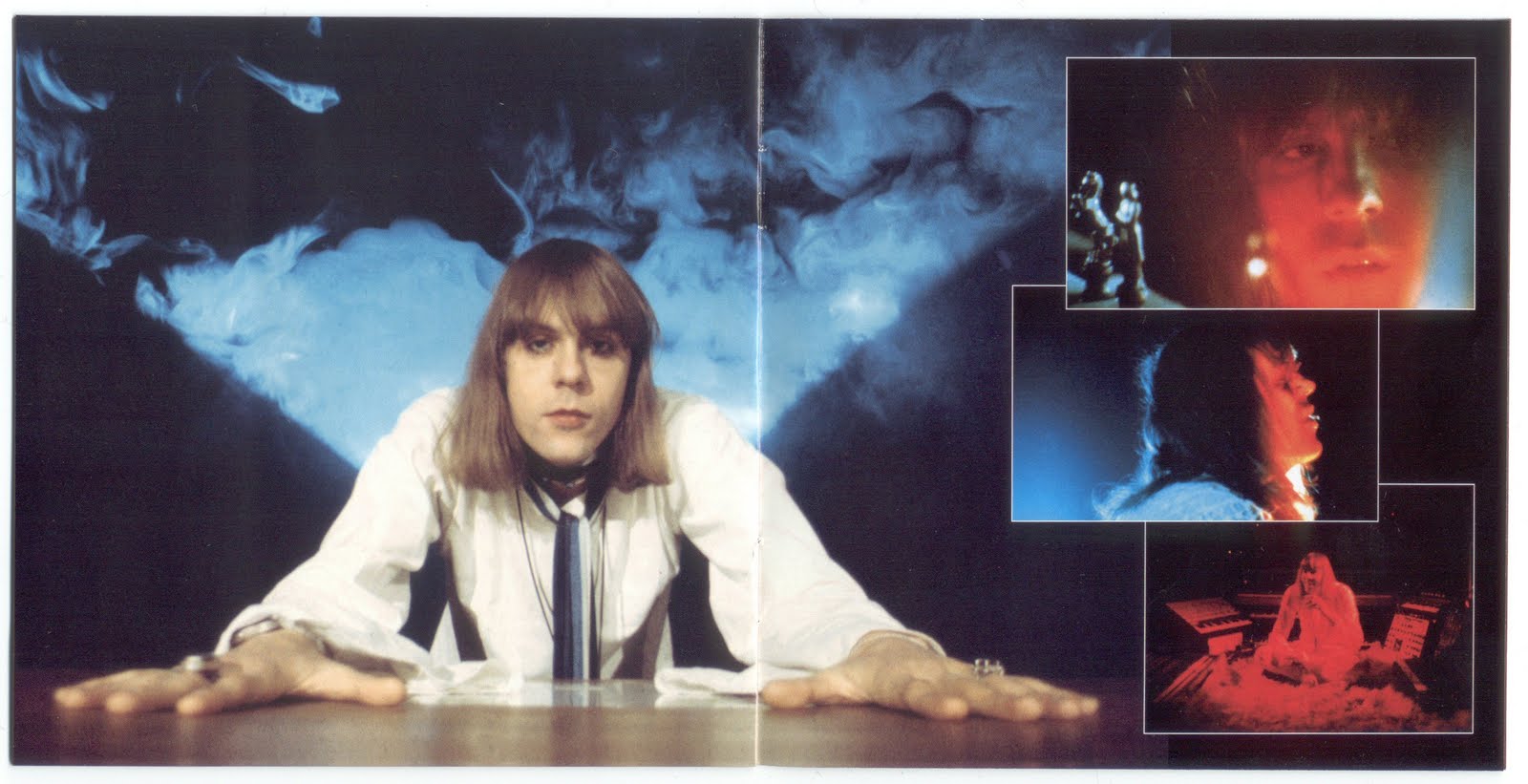
King Crimson - Three of Perfect Pair [1984]
 1. Three of a Perfect Pair
2. Model Man
3. Sleepless
4. Man with an Open Heart
5. Nuages (That Which Passes, Passes Like Clouds)
6. Industry
7. Dig Me
8. No Warning
9. Larks' Tongues in Aspic (Part III)
GET DOWN HERE
Thanks Jacob
1. Three of a Perfect Pair
2. Model Man
3. Sleepless
4. Man with an Open Heart
5. Nuages (That Which Passes, Passes Like Clouds)
6. Industry
7. Dig Me
8. No Warning
9. Larks' Tongues in Aspic (Part III)
GET DOWN HERE
Thanks Jacob

7/30/10
Oiled Wildlife Care Network
 Although a California-based organization, the Oiled Wildlife Care Network is currently helping to lead the effort to care for oil-affected marine mammals and sea turtles in Louisiana, in partnership with NOAA-NMFS and the USFWS.
Volunteers are being recruited on a state-by-state basis and updated on the Deepwater Horizon Facebook page. If you would like to obtain volunteer information, please call 1-866-448-5816. Two ways to track the event are to visit the Deepwater Horizon site and the OWCN blog. To report an oiled animal, please call the Wildlife Hotline at 1-866-557-1401. Pertinent information on the animal, as well as your contact information, will be collected and immediately forwarded to the wildlife responders.
Information about what members of the public should do if they encounter oiled wildlife can be downloaded here. Information about turtles and marine mammals in the Gulf of Mexico and this spill can be found here; information about the effects of oil on sea turtles and marine mammals can be found here. All of the wildlife care for this spill is being covered by BP. If you are still interested in supporting wildlife rehabilitation work, please see How You Can Help.
To access the main OWCN site, please click here.
Media contact: Sylvia Wright, UC Davis News Service, (530) 219-8849, swright@ucdavis.edu This e-mail address is being protected from spambots. You need JavaScript enabled to view it .
Oiled Wildlife Numbers
These data reflect only the initial, field-level evaluation and do not reflect a final determination of the cause of injury, or death. Official designations of cause of death will be determined at a later date. All turtles and mammals will have partial or full necropsies to help determine the exact cause of death if at all possible.
For the full report, please visit the Deepwater Horizon/BP Spill site at the Deepwater Horizon Response Fish and Wildlife Report page.
This table last updated: July 29, 2010
Although a California-based organization, the Oiled Wildlife Care Network is currently helping to lead the effort to care for oil-affected marine mammals and sea turtles in Louisiana, in partnership with NOAA-NMFS and the USFWS.
Volunteers are being recruited on a state-by-state basis and updated on the Deepwater Horizon Facebook page. If you would like to obtain volunteer information, please call 1-866-448-5816. Two ways to track the event are to visit the Deepwater Horizon site and the OWCN blog. To report an oiled animal, please call the Wildlife Hotline at 1-866-557-1401. Pertinent information on the animal, as well as your contact information, will be collected and immediately forwarded to the wildlife responders.
Information about what members of the public should do if they encounter oiled wildlife can be downloaded here. Information about turtles and marine mammals in the Gulf of Mexico and this spill can be found here; information about the effects of oil on sea turtles and marine mammals can be found here. All of the wildlife care for this spill is being covered by BP. If you are still interested in supporting wildlife rehabilitation work, please see How You Can Help.
To access the main OWCN site, please click here.
Media contact: Sylvia Wright, UC Davis News Service, (530) 219-8849, swright@ucdavis.edu This e-mail address is being protected from spambots. You need JavaScript enabled to view it .
Oiled Wildlife Numbers
These data reflect only the initial, field-level evaluation and do not reflect a final determination of the cause of injury, or death. Official designations of cause of death will be determined at a later date. All turtles and mammals will have partial or full necropsies to help determine the exact cause of death if at all possible.
For the full report, please visit the Deepwater Horizon/BP Spill site at the Deepwater Horizon Response Fish and Wildlife Report page.
This table last updated: July 29, 2010
 click 2 enlarge data
7/28/10
From Curl Curl to Cambria
 Great interview about Paipo riding and Campbell Brothers’ Bonzers over at mypaipoboards.org.
From Curl Curl to Cambria
Robert Moynier Interview
July 5 2010, Cambria, California
Interview by Bob Green.
For the complete interview go mypaipoboards.org. There’s plenty of other good stuff there, also. Excerpt after the jump
Between the early- to late-Sixties, were you seeing any bellyboarders about?
Actually I did, and the reason for that was my family moved down to the Newport Beach/Orange County area and I ended up surfing Newport/Huntington beach heavily between 1966 through the summer of 1970. If there was ever anything resembling a center of paipo/bellyboarding culture in the continental U.S. it was probably that area. The most important functional reason for this was the existence of the “black ball” surf access restrictions that took place every summer in Newport and Huntington. What this meant was whenever the black ball flags were up, usually from 9am to 5pm, June through September, nobody could be out in the water riding anything longer than 5-foot, or you’d get called in, cited, and charged with a hefty little fine. Basically they were trying to make the beach and ocean tourist friendly and reduce collisions and injuries between the vacationers and out of control longboarders. Or perhaps it was the other way around. In any case, it worked pretty well and fortunately it had the unintended consequence of spawning a real area subculture and mini industry of paipo riders, mat surfers, bodysurfers, and even some kneeboarders. Both Newport and Huntington get pretty good during summer south and southwest swells, so with the seasonal elimination of the longboard, it was an ideal environment for the alternative surfcraft people to do their thing relatively hassle free and really hone their skills in some challenging, quality spots like the Wedge, Newport Point, and Huntington Pier. To take care of these surfers, you had a number of business, like Newport Paipo and Jack’s Surfboards, focusing in on making a fair amount of bellyboards and kneeboards, and other people working on improving swim fins, making hand boards, etc. So all the stuff that was otherwise taking place in isolated pockets up and down the coast was happening in this one, small, concentrated area.
You have posted on another blog about a paipo built by Gordon Thietz and ridden by Candy Calhoun. Can you tell me about your more recent experience riding prone? How did you get started riding prone again and what are you riding?
What got me into it was a flurry of injuries about 2 years ago involving Achilles tendons, sprained ankles, and a broken big toe. These kinds of things tend to put a damper on stand-up surfing, so it was natural to re-focus on riding prone in order to keep in the ocean as part of my rehab. I had never actually left that aspect of surfing, but it was something I only did maybe a half dozen times a year, on my stand-up board, usually in small, lined-up conditions. I always was stoked at the sensation of speed and immediacy to the wave and water, plus the fact that when prone, it’s always overhead! So recently I started surfing consistently prone due to physical factors, but as I healed up, I have not found myself necessarily craving a return to the stand-up experience. I’ve actually become more intrigued with the different aspects of trim, drift, body torque, speed, and wave “touch” that prone allows. I am riding my stand-up boards doing this, on 7’8”, 8’0″ and 9’0′ boards, all Bonzers.
Bonzers: … by late 1970, I was riding a 5’6″ Newport Paipo “Shoe,” a dished out, very hard railed and very fast stand-up/kneeboard combo. From there Walden Surfboards made me a 5-foot dished-out deck, soft-railed board that was brilliant in most surf up to about 6 foot. That was a board I kept and rode until the late-1970s. Around 1972, I met the Campbell Brothers in Oxnard, and glassed in some “Bonzer” runners on the thing, and it rode even better! Duncan still has some footage of me on it from 1972, somewhere in the archives. In all of this what was happening, at least for me, was trying to find that combination of length, template, and volume that would allow a stand-up surfer to draw those kneeboard lines. Looking for that nexus between the paipo/kneeboard experience and a functional stand-up surfboard, I found that was possible utilizing the Bonzer bottom and fin configurations, and for the most part, have been riding Campbell Bros. Bonzers in a variety of lengths and templates ever since.
via kurungabaa/ my paipo.org
Great interview about Paipo riding and Campbell Brothers’ Bonzers over at mypaipoboards.org.
From Curl Curl to Cambria
Robert Moynier Interview
July 5 2010, Cambria, California
Interview by Bob Green.
For the complete interview go mypaipoboards.org. There’s plenty of other good stuff there, also. Excerpt after the jump
Between the early- to late-Sixties, were you seeing any bellyboarders about?
Actually I did, and the reason for that was my family moved down to the Newport Beach/Orange County area and I ended up surfing Newport/Huntington beach heavily between 1966 through the summer of 1970. If there was ever anything resembling a center of paipo/bellyboarding culture in the continental U.S. it was probably that area. The most important functional reason for this was the existence of the “black ball” surf access restrictions that took place every summer in Newport and Huntington. What this meant was whenever the black ball flags were up, usually from 9am to 5pm, June through September, nobody could be out in the water riding anything longer than 5-foot, or you’d get called in, cited, and charged with a hefty little fine. Basically they were trying to make the beach and ocean tourist friendly and reduce collisions and injuries between the vacationers and out of control longboarders. Or perhaps it was the other way around. In any case, it worked pretty well and fortunately it had the unintended consequence of spawning a real area subculture and mini industry of paipo riders, mat surfers, bodysurfers, and even some kneeboarders. Both Newport and Huntington get pretty good during summer south and southwest swells, so with the seasonal elimination of the longboard, it was an ideal environment for the alternative surfcraft people to do their thing relatively hassle free and really hone their skills in some challenging, quality spots like the Wedge, Newport Point, and Huntington Pier. To take care of these surfers, you had a number of business, like Newport Paipo and Jack’s Surfboards, focusing in on making a fair amount of bellyboards and kneeboards, and other people working on improving swim fins, making hand boards, etc. So all the stuff that was otherwise taking place in isolated pockets up and down the coast was happening in this one, small, concentrated area.
You have posted on another blog about a paipo built by Gordon Thietz and ridden by Candy Calhoun. Can you tell me about your more recent experience riding prone? How did you get started riding prone again and what are you riding?
What got me into it was a flurry of injuries about 2 years ago involving Achilles tendons, sprained ankles, and a broken big toe. These kinds of things tend to put a damper on stand-up surfing, so it was natural to re-focus on riding prone in order to keep in the ocean as part of my rehab. I had never actually left that aspect of surfing, but it was something I only did maybe a half dozen times a year, on my stand-up board, usually in small, lined-up conditions. I always was stoked at the sensation of speed and immediacy to the wave and water, plus the fact that when prone, it’s always overhead! So recently I started surfing consistently prone due to physical factors, but as I healed up, I have not found myself necessarily craving a return to the stand-up experience. I’ve actually become more intrigued with the different aspects of trim, drift, body torque, speed, and wave “touch” that prone allows. I am riding my stand-up boards doing this, on 7’8”, 8’0″ and 9’0′ boards, all Bonzers.
Bonzers: … by late 1970, I was riding a 5’6″ Newport Paipo “Shoe,” a dished out, very hard railed and very fast stand-up/kneeboard combo. From there Walden Surfboards made me a 5-foot dished-out deck, soft-railed board that was brilliant in most surf up to about 6 foot. That was a board I kept and rode until the late-1970s. Around 1972, I met the Campbell Brothers in Oxnard, and glassed in some “Bonzer” runners on the thing, and it rode even better! Duncan still has some footage of me on it from 1972, somewhere in the archives. In all of this what was happening, at least for me, was trying to find that combination of length, template, and volume that would allow a stand-up surfer to draw those kneeboard lines. Looking for that nexus between the paipo/kneeboard experience and a functional stand-up surfboard, I found that was possible utilizing the Bonzer bottom and fin configurations, and for the most part, have been riding Campbell Bros. Bonzers in a variety of lengths and templates ever since.
via kurungabaa/ my paipo.org
7/27/10
"Heathen Child"
 Heathen Child by MuteRecords
It's the first single from the second album from Nick Cave, Warren Ellis, Martyn Casey, and Jim Sclavunos's balls-out Grinderman project. It's swampy and bluesy and you may feel like you need a wash after listening to it. The "Heathen Child" single is out on limited edition 12" colored vinyl September 6 and features another version of the song-- dubbed "Super Heathen Child"-- with an ear-blasting guitar solo from the one and only Robert Fripp (David Bowie, King Crimson). The download version is backed by the B-side "Star Charmer".
Grinderman 2 hits September 13 in Europe via Mute and September 14 in the U.S. via Anti-. Listen to the non-Fripp version of "Heathen Child" above (via @grindermansite).
Heathen Child by MuteRecords
It's the first single from the second album from Nick Cave, Warren Ellis, Martyn Casey, and Jim Sclavunos's balls-out Grinderman project. It's swampy and bluesy and you may feel like you need a wash after listening to it. The "Heathen Child" single is out on limited edition 12" colored vinyl September 6 and features another version of the song-- dubbed "Super Heathen Child"-- with an ear-blasting guitar solo from the one and only Robert Fripp (David Bowie, King Crimson). The download version is backed by the B-side "Star Charmer".
Grinderman 2 hits September 13 in Europe via Mute and September 14 in the U.S. via Anti-. Listen to the non-Fripp version of "Heathen Child" above (via @grindermansite).
The Dirty Carter Experimental Sound Generating Instrument
Dirty-Carter Experimental Sound Generating Instrument test from Chris Carter on Vimeo.
“The Dirty Carter Experimental Sound Generating Instrument uses a dual 4-stage shift register. Each register is controlled independently. Two oscillators are used per register: one as a clock, the other as input data that is cascaded through the four stages. The outputs from the stages are mixed together. A fast clock rate produces a crude form of wavetable synthesis, whilst a slow clock rate creates audible pulses and clicks. The clock speed and the data input’s frequency are controlled by touch electrodes/pads. By tilting the instrument, sound from both the 4-stage shift registers can be mixed together.” http://www.throbbing-gristle.com/
7/25/10
Fire Of Love
 In 1981, The Gun Club released their debut album, Fire Of Love. It contained the single, "Sex Beat". The Los Angeles punk band went through numerous personnel changes. At various points in their career, they had Patricia Morrison (ex-The Bags, later Sisters Of Mercy and The Damned), Rob Graves (ex-The Bags, future 45 Grave), Terry Graham (ex-The Bags) and Kid Congo Powers (future The Cramps). Jeffrey Lee Pierce was the glue. The band officially ended when Pierce died of a brain hemorrhage on March 31, 1996.
review;
The Gun Club's debut is the watermark for all post-punk roots music. This features the late Jeffrey Lee Pierce's swamped-out brand of roiling rock, swaggerific hell-bound blues, and gothic country. With Pierce's wailing high lonesome slide guitar twinned with Ward Dotson's spine-shaking riffs and the solid yet off-the-rails rhythm section of bassist Rob Ritter and drummer Terry Graham, the Gun Club burst out of L.A. in the early '80s with a bone to pick and a mountain to move -- and they accomplished both on their debut album. With awesome, stripped to the frame production by the Flesh Eaters' Chris D., Fire of Love blew away all expectations -- and with good reason. Nobody has heard music like this before or since. Pierce's songs were rooted in his land of Texas. On "Sex Beat," a razor-sharp country one-two shuffle becomes a howling wind as Pierce's wasted, half-sung half-howled vocals relate a tale of voodoo, sex, dope, and death. The song choogles like a freight train coming undone in a twister. Here Black Flag, the Sex Pistols, Son House, and the coughing, hacking rambling ghost of Hank Williams all converge in a reckless mass of seething energy and nearly evil intent. As if the opener weren't enough of a jolt, the Gun Club follow this with a careening version of House's "Preachin the Blues," full of staccato phrasing and blazing slide. But it isn't until the anthemic, opiate-addled country of "She's Like Heroin to Me" and the truly frightening punk-blues of "Ghost on the Highway" that the listener comes to grip with the awesome terror that is the Gun Club. The songs become rock & roll ciphers, erasing themselves as soon as they speak, heading off into the whirlwind of a storm that is so big, so black, and so awful one cannot meditate on anything but its power. Fire of Love may be just what the doctor ordered, but to cure or kill is anybody's guess. -AMG
Ward Dotson - guitars, slide guitar
Jeffrey Lee Pierce - vocals, slide guitar
Rob Ritter - bass
Terry Graham - drums
1. Sex Beat
2. Preaching The Blues
3. Promise Me
4. She's Like Heroin To Me
5. For The Love Of Ivy
6. Fire Spirit
7. Ghost On The Highway
8. Jack On Fire
9. Black Train
10. Cool Drink Of Water
11. Goodbye Johnny
AN ABSOLUTE MUST HAVE SO GET DOWN HERE.
In 1981, The Gun Club released their debut album, Fire Of Love. It contained the single, "Sex Beat". The Los Angeles punk band went through numerous personnel changes. At various points in their career, they had Patricia Morrison (ex-The Bags, later Sisters Of Mercy and The Damned), Rob Graves (ex-The Bags, future 45 Grave), Terry Graham (ex-The Bags) and Kid Congo Powers (future The Cramps). Jeffrey Lee Pierce was the glue. The band officially ended when Pierce died of a brain hemorrhage on March 31, 1996.
review;
The Gun Club's debut is the watermark for all post-punk roots music. This features the late Jeffrey Lee Pierce's swamped-out brand of roiling rock, swaggerific hell-bound blues, and gothic country. With Pierce's wailing high lonesome slide guitar twinned with Ward Dotson's spine-shaking riffs and the solid yet off-the-rails rhythm section of bassist Rob Ritter and drummer Terry Graham, the Gun Club burst out of L.A. in the early '80s with a bone to pick and a mountain to move -- and they accomplished both on their debut album. With awesome, stripped to the frame production by the Flesh Eaters' Chris D., Fire of Love blew away all expectations -- and with good reason. Nobody has heard music like this before or since. Pierce's songs were rooted in his land of Texas. On "Sex Beat," a razor-sharp country one-two shuffle becomes a howling wind as Pierce's wasted, half-sung half-howled vocals relate a tale of voodoo, sex, dope, and death. The song choogles like a freight train coming undone in a twister. Here Black Flag, the Sex Pistols, Son House, and the coughing, hacking rambling ghost of Hank Williams all converge in a reckless mass of seething energy and nearly evil intent. As if the opener weren't enough of a jolt, the Gun Club follow this with a careening version of House's "Preachin the Blues," full of staccato phrasing and blazing slide. But it isn't until the anthemic, opiate-addled country of "She's Like Heroin to Me" and the truly frightening punk-blues of "Ghost on the Highway" that the listener comes to grip with the awesome terror that is the Gun Club. The songs become rock & roll ciphers, erasing themselves as soon as they speak, heading off into the whirlwind of a storm that is so big, so black, and so awful one cannot meditate on anything but its power. Fire of Love may be just what the doctor ordered, but to cure or kill is anybody's guess. -AMG
Ward Dotson - guitars, slide guitar
Jeffrey Lee Pierce - vocals, slide guitar
Rob Ritter - bass
Terry Graham - drums
1. Sex Beat
2. Preaching The Blues
3. Promise Me
4. She's Like Heroin To Me
5. For The Love Of Ivy
6. Fire Spirit
7. Ghost On The Highway
8. Jack On Fire
9. Black Train
10. Cool Drink Of Water
11. Goodbye Johnny
AN ABSOLUTE MUST HAVE SO GET DOWN HERE.
7/24/10
Roxy Music (BBC sessions from 1972-1973)
 Last month, BBC6 rebroadcast a 1972 In Concert programme featuring Roxy Music live at the Paris Theatre in August. That was excuse enough to dig out this old Oh Boy bootleg from the archives.
Oh Boy, out of Luxembourg, made a business copying BBC sessions and radio shows and minting them into silver disc bootlegs when the old copyright laws in Europe allowed for such. But they had a bad habit of getting the song titles wrong. Worse still was the lack of accurate dates and venues.
Roxy Music’s When We Were Young was released by Oh Boy in 1989 with a nice color cover, two tracks mis-titled and with just the generic “live in London, 1972″ to put things in perspective.
However, this is probably not the In Concert show. Between January 1972 and March 1973, Roxy Music were in the BBC studios for several sessions for John Peel’s Sounds Of The Seventies. It appears When We Were Young contains the first and last BBC sessions and two songs, including the hit Virginia Plain, from July 1972, just as it was released as a 7-inch single.
The most interesting of the sets is the sessions from January 1972, before Roxy Music had a record deal. This is the band raw and with guest Davy O’List of the Nice on guitar. According to Simon Galloway at the roxyrama site, this session is probably the only proper recording made by this early incarnation of Roxy Music. Pay attention to Davy O’List’s soloing on Sea Breeze. It’s something you don’t usually hear on a Roxy Music song.
Of the final session, this is what Simon Galloway writes, “Pyjamarama is a far more intimate take than the single version, showing something of its Beatles influence until Eno brilliantly wreaks havoc on Andy Mackay’s sax break… In Every Dream Home A Heartache starts out almost identical to the album, with less of the drama but more of Mackay’s subdued improv and Manzanera’s psychedelic arpeggios. When it hits the ‘but you blew my mind’ freak out section, Eno takes hold of Manzanera’s guitar and renders it almost unrecognisable, shifting the whole pitch of the instrument in extremes.”
The version of If There Is Something is stretched to 12 minutes with a climactic duel between McKay and Manzanera. Solid drumming and Eno’s distortion effects make this a wonderful mess.
Those were the days when experiment and performance were part of the whole. This is one great CD with excellent audio. The roxyrama website has an excellent history of Roxy Music’s BBC sessions by Simon Galloway.
Last month, BBC6 rebroadcast a 1972 In Concert programme featuring Roxy Music live at the Paris Theatre in August. That was excuse enough to dig out this old Oh Boy bootleg from the archives.
Oh Boy, out of Luxembourg, made a business copying BBC sessions and radio shows and minting them into silver disc bootlegs when the old copyright laws in Europe allowed for such. But they had a bad habit of getting the song titles wrong. Worse still was the lack of accurate dates and venues.
Roxy Music’s When We Were Young was released by Oh Boy in 1989 with a nice color cover, two tracks mis-titled and with just the generic “live in London, 1972″ to put things in perspective.
However, this is probably not the In Concert show. Between January 1972 and March 1973, Roxy Music were in the BBC studios for several sessions for John Peel’s Sounds Of The Seventies. It appears When We Were Young contains the first and last BBC sessions and two songs, including the hit Virginia Plain, from July 1972, just as it was released as a 7-inch single.
The most interesting of the sets is the sessions from January 1972, before Roxy Music had a record deal. This is the band raw and with guest Davy O’List of the Nice on guitar. According to Simon Galloway at the roxyrama site, this session is probably the only proper recording made by this early incarnation of Roxy Music. Pay attention to Davy O’List’s soloing on Sea Breeze. It’s something you don’t usually hear on a Roxy Music song.
Of the final session, this is what Simon Galloway writes, “Pyjamarama is a far more intimate take than the single version, showing something of its Beatles influence until Eno brilliantly wreaks havoc on Andy Mackay’s sax break… In Every Dream Home A Heartache starts out almost identical to the album, with less of the drama but more of Mackay’s subdued improv and Manzanera’s psychedelic arpeggios. When it hits the ‘but you blew my mind’ freak out section, Eno takes hold of Manzanera’s guitar and renders it almost unrecognisable, shifting the whole pitch of the instrument in extremes.”
The version of If There Is Something is stretched to 12 minutes with a climactic duel between McKay and Manzanera. Solid drumming and Eno’s distortion effects make this a wonderful mess.
Those were the days when experiment and performance were part of the whole. This is one great CD with excellent audio. The roxyrama website has an excellent history of Roxy Music’s BBC sessions by Simon Galloway.
 Tks 1-4 likely Jan 4, 1972 with Rik Kenton on bass and broadcast on Sounds of the Seventies with John Peel. Sea Breezes is likely from the Feb 18 session. This session was before the band secured a record deal and features Davy O’List [The Nice] on guitar and bassist Graham Simpson.
Track 01. The Bob [Medley] (7.2MB)
Track 02. Would You Believe (4.8MB)
Track 03. Sea Breezes (8.7MB)
Track 04. Remake, Remodel (6.3MB)
Tks 7-8 appear to be the July 18, 1972 Sounds Of The Seventies with John Peel. Tks 5-6, 9-10 March 5, 1973 for Sounds Of The Seventies with John Peel. This session was a preview for the album For Your Pleasure. The bass player here is Sal Maida.
Track 05. Pyjamerama (3.6MB)
Track 06. Editions Of You (4.7MB)
Track 07. Virginia Plain [art says The Bob reprise] (5.2MB)
Track 08. If There Is Something [art says Secret Song] (16.4MB - visit the html page to download the track)
Track 09. In Every Dream Home A Heartache* (9.7MB)
Track 10 .Do The Strand* (5.0MB)
* Both tracks have a live audience. It is possible they are from a different unidentified session.
FM stereo quality.
Bryan Ferry - vocals, keyboards
Brian Eno - Synthesizer, tapes
Andy Mackay - Sax, clarinet, oboe
Phil Manzanera - guitar
Paul Thompson - drums
ALL VIA...roio
.....smarts, arts, angst and a solid aesthetic, what i would have given to see Roxy in this era. there are some GREAT German performances out on youtube from very near this time.
pure and simple(kinda) they are just a GREAT ROCK BAND!
w/Eno and Mackay going off.
I URGE YOU TO GO FULL SCREEN NOW....
and my favorite psychedelic trip.....
Tks 1-4 likely Jan 4, 1972 with Rik Kenton on bass and broadcast on Sounds of the Seventies with John Peel. Sea Breezes is likely from the Feb 18 session. This session was before the band secured a record deal and features Davy O’List [The Nice] on guitar and bassist Graham Simpson.
Track 01. The Bob [Medley] (7.2MB)
Track 02. Would You Believe (4.8MB)
Track 03. Sea Breezes (8.7MB)
Track 04. Remake, Remodel (6.3MB)
Tks 7-8 appear to be the July 18, 1972 Sounds Of The Seventies with John Peel. Tks 5-6, 9-10 March 5, 1973 for Sounds Of The Seventies with John Peel. This session was a preview for the album For Your Pleasure. The bass player here is Sal Maida.
Track 05. Pyjamerama (3.6MB)
Track 06. Editions Of You (4.7MB)
Track 07. Virginia Plain [art says The Bob reprise] (5.2MB)
Track 08. If There Is Something [art says Secret Song] (16.4MB - visit the html page to download the track)
Track 09. In Every Dream Home A Heartache* (9.7MB)
Track 10 .Do The Strand* (5.0MB)
* Both tracks have a live audience. It is possible they are from a different unidentified session.
FM stereo quality.
Bryan Ferry - vocals, keyboards
Brian Eno - Synthesizer, tapes
Andy Mackay - Sax, clarinet, oboe
Phil Manzanera - guitar
Paul Thompson - drums
ALL VIA...roio
.....smarts, arts, angst and a solid aesthetic, what i would have given to see Roxy in this era. there are some GREAT German performances out on youtube from very near this time.
pure and simple(kinda) they are just a GREAT ROCK BAND!
w/Eno and Mackay going off.
I URGE YOU TO GO FULL SCREEN NOW....
and my favorite psychedelic trip.....
7/23/10


Stecyk / Greenough
 Craig Stecyk’s photograph of George Greenough, the surfer and surfboard designer, around 1965.
By ROBERTA SMITH
NY Times Published: July 22, 2010
The exuberant three-gallery exhibition “Swell” is one of the Big Kahunas of the season’s group shows. Its requisite summertime theme is surfing, which runs wider and deeper than most, encompassing an array of visual material and several familiar characters, namely the American male as renegade and good buddy.
At Nyehaus gallery in Chelsea, various black-and-white photographs convey the solitude, skill and risk of surfing.
The show, which sprawls throughout the Chelsea spaces of Nyehaus, the Friedrich Petzel Gallery and Metro Pictures, spans more than half a century, from the 1950s to the present. In addition to scores of artworks it contains about two dozen surf boards, along with photographs, posters and other artifacts. Of the nearly 80 individuals whose efforts are represented here, fewer than 10 are women. This statistic reflects a significant lack of imagination, considering that a lot of the work here is merely vaguely oceanic. Nonetheless the show, which has been organized by Tim Nye of Nyehaus and Jacqueline Miro, an architect, urbanist and surfer, in concert with the staffs at Petzel and Metro Pictures, is ecumenical in other ways.
stolen from /continued on... South Willard
Craig Stecyk’s photograph of George Greenough, the surfer and surfboard designer, around 1965.
By ROBERTA SMITH
NY Times Published: July 22, 2010
The exuberant three-gallery exhibition “Swell” is one of the Big Kahunas of the season’s group shows. Its requisite summertime theme is surfing, which runs wider and deeper than most, encompassing an array of visual material and several familiar characters, namely the American male as renegade and good buddy.
At Nyehaus gallery in Chelsea, various black-and-white photographs convey the solitude, skill and risk of surfing.
The show, which sprawls throughout the Chelsea spaces of Nyehaus, the Friedrich Petzel Gallery and Metro Pictures, spans more than half a century, from the 1950s to the present. In addition to scores of artworks it contains about two dozen surf boards, along with photographs, posters and other artifacts. Of the nearly 80 individuals whose efforts are represented here, fewer than 10 are women. This statistic reflects a significant lack of imagination, considering that a lot of the work here is merely vaguely oceanic. Nonetheless the show, which has been organized by Tim Nye of Nyehaus and Jacqueline Miro, an architect, urbanist and surfer, in concert with the staffs at Petzel and Metro Pictures, is ecumenical in other ways.
stolen from /continued on... South Willard
7/20/10

7/19/10
Made in Korea, Assembled in Detroit????
 DEARBORN, Mich. — Ford Motor Co. has picked a subsidiary of Korean battery maker LG Chem to supply battery packs for an electric version of the Ford Focus that will hit showrooms sometime next year.
The subsidiary, Compact Power Inc., is building a lithium-ion battery factory in Holland, Mich., near Grand Rapids that also will supply cells for the Chevrolet Volt rechargeable electric car.
Initially the battery cells will be made in South Korea by LG Chem and shipped to the U.S., where Compact Power, based in Troy, Mich., is looking for a site to assemble them into packs.
Once the Holland factory is up and running, the cells and packs will be produced in the U.S., Ford said.
Ford’s assembly plant in Wayne, Mich., near Detroit, will build a new version of the Focus.
Ford says it expects the electric Focus to have a range of up to 100 miles on a single charge.
The company plans to have five electric or gas-electric hybrid vehicles in the U.S. by 2012 including the Focus, the Transit Connect small commercial van, two unidentified hybrids and a rechargeable hybrid electric vehicle that also hasn’t been named.
President Barack Obama will travel to Holland on Thursday for the groundbreaking ceremony at the Compact Power factory.
Compact Power received $151 million from a stimulus program announced last August to open the $303 million plant, which is expected to produce lithium ion cells and employ about 450 people by 2013, the White House said.
DEARBORN, Mich. — Ford Motor Co. has picked a subsidiary of Korean battery maker LG Chem to supply battery packs for an electric version of the Ford Focus that will hit showrooms sometime next year.
The subsidiary, Compact Power Inc., is building a lithium-ion battery factory in Holland, Mich., near Grand Rapids that also will supply cells for the Chevrolet Volt rechargeable electric car.
Initially the battery cells will be made in South Korea by LG Chem and shipped to the U.S., where Compact Power, based in Troy, Mich., is looking for a site to assemble them into packs.
Once the Holland factory is up and running, the cells and packs will be produced in the U.S., Ford said.
Ford’s assembly plant in Wayne, Mich., near Detroit, will build a new version of the Focus.
Ford says it expects the electric Focus to have a range of up to 100 miles on a single charge.
The company plans to have five electric or gas-electric hybrid vehicles in the U.S. by 2012 including the Focus, the Transit Connect small commercial van, two unidentified hybrids and a rechargeable hybrid electric vehicle that also hasn’t been named.
President Barack Obama will travel to Holland on Thursday for the groundbreaking ceremony at the Compact Power factory.
Compact Power received $151 million from a stimulus program announced last August to open the $303 million plant, which is expected to produce lithium ion cells and employ about 450 people by 2013, the White House said.
7/17/10
Klaus Schulze- Moondawn (deluxe edition)
 Klaus Schulze (born 4 August 1947) is a German electronic music composer and musician. He also used the alias Richard Wahnfried. He was briefly a member of the electronic bands Tangerine Dream and Ash Ra Tempel before launching a solo career consisting of more than 60 albums (more than 140 CDs) lasting five decades.
Moondawn is the sixth album by Klaus Schulze. It was originally released in 1976, and in 2005 was the thirteenth Schulze album reissued by Revisited Records. In 1995, Manikin Records released "The Original Master" edition of Moondawn, containing a different bonus track from the one included on the 2006 reissue, "Supplement" (25:22). Moondawn is Schulze's first album that was performed in the Berlin School style.
via http://musistenz.blogspot.com/
Klaus Schulze (born 4 August 1947) is a German electronic music composer and musician. He also used the alias Richard Wahnfried. He was briefly a member of the electronic bands Tangerine Dream and Ash Ra Tempel before launching a solo career consisting of more than 60 albums (more than 140 CDs) lasting five decades.
Moondawn is the sixth album by Klaus Schulze. It was originally released in 1976, and in 2005 was the thirteenth Schulze album reissued by Revisited Records. In 1995, Manikin Records released "The Original Master" edition of Moondawn, containing a different bonus track from the one included on the 2006 reissue, "Supplement" (25:22). Moondawn is Schulze's first album that was performed in the Berlin School style.
via http://musistenz.blogspot.com/
 Recorded:
January 1976, Frankfurt & for CD release remixed 1991 by Klaus Schulze
Release:
02 December 2005, CD on Revisited Records (SPV 304802)
First release:
16 April 1976 on Brain (1088)
Performed by:
Klaus Schulze (ARP 2600, ARP Odyssey, Farfisa Professional Organ, Farfisa Syntorchestra, EMS Synthi A, Crumar Keybords, Sequenzer Synthanorma 3-12, and for the first time : The Big Moog) & Harald Grosskopf (drums)
Recorded:
January 1976, Frankfurt & for CD release remixed 1991 by Klaus Schulze
Release:
02 December 2005, CD on Revisited Records (SPV 304802)
First release:
16 April 1976 on Brain (1088)
Performed by:
Klaus Schulze (ARP 2600, ARP Odyssey, Farfisa Professional Organ, Farfisa Syntorchestra, EMS Synthi A, Crumar Keybords, Sequenzer Synthanorma 3-12, and for the first time : The Big Moog) & Harald Grosskopf (drums)
 1. "Floating" on original release 27:15 2. "Mindphaser" on original release 25:22 3. "Floating Sequence" reissue bonus track 21:11
GET DOWN HERE
1. "Floating" on original release 27:15 2. "Mindphaser" on original release 25:22 3. "Floating Sequence" reissue bonus track 21:11
GET DOWN HERE
7/16/10
Junior Kimbrough: Do the Rump!
 1st of all, DO NOT PASS JUDGEMENT ON THIS SHIT LP COVER that gives the impression of a
slick Junior put through a Monsanto 'artist clean up machine' to rope in a demographic that would never accept him anyway. A weak attempt at the suits in marketing in delusional
mode once again. This LP is 100% hillbilly deep soul with grooves nobody not from the sticks could manage. Junior is down and out and tellin' his story for real!
A+
doomgrinder says
This Cd is the Best Junior Kimbrough record;even though I love "All Night Long" and "Sad Days,Lonely Nights" the sound of this record is pure Hill Country Mississippi blues and has the deepest groove I have ever heard. This CD rivals R. L. Burnside's "Too Bad Jim" as the classic recording of Hill Country Blues. Rev KM Williams.
1. Keep Your Hands off Her
2. I Feel Good, Little Girl
3. You Better Run
4. I'm So Glad (Trouble Don't Last Always)
5. Done Got Old
6. Please Don't Leave Me, Baby
7. Come on and Go With Me
8. Do the Rump!
9. I Want to Know What's Wrong With You
10. Nobody But You Baby
11. Too Late Baby
12. My Mama Done Told Me
13. Walk With Me
GET DOWN HERE
1st of all, DO NOT PASS JUDGEMENT ON THIS SHIT LP COVER that gives the impression of a
slick Junior put through a Monsanto 'artist clean up machine' to rope in a demographic that would never accept him anyway. A weak attempt at the suits in marketing in delusional
mode once again. This LP is 100% hillbilly deep soul with grooves nobody not from the sticks could manage. Junior is down and out and tellin' his story for real!
A+
doomgrinder says
This Cd is the Best Junior Kimbrough record;even though I love "All Night Long" and "Sad Days,Lonely Nights" the sound of this record is pure Hill Country Mississippi blues and has the deepest groove I have ever heard. This CD rivals R. L. Burnside's "Too Bad Jim" as the classic recording of Hill Country Blues. Rev KM Williams.
1. Keep Your Hands off Her
2. I Feel Good, Little Girl
3. You Better Run
4. I'm So Glad (Trouble Don't Last Always)
5. Done Got Old
6. Please Don't Leave Me, Baby
7. Come on and Go With Me
8. Do the Rump!
9. I Want to Know What's Wrong With You
10. Nobody But You Baby
11. Too Late Baby
12. My Mama Done Told Me
13. Walk With Me
GET DOWN HERE
 use the doomgrinder link to find another Junior gem "You'd Better Run" pictured above. (a compilation and good starter)
from "Do The Rump"
use the doomgrinder link to find another Junior gem "You'd Better Run" pictured above. (a compilation and good starter)
from "Do The Rump"
Tunas at T-Tree
Surfing on Tom Wegener Tuna Surfboards. The tuna is an alaia that floats good and easy to catch waves - a tuna. The boards are 5'3", 6'1" and 7'7.
stolen from The Alley Fish Fry
7/15/10
It's A Different Thing All Together...
 Some call this surfing....
 Yet in some places it still carries the magic we long for and rarely see.
Sure, it's not often, but we do occasionally get the soul sessions. Otherwise personally, i would not be doing it.
Cain Kilcullen and Fergal Smith enjoying the other side of the coin in magical Ireland.
Yet in some places it still carries the magic we long for and rarely see.
Sure, it's not often, but we do occasionally get the soul sessions. Otherwise personally, i would not be doing it.
Cain Kilcullen and Fergal Smith enjoying the other side of the coin in magical Ireland.
Scott Walker- Stretch
 Born Noel Scott Engel, 9 January 1943, Hamilton, Ohio, USA. After relocating to New York during childhood, this precocious talent initially pursued a career as an actor, and also briefly recorded under the name Scotty Engel. Moving to Hollywood, he worked on sessions with arranger Jack Nitzsche before joining the Routers as a bassist. He next teamed up with singer John Maus as the Dalton Brothers, which gradually evolved into the Walker Brothers with the addition of drummer Gary Leeds. The trio moved to England and found themselves fêted as teen-idols, with a string of hits that established them as one of the most successful UK-based groups of the mid-60s. The group broke up in May 1967 at a time when Scott was still regarded as a sex symbol and potential solo superstar. Yet there was something contradictory about the singer's image. Ridden with angst during the Walkers' teen-idol peak, he was known for his moody reclusiveness, tendency to wear dark glasses and stay in curtain-closed rooms during daylight hours. The classic pop existentialist, Walker was trapped in a system that regarded him as a contradiction. His manager Maurice King encouraged a straightforward showbusiness career involving regular television appearances and even cabaret. Walker, meanwhile, had become a devotee of Belgian composer Jacques Brel and included several of his songs on his debut solo album, Scott. There is no finer example of the contradiction that Walker faced than the incongruous image of the singer performing 'My Death' on BBC television's chirpy Billy Cotton Band Show.
more..
This is a rather rare one. It comes from the early 70s - a few years after the supreme glory of the Scott series of solo albums, where Mr Engel buried and walked upon the grave of the image of fabricated boy band puppet that might have arisen from his days in the Walker Brothers.
This is a series of eclectic covers and although it cannot stand anywhere close to Scott's greatest works (the Scott series from the late 60s and some later albums from the eighties onward - when he went into another stratosphere, artistically and musically), it's definitely worth checking out for Engel fans.
See interview w/Scott here.
via Taringa
This is but a drop in the bucket of Scot's work and certainly very pop.
Tracklisting
"Sunshine" - 4:27
"Just One Smile" - 4:23
"A Woman Left Lonely" - 3:22
"No Easy Way Down" - 4:37
"That's How I Got to Memphis" - 3:10
"Use Me" - 4:19
"Frisco Depot" - 3:46
"Someone Who Cared" - 2:58
"Where Dows Brown Begin" - 4:35
"Where Love Has Died" - 2:23
"I'll Be Home" - 3:24
GET DOWN HERE
Born Noel Scott Engel, 9 January 1943, Hamilton, Ohio, USA. After relocating to New York during childhood, this precocious talent initially pursued a career as an actor, and also briefly recorded under the name Scotty Engel. Moving to Hollywood, he worked on sessions with arranger Jack Nitzsche before joining the Routers as a bassist. He next teamed up with singer John Maus as the Dalton Brothers, which gradually evolved into the Walker Brothers with the addition of drummer Gary Leeds. The trio moved to England and found themselves fêted as teen-idols, with a string of hits that established them as one of the most successful UK-based groups of the mid-60s. The group broke up in May 1967 at a time when Scott was still regarded as a sex symbol and potential solo superstar. Yet there was something contradictory about the singer's image. Ridden with angst during the Walkers' teen-idol peak, he was known for his moody reclusiveness, tendency to wear dark glasses and stay in curtain-closed rooms during daylight hours. The classic pop existentialist, Walker was trapped in a system that regarded him as a contradiction. His manager Maurice King encouraged a straightforward showbusiness career involving regular television appearances and even cabaret. Walker, meanwhile, had become a devotee of Belgian composer Jacques Brel and included several of his songs on his debut solo album, Scott. There is no finer example of the contradiction that Walker faced than the incongruous image of the singer performing 'My Death' on BBC television's chirpy Billy Cotton Band Show.
more..
This is a rather rare one. It comes from the early 70s - a few years after the supreme glory of the Scott series of solo albums, where Mr Engel buried and walked upon the grave of the image of fabricated boy band puppet that might have arisen from his days in the Walker Brothers.
This is a series of eclectic covers and although it cannot stand anywhere close to Scott's greatest works (the Scott series from the late 60s and some later albums from the eighties onward - when he went into another stratosphere, artistically and musically), it's definitely worth checking out for Engel fans.
See interview w/Scott here.
via Taringa
This is but a drop in the bucket of Scot's work and certainly very pop.
Tracklisting
"Sunshine" - 4:27
"Just One Smile" - 4:23
"A Woman Left Lonely" - 3:22
"No Easy Way Down" - 4:37
"That's How I Got to Memphis" - 3:10
"Use Me" - 4:19
"Frisco Depot" - 3:46
"Someone Who Cared" - 2:58
"Where Dows Brown Begin" - 4:35
"Where Love Has Died" - 2:23
"I'll Be Home" - 3:24
GET DOWN HERE
7/14/10
Ford Recommends BP
 (this article was before the continuing oil disaster by BP)
By Rants&Raves
Filling up yesterday on the way back into town I noticed a tagline that says “Ford Recommends BP” on the gas cap of the Fusion that I’m driving for the First 5000 test drive series. Now, I’ve seen this before and never really paid it much attention other than to look up at the gas station’s sign to see if I was at a BP or not. But while pumping gas yesterday I thought to myself “man, I bet BP paid a fortune to have this put on Ford’s gas caps…”
I’m not really sure of the effectiveness, though…as I’ve never opened my fuel door, seen “Ford Recommends BP” and thought “Oh…well there’s a BP right over there, I’d better go over there instead!” If I were BP, I would’ve liked my logo next to the low fuel indicator light!
I did some research (read: I “Googled” it) and only found one website that had an article on it and like mine, was just speculation about the product placement and had no facts about the advertising deal itself. I did find out that BP sponsors the Ford Focus WRC team and there might be some kind of aspect to their contract to allow BP to place a small logo on the gas caps of Ford’s production vehicles…although that seems like a pretty big perk to sponsoring a race car.
Who knows…Maybe there’s some segment of the car buying public who will start thinking Ford is telling them that BP makes the best gas for their car and BP’s product placement will pay off.
2 cents; I just love BP's logo as of years ago with the GREEN and YELLOW SUN. In fact i was, as far as oil co.'s go, a BP endorser.(in Ca.we know BP as ARCO)
i just want off it all together!
(this article was before the continuing oil disaster by BP)
By Rants&Raves
Filling up yesterday on the way back into town I noticed a tagline that says “Ford Recommends BP” on the gas cap of the Fusion that I’m driving for the First 5000 test drive series. Now, I’ve seen this before and never really paid it much attention other than to look up at the gas station’s sign to see if I was at a BP or not. But while pumping gas yesterday I thought to myself “man, I bet BP paid a fortune to have this put on Ford’s gas caps…”
I’m not really sure of the effectiveness, though…as I’ve never opened my fuel door, seen “Ford Recommends BP” and thought “Oh…well there’s a BP right over there, I’d better go over there instead!” If I were BP, I would’ve liked my logo next to the low fuel indicator light!
I did some research (read: I “Googled” it) and only found one website that had an article on it and like mine, was just speculation about the product placement and had no facts about the advertising deal itself. I did find out that BP sponsors the Ford Focus WRC team and there might be some kind of aspect to their contract to allow BP to place a small logo on the gas caps of Ford’s production vehicles…although that seems like a pretty big perk to sponsoring a race car.
Who knows…Maybe there’s some segment of the car buying public who will start thinking Ford is telling them that BP makes the best gas for their car and BP’s product placement will pay off.
2 cents; I just love BP's logo as of years ago with the GREEN and YELLOW SUN. In fact i was, as far as oil co.'s go, a BP endorser.(in Ca.we know BP as ARCO)
i just want off it all together!
HONK / and Relationships
see post below for Rick Nelson's connection with this 70's Laguna Surf Band.
Nothing to do with Rick but a seminal point in the movie.
* Will Brady (bass & vocals)
* Craig Buhler (saxophone, clarinet & flute)
* Tris Imboden (drums), drummer with Chicago since 1990
* Richard Stekol (vocals & guitar)
* Beth Fitchet Wood (vocals & guitar)
* Steve Wood (keyboards & vocals),
my 2 cents; i'm not a huge fan of the band yet their impact on surf history fusing with country soul, can not be denied.(a bit too fusion for me)
Certainly the country soul from LA had reached the fertile grounds of druggy Laguna.
It's marriage just never really lasted.
Rick Nelson and The Stone Caynon Band/ Garden Party LP + Alternatives
 Rick Nelson's Garden Party album rocks a lot harder than the title track would lead one to believe, and is also as much of a showcase for the Stone Canyon Band as it is for Nelson. Allen Kemp's lead guitar crunches and grinds its notes on the opening track, the edgy "Let It Bring You Along," before we hear the familiar, laid-back, country-rock strains of "Garden Party." The jaunty "So Long Mama" follows, dominated by Nelson's rhythm guitar and showcasing Tom Brumley's pedal steel guitar, and then Kemp and the rhythm section of Stephen A. Love (bass) and Patrick Shanahan (drums) move to the fore on the pounding "I Wanna Be With You." Nelson slips into a completely different mode on the ethereal, understated "Are You Really Real?" The original's second side opened with a solid rendition of Chuck Berry's "I'm Talking About You," which offers Kemp in a somewhat jazzy and discursive break. The playing is more subdued and lyrical on Nelson's own "Night Time Lady," and the bluesy "Flower Opens Gently By," and the album ends on the soft, bittersweet ballad "Palace Guard." There's a fair amount of melodic invention throughout, though not quite enough to make this album a classic. The domestic CD version from the end of the 1980s offers only fair sound -- those interested in something better should opt for the 2002-vintage BGO two-on-one reissue of Garden Party. ~ Bruce Eder
 The only thing missing, to me is Rick's version of Dylan's "she Belongs To Me" which is his best material. (find it on may other compilations)
Full performer name: Rick Nelson & The Stone Canyon Band.
Personnel: Rick Nelson (vocals, guitar); Allen Kemp (vocals, guitar, background vocals); Steve Love (vocals, background vocals); Tom Brumley (steel guitar); Don Nelson (flute, wooden flute); Patrick Shanahan (drums).
1. "Let It Bring You Along" (Stephen A. Love) – 4:12
2. "Garden Party" – 3:45
3. "So Long Mama" – 3:25
4. "I Wanna Be With You" (Randy Meisner, Allen Kemp) – 2:15
5. "Are You Really Real?" – 3:25
6. "I'm Talking About You" (Chuck Berry) – 3:55
7. "Night Time Lady" – 3:50
8. "Flower Opens Gently By" – 3:08
9. "Don't Let Your Goodbye Stand" (Richard Stekol) – 3:17
10. "Palace Guard" – 5:10
GET DOWN HERE
CONVERT TO MP3 USING LINK TO RIGHT>>>>>
AGAIN THIS IS NOT ON LP BUT USE CONVERTER. OR SEACH OUT ONE OF MANY CONFUSING COLLECTIONS.
All confusion aside. the 1 cd that encompasses the Nelson Stone Caynon era would be
THIS
or try This as well
related trivia; As the Nelson had connections in Laguna Beach's surf/country/hippie scene, he was friends with the band "Honk" who did the music for "5 Summer Stories"
including "Don't Let Your Goodbye Stand"(Richard Steko). Rick covered this on this LP.
Here is Honk's version
The only thing missing, to me is Rick's version of Dylan's "she Belongs To Me" which is his best material. (find it on may other compilations)
Full performer name: Rick Nelson & The Stone Canyon Band.
Personnel: Rick Nelson (vocals, guitar); Allen Kemp (vocals, guitar, background vocals); Steve Love (vocals, background vocals); Tom Brumley (steel guitar); Don Nelson (flute, wooden flute); Patrick Shanahan (drums).
1. "Let It Bring You Along" (Stephen A. Love) – 4:12
2. "Garden Party" – 3:45
3. "So Long Mama" – 3:25
4. "I Wanna Be With You" (Randy Meisner, Allen Kemp) – 2:15
5. "Are You Really Real?" – 3:25
6. "I'm Talking About You" (Chuck Berry) – 3:55
7. "Night Time Lady" – 3:50
8. "Flower Opens Gently By" – 3:08
9. "Don't Let Your Goodbye Stand" (Richard Stekol) – 3:17
10. "Palace Guard" – 5:10
GET DOWN HERE
CONVERT TO MP3 USING LINK TO RIGHT>>>>>
AGAIN THIS IS NOT ON LP BUT USE CONVERTER. OR SEACH OUT ONE OF MANY CONFUSING COLLECTIONS.
All confusion aside. the 1 cd that encompasses the Nelson Stone Caynon era would be
THIS
or try This as well
related trivia; As the Nelson had connections in Laguna Beach's surf/country/hippie scene, he was friends with the band "Honk" who did the music for "5 Summer Stories"
including "Don't Let Your Goodbye Stand"(Richard Steko). Rick covered this on this LP.
Here is Honk's version
7/13/10
R. STEVIE MOORE - Swing and Miss: 77
 Low Profile of R. Stevie Moore: Improviser, composer, arranger, producer, musical conceptualist, comedy writer, vocal stylist, filmmaker, sketchpad artist, drama example, self-taught instrumentalist and bon vivant, r.stevie moore was born 1952 in nashville TN to famed elvis bass player bob. since '66 rsm has recorded nearly 2,000 songs on over 400 very original homemade albums of alarmingly idiosyncratic variety and styles, often considered a seminal pioneer in the DIY ethic. remaining virtually unknown, he quietly resides in new jersey as curator of his own museum.
LP review;
With a catalog as extensive and varied as R. Stevie Moore's, it's difficult to come right out and declare any single release to be his best work ever. However, an argument can certainly be made for 1977's Swing and a Miss. Unlike many of Moore's early tapes, there are no lengthy, tedious experiments here. The songs are an amazingly varied lot. Just the first three tracks move seamlessly from the pioneering synth rock experiment "Manufacturers" (which would eventually become one of Moore's best-known songs thanks to its inclusion on the popular new wave cassette sampler Trouser Press Presents the Best of America Underground in the early '80s) through the gossamer guitar jangle of the breathy "I Wanna Hit You" (which sounds like a lost Big Star classic) to the atmospheric darkness of the slowly unfolding instrumental "Flowers Sleep Into the Night." Elsewhere, Moore's knack for instantly memorable power pop tunes delivers the hard-rocking "I Just Want to Feel You" and "When You Gonna Find Me a Wife," McCartney-like acoustic ditties like "New Girl" and "Girl Go," strange but wonderful experiments like the synthesizer minimalism of "Terribly Honest" and the endearingly peculiar "Don't Let Me Go to the Dogs," the beautifully melodic instrumental "Andrea Bliss," the sheer bubblegum perfection of "Here Comes Summer Again," and the disco-tinged character study "Dance Man" (in which the lounge lizard protagonist of Roxy Music's "Love Is the Drug" gets shot down by the nubile innocent of ABBA's "Dancing Queen"). Along the way, Moore even throws in the enthusiastic recommendation of "Commercial" (an utterly sincere entreaty to America's record-buying public to rush right out and buy Kraftwerk's then-latest album, Trans-Europe Express), and the heartbreaking "Johna Lynn Escapes to Chicago," four minutes' worth of an audio letter from Moore's ex that manages to have the emotional impact of an Ann Beattie short story even though it's mostly just a list of the albums she's managed to bring with her. The album's centerpiece is the one-two punch of the biting "New Talent Needed All the Time," a shaggy dog story in the talking blues style that neatly sums up Moore's difficulties with the mainstream music business, and the anguished ballad "You Are Too Far From Me," one of Moore's most direct and powerful songs. As many excellent songs as Moore has recorded in his career, Swing and a Miss is arguably his finest 100 minutes.
–Stewart Mason, All Music Guide
Tracklist and credits found here
GET DOWN HERE CD 1
GET CD2
all viahttp://totalwire.blogspot.com/
Currently;
Arts website Sick of the Radio is giving away a compilation tribute album to outsider pop artist R. Stevie Moore, Copy Me Treat Me. The first volume is available for free download here, with the second volume dropping next week. Featured artists include former Pitchfork contributor Dominique Leone, Dino Felipe, and Ariel Pink's Haunted Graffiti, who deliver this take on Moore cut "She Don't Know What to Do With Herself".
Low Profile of R. Stevie Moore: Improviser, composer, arranger, producer, musical conceptualist, comedy writer, vocal stylist, filmmaker, sketchpad artist, drama example, self-taught instrumentalist and bon vivant, r.stevie moore was born 1952 in nashville TN to famed elvis bass player bob. since '66 rsm has recorded nearly 2,000 songs on over 400 very original homemade albums of alarmingly idiosyncratic variety and styles, often considered a seminal pioneer in the DIY ethic. remaining virtually unknown, he quietly resides in new jersey as curator of his own museum.
LP review;
With a catalog as extensive and varied as R. Stevie Moore's, it's difficult to come right out and declare any single release to be his best work ever. However, an argument can certainly be made for 1977's Swing and a Miss. Unlike many of Moore's early tapes, there are no lengthy, tedious experiments here. The songs are an amazingly varied lot. Just the first three tracks move seamlessly from the pioneering synth rock experiment "Manufacturers" (which would eventually become one of Moore's best-known songs thanks to its inclusion on the popular new wave cassette sampler Trouser Press Presents the Best of America Underground in the early '80s) through the gossamer guitar jangle of the breathy "I Wanna Hit You" (which sounds like a lost Big Star classic) to the atmospheric darkness of the slowly unfolding instrumental "Flowers Sleep Into the Night." Elsewhere, Moore's knack for instantly memorable power pop tunes delivers the hard-rocking "I Just Want to Feel You" and "When You Gonna Find Me a Wife," McCartney-like acoustic ditties like "New Girl" and "Girl Go," strange but wonderful experiments like the synthesizer minimalism of "Terribly Honest" and the endearingly peculiar "Don't Let Me Go to the Dogs," the beautifully melodic instrumental "Andrea Bliss," the sheer bubblegum perfection of "Here Comes Summer Again," and the disco-tinged character study "Dance Man" (in which the lounge lizard protagonist of Roxy Music's "Love Is the Drug" gets shot down by the nubile innocent of ABBA's "Dancing Queen"). Along the way, Moore even throws in the enthusiastic recommendation of "Commercial" (an utterly sincere entreaty to America's record-buying public to rush right out and buy Kraftwerk's then-latest album, Trans-Europe Express), and the heartbreaking "Johna Lynn Escapes to Chicago," four minutes' worth of an audio letter from Moore's ex that manages to have the emotional impact of an Ann Beattie short story even though it's mostly just a list of the albums she's managed to bring with her. The album's centerpiece is the one-two punch of the biting "New Talent Needed All the Time," a shaggy dog story in the talking blues style that neatly sums up Moore's difficulties with the mainstream music business, and the anguished ballad "You Are Too Far From Me," one of Moore's most direct and powerful songs. As many excellent songs as Moore has recorded in his career, Swing and a Miss is arguably his finest 100 minutes.
–Stewart Mason, All Music Guide
Tracklist and credits found here
GET DOWN HERE CD 1
GET CD2
all viahttp://totalwire.blogspot.com/
Currently;
Arts website Sick of the Radio is giving away a compilation tribute album to outsider pop artist R. Stevie Moore, Copy Me Treat Me. The first volume is available for free download here, with the second volume dropping next week. Featured artists include former Pitchfork contributor Dominique Leone, Dino Felipe, and Ariel Pink's Haunted Graffiti, who deliver this take on Moore cut "She Don't Know What to Do With Herself".
Suddenly the reality hit me’
 stolen from South Willard
How does it feel to watch the life and death of your father being re-enacted on film? Natalie Curtis, daughter of Joy Division singer, Ian Curtis, went on set, camera in hand, to find out
By: Natalie Curtis
The Guardian, Saturday 22 September 2007
I was about three when my mum first told me that my father, Ian Curtis - who died when I was one - was a singer, but it just seemed normal, like having an uncle who was a tradesman or whatever. I remember hearing Love Will Tear Us Apart on the radio and realising he was known in some way, but I never thought of him as famous. When I was growing up, neither myself nor my mother were in the public eye, and Joy Division were more cult than mainstream. The first time I heard their album Closer, I thought it was out of this world. I assumed all music was done with that level of style and intelligence. As I grew older, it was a shock to discover not everything was that amazing.
Initially I was dead against visiting the set of Control, the film about my father’s life directed by photographer Anton Corbijn. Although it took my mother’s memoir, Touching From A Distance, as a starting point, books are read in private, whereas a film is something much more public, an experience shared with an audience. When filming began in Macclesfield, I declined the opportunity to go. Macclesfield was somewhere I’d always associated with lush, green, rolling hills and I didn’t want to associate it with a film about my father’s suicide. Gradually my curiosity got the better of me, though; after all, I did study photography and am interested in film. Also, I felt that seeing the process would make it easier to watch the finished thing.
In July 2006 I went to Nottingham, where most of the film was being shot. I was on edge. It felt too weird. A bungalow had been given a 70s makeover to recreate my parents’ engagement party. Of course, I’ve no idea how realistic it was, because I wasn’t born. I first met Sam Riley, who plays my father, outside the bungalow. Sam looked really sweet with his 70s Ian haircut; as it was the pre-band Ian he was playing, he wasn’t the Ian Curtis we all imagine. He felt a bit awkward at first, I think. But I had a sneaky cigarette with him, so when I saw that scene where Ian says, “You can’t be in my gang if you don’t smoke!” I couldn’t help but giggle.
In between scenes, I was introduced to Samantha Morton, who plays my mother. Later that night we got a call to come along to a restaurant in some dark, trendy club, and afterwards we went to the flat where Samantha was staying with her fiancé. She held my hand as we crossed the road, just like my mum used to do when I was younger - I think the cast saw me as the baby of the set, because I am the baby in the film. Samantha didn’t have on the Debbie wig when we met, but we talked until dawn about her role and I saw her notes - thoughts and reflections on how to play the character. She’d made them from my mum’s book, but also from her own experiences as a mother. She had her daughter at a similar age to my mother when she had me. She also had a “Debbie playlist” - songs my mother would have listened to in 1980, such as Bowie and Durutti Column’s Sketch For Summer, one of my own favourites. Every day before filming, Samantha would listen to the music to psych herself into character. Spending time with her had reassured me; I knew that whatever happened she’d do a damned good job, even if she didn’t seem quite like my mother. Both she and Sam are in their late 20s playing my parents in their teens and early 20s, so they seem older. I think the film has made Mum slightly dowdier, too - I certainly don’t remember her wearing such awful clothes.
It felt odder when they started filming the band scenes in a Nottingham pub that was supposed to be Rafters in Manchester, where Joy Division played. I’ve grown up with black-and-white photos of the band - probably what attracted me to become a photographer - but suddenly they were there in front of me in colour, in 3-D and uncannily accurate. Harry Treadaway - who plays drummer Steve Morris - had previously played guitar, but none of the others had played instruments before. They obviously worked hard at getting everything spot-on. Harry took me to lunch and told me he’d perfected his Macc accent by recording local lads in a bicycle shop. The “pretend Joy Division” even had banter and in-jokes like a real group, and called each other by their characters’ names: Barney, Steve, Ian and Hooky.
We talked a lot about their roles; they were particularly interested in some research I’d done for the writer, Matt Greenhalgh. My father was diagnosed with epilepsy in January 1979, and looking into this for Matt gave me a real understanding of what he was going through at the time. There was more of a stigma attached to being epileptic then and people were a lot less well informed. My father also suffered from mood swings and depression. You read about mental health services being cut now, but God knows what it must have been like in the late 70s. There were loads of side-effects to his medication. It’s likely that the epilepsy and the medication would have exacerbated the depression, although there was no provision for dealing with this.
People constantly ask, “Why did he kill himself?” To me it seems obvious - because he was really depressed. Bernard [Sumner, Joy Division guitarist] told me that my father used to drink before performing, which may explain his on-stage fits, because alcohol is a seizure trigger. Seizures can also be triggered by flashing lights, lack of sleep and stress. Ian’s lifestyle and the tension caused by the disintegration of his marriage would not have helped. He did the best he could; he was just very ill.
I’ve never really felt angry at my father for committing suicide, nor was I emotional about it all being brought up in the film because it’s been there every day for me, although I’ve not had a tortured life.
We had a lot of laughs on set, in the same way as Mum told me how there was always mischief around the band. One of my favourite moments was being an extra at the Bury riot gig scene of 1980. It felt strange shouting, “Fuck off!” at a pretend Alan Hempsall, the Crispy Ambulance singer who stood in for my father when he was too ill to go on stage, because I’d interviewed the real one in my research. I got caught up in the skinheads’ fight and had a bruise on my foot for a month. The Strawberry Studios scene was special for me because I helped Harry discover how they made the famous drum sound in She’s Lost Control. He explained that that “crrch crrch” sound was a combination of a syn drum and the sound of tape head cleaner being sprayed. It was a strange afternoon. Everyone was happy when it was all over, but I cried. Joy Division is not something that will ever go away for me.
At the wrap party it was interesting to watch the actors, who had felt like a real band to me, suddenly shaking off their characters. We were shown some rushes and the reality behind it suddenly hit me. There was a baby scene I found especially upsetting; everyone cheered and said, “That’s you.” I drank more than I normally would that night.
It was hard to watch the finished film, but it is just a film, after all. Toby Kebbell - who plays Joy Division manager Rob Gretton - is one of my favourites, but he’s not how Rob was. Rob was always around, but in the last year of his life I worked in a nearby office and got to know him much better; he was so gentle and wise. I never heard Rob swear like he does in the film and there’s a bit where he’s mean to Alan Hempsall. Rob would never have been like that. I don’t think the film captures how lovable Tony Wilson - the Factory Records boss who used his life savings to fund Joy Division’s debut - was either. However, my mother and I agree with what Tony once said: if it is a choice between the truth and the legend, take the legend every time.
I miss Tony terribly and remember him arriving on set with his mad Weimaraner William bounding on to a scene and someone yelling, “Cut!!!” Four days after I saw the finished film, Tony died of cancer. So, a year after hanging out on set with a pretend Steve and a pretend Hooky, I caught up with the real ones, not at a glitzy film premiere but at a funeral.
I have mixed feelings about the film - I feel so excited for the band and the music, but repulsed by the idea of people watching a film about my family. It’s probably the same for all those left behind. The band must have been very excited when the film got an ovation at Cannes, but it can’t be comfortable watching people be very happy about sad things in your life. I felt sad reading recently that they said they feel guilty; but if anyone let Ian Curtis down, it was the NHS, not musicians too young to help.
Tony never got to see the film, but for me it is for him. It feels like Joy Division are finally going from being an enormous cult to a household name - just as Tony always believed they should.
stolen from South Willard
How does it feel to watch the life and death of your father being re-enacted on film? Natalie Curtis, daughter of Joy Division singer, Ian Curtis, went on set, camera in hand, to find out
By: Natalie Curtis
The Guardian, Saturday 22 September 2007
I was about three when my mum first told me that my father, Ian Curtis - who died when I was one - was a singer, but it just seemed normal, like having an uncle who was a tradesman or whatever. I remember hearing Love Will Tear Us Apart on the radio and realising he was known in some way, but I never thought of him as famous. When I was growing up, neither myself nor my mother were in the public eye, and Joy Division were more cult than mainstream. The first time I heard their album Closer, I thought it was out of this world. I assumed all music was done with that level of style and intelligence. As I grew older, it was a shock to discover not everything was that amazing.
Initially I was dead against visiting the set of Control, the film about my father’s life directed by photographer Anton Corbijn. Although it took my mother’s memoir, Touching From A Distance, as a starting point, books are read in private, whereas a film is something much more public, an experience shared with an audience. When filming began in Macclesfield, I declined the opportunity to go. Macclesfield was somewhere I’d always associated with lush, green, rolling hills and I didn’t want to associate it with a film about my father’s suicide. Gradually my curiosity got the better of me, though; after all, I did study photography and am interested in film. Also, I felt that seeing the process would make it easier to watch the finished thing.
In July 2006 I went to Nottingham, where most of the film was being shot. I was on edge. It felt too weird. A bungalow had been given a 70s makeover to recreate my parents’ engagement party. Of course, I’ve no idea how realistic it was, because I wasn’t born. I first met Sam Riley, who plays my father, outside the bungalow. Sam looked really sweet with his 70s Ian haircut; as it was the pre-band Ian he was playing, he wasn’t the Ian Curtis we all imagine. He felt a bit awkward at first, I think. But I had a sneaky cigarette with him, so when I saw that scene where Ian says, “You can’t be in my gang if you don’t smoke!” I couldn’t help but giggle.
In between scenes, I was introduced to Samantha Morton, who plays my mother. Later that night we got a call to come along to a restaurant in some dark, trendy club, and afterwards we went to the flat where Samantha was staying with her fiancé. She held my hand as we crossed the road, just like my mum used to do when I was younger - I think the cast saw me as the baby of the set, because I am the baby in the film. Samantha didn’t have on the Debbie wig when we met, but we talked until dawn about her role and I saw her notes - thoughts and reflections on how to play the character. She’d made them from my mum’s book, but also from her own experiences as a mother. She had her daughter at a similar age to my mother when she had me. She also had a “Debbie playlist” - songs my mother would have listened to in 1980, such as Bowie and Durutti Column’s Sketch For Summer, one of my own favourites. Every day before filming, Samantha would listen to the music to psych herself into character. Spending time with her had reassured me; I knew that whatever happened she’d do a damned good job, even if she didn’t seem quite like my mother. Both she and Sam are in their late 20s playing my parents in their teens and early 20s, so they seem older. I think the film has made Mum slightly dowdier, too - I certainly don’t remember her wearing such awful clothes.
It felt odder when they started filming the band scenes in a Nottingham pub that was supposed to be Rafters in Manchester, where Joy Division played. I’ve grown up with black-and-white photos of the band - probably what attracted me to become a photographer - but suddenly they were there in front of me in colour, in 3-D and uncannily accurate. Harry Treadaway - who plays drummer Steve Morris - had previously played guitar, but none of the others had played instruments before. They obviously worked hard at getting everything spot-on. Harry took me to lunch and told me he’d perfected his Macc accent by recording local lads in a bicycle shop. The “pretend Joy Division” even had banter and in-jokes like a real group, and called each other by their characters’ names: Barney, Steve, Ian and Hooky.
We talked a lot about their roles; they were particularly interested in some research I’d done for the writer, Matt Greenhalgh. My father was diagnosed with epilepsy in January 1979, and looking into this for Matt gave me a real understanding of what he was going through at the time. There was more of a stigma attached to being epileptic then and people were a lot less well informed. My father also suffered from mood swings and depression. You read about mental health services being cut now, but God knows what it must have been like in the late 70s. There were loads of side-effects to his medication. It’s likely that the epilepsy and the medication would have exacerbated the depression, although there was no provision for dealing with this.
People constantly ask, “Why did he kill himself?” To me it seems obvious - because he was really depressed. Bernard [Sumner, Joy Division guitarist] told me that my father used to drink before performing, which may explain his on-stage fits, because alcohol is a seizure trigger. Seizures can also be triggered by flashing lights, lack of sleep and stress. Ian’s lifestyle and the tension caused by the disintegration of his marriage would not have helped. He did the best he could; he was just very ill.
I’ve never really felt angry at my father for committing suicide, nor was I emotional about it all being brought up in the film because it’s been there every day for me, although I’ve not had a tortured life.
We had a lot of laughs on set, in the same way as Mum told me how there was always mischief around the band. One of my favourite moments was being an extra at the Bury riot gig scene of 1980. It felt strange shouting, “Fuck off!” at a pretend Alan Hempsall, the Crispy Ambulance singer who stood in for my father when he was too ill to go on stage, because I’d interviewed the real one in my research. I got caught up in the skinheads’ fight and had a bruise on my foot for a month. The Strawberry Studios scene was special for me because I helped Harry discover how they made the famous drum sound in She’s Lost Control. He explained that that “crrch crrch” sound was a combination of a syn drum and the sound of tape head cleaner being sprayed. It was a strange afternoon. Everyone was happy when it was all over, but I cried. Joy Division is not something that will ever go away for me.
At the wrap party it was interesting to watch the actors, who had felt like a real band to me, suddenly shaking off their characters. We were shown some rushes and the reality behind it suddenly hit me. There was a baby scene I found especially upsetting; everyone cheered and said, “That’s you.” I drank more than I normally would that night.
It was hard to watch the finished film, but it is just a film, after all. Toby Kebbell - who plays Joy Division manager Rob Gretton - is one of my favourites, but he’s not how Rob was. Rob was always around, but in the last year of his life I worked in a nearby office and got to know him much better; he was so gentle and wise. I never heard Rob swear like he does in the film and there’s a bit where he’s mean to Alan Hempsall. Rob would never have been like that. I don’t think the film captures how lovable Tony Wilson - the Factory Records boss who used his life savings to fund Joy Division’s debut - was either. However, my mother and I agree with what Tony once said: if it is a choice between the truth and the legend, take the legend every time.
I miss Tony terribly and remember him arriving on set with his mad Weimaraner William bounding on to a scene and someone yelling, “Cut!!!” Four days after I saw the finished film, Tony died of cancer. So, a year after hanging out on set with a pretend Steve and a pretend Hooky, I caught up with the real ones, not at a glitzy film premiere but at a funeral.
I have mixed feelings about the film - I feel so excited for the band and the music, but repulsed by the idea of people watching a film about my family. It’s probably the same for all those left behind. The band must have been very excited when the film got an ovation at Cannes, but it can’t be comfortable watching people be very happy about sad things in your life. I felt sad reading recently that they said they feel guilty; but if anyone let Ian Curtis down, it was the NHS, not musicians too young to help.
Tony never got to see the film, but for me it is for him. It feels like Joy Division are finally going from being an enormous cult to a household name - just as Tony always believed they should.
7/12/10
7/11/10
The Making of The Westsiders Movie
 text via Postmodern Surfer
I just finished directing my first feature film. It’s called The Westsiders. It’s about the rise and fall of The Westsiders Surf Tribe from Santa Cruz, California. This following is part of the story of how I got here today.
I met Flea in sixth grade. He came to school with half his face-swollen shut. I couldn’t believe it when he told me he was out surfing at Steamer Lane when his board hit him in the face. I had heard of Steamer Lane, but only knew it as a place to stay away from. You see there was something called, “Helgy Beatings” and what that meant was that the older kids would hold you down and give you beatings. There was nowhere worse for beatings than Steamer Lane.
If you could take your beatings, then prove yourself in the big waves, then you could count yourself as one of The Westsiders. Vince Collier, VC, was the biggest brute force in the water at Steamer Lane, and he got any wave he wanted and he ruled with an iron fist and a lion’s heart. We were scared of Vince, but we respected him.
I started surfing with Jason Ratboy Collins, Darryl Flea Virostko and then went on to meet Sean Barney Barron, Kenny Skindog Collins, Anthony Ruffo and Mike Brummit, I became part of the family.
Fate turned against Ratboy when he lost his father at age 12, but it brought the whole surfing community together. We supported each other, through thick and thin. Our family was our best friends and the Mom’s that fed us.
In my mind, even then, I knew that this was a story worth telling, little did I know the journey I was on and twenty years later, finally I am telling the story of our lives.
I documented my friends with the advent of the video camera and chronicled their rising surfing fame in a surfing action video series, named The Kill. My friends rose to the top of the surfing world. All the while I was going to film school at University of California, Santa Barbara. I was learning from studying the masters, De Sica, Ford, Spielberg, Kurosawa and Wells.
text via Postmodern Surfer
I just finished directing my first feature film. It’s called The Westsiders. It’s about the rise and fall of The Westsiders Surf Tribe from Santa Cruz, California. This following is part of the story of how I got here today.
I met Flea in sixth grade. He came to school with half his face-swollen shut. I couldn’t believe it when he told me he was out surfing at Steamer Lane when his board hit him in the face. I had heard of Steamer Lane, but only knew it as a place to stay away from. You see there was something called, “Helgy Beatings” and what that meant was that the older kids would hold you down and give you beatings. There was nowhere worse for beatings than Steamer Lane.
If you could take your beatings, then prove yourself in the big waves, then you could count yourself as one of The Westsiders. Vince Collier, VC, was the biggest brute force in the water at Steamer Lane, and he got any wave he wanted and he ruled with an iron fist and a lion’s heart. We were scared of Vince, but we respected him.
I started surfing with Jason Ratboy Collins, Darryl Flea Virostko and then went on to meet Sean Barney Barron, Kenny Skindog Collins, Anthony Ruffo and Mike Brummit, I became part of the family.
Fate turned against Ratboy when he lost his father at age 12, but it brought the whole surfing community together. We supported each other, through thick and thin. Our family was our best friends and the Mom’s that fed us.
In my mind, even then, I knew that this was a story worth telling, little did I know the journey I was on and twenty years later, finally I am telling the story of our lives.
I documented my friends with the advent of the video camera and chronicled their rising surfing fame in a surfing action video series, named The Kill. My friends rose to the top of the surfing world. All the while I was going to film school at University of California, Santa Barbara. I was learning from studying the masters, De Sica, Ford, Spielberg, Kurosawa and Wells.
 In 2003 I decided that it was time. I had to start The Westsiders Movie full time and craft a comprehensive and compelling feature. I had no choice, every bone in my body said make this film.
I would especially like to thank every one who has been involved in this film, from my video productions teacher in High School to Mike DeNicola the art director/producer and Brian Hirrel the executive producer. So, many people were generous, it is a miracle. But most especially the families and people in the film who shared their lives so openly and honestly. The Collins, Virosko, Barron, and Collier families and the entire city of Santa Cruz, both Eastsiders and Westsiders, this movie is dedicated to you.
http://thewestsiders.com/home.html
In 2003 I decided that it was time. I had to start The Westsiders Movie full time and craft a comprehensive and compelling feature. I had no choice, every bone in my body said make this film.
I would especially like to thank every one who has been involved in this film, from my video productions teacher in High School to Mike DeNicola the art director/producer and Brian Hirrel the executive producer. So, many people were generous, it is a miracle. But most especially the families and people in the film who shared their lives so openly and honestly. The Collins, Virosko, Barron, and Collier families and the entire city of Santa Cruz, both Eastsiders and Westsiders, this movie is dedicated to you.
http://thewestsiders.com/home.html
Paul Weller - Weller at The BBC (2008)
 i must say i was torn as whether to post this or not being that i may be depriving Mr. Weller of his well deserved art monies. the argument IS part 'cop out' yet part of me does believe that in posting this for free, many people will be turning on others to the music and therefore the promotional angle is somewhat valid. (also the file will not be active for very long)
anyways, these are very soulful and rockin' performances. just listen and view his version of "Guilded Splinters" below.
1. Fly On The Wall (3:33)
2. Pink On White Walls (2:47)
3. Amongst Butterflies (2:32)
4. Wild Wood (3:35)
5. Hung Up (3:00)
6. Out Of The Sinking (Band Version) (3:49)
7. Clues (3:56)
8. Whirlpool's End (6:49)
9. Out Of The Sinking (Acoustic Version) (3:28)
10. Broken Stones (Band Version) (3:21)
11. Time Passes (4:15)
12. The Changingman (3:47)
13. I Walk On Gilded Splinters (3:21)
14. Broken Stones (Acoustic Version) (2:30)
15. You Do Something To Me (3:24)
16. Brushed (3:46)
17. Peacock Suit (3:05)
18. Up In Suzes' Room (4:36)
19. Friday Street (2:30)
20. Mermaids (3:12)
21. The Poacher (3:16)
22. Driving Nowhere (2:50)
23. Friday Street (Acoustic Version) (2:31)
24. Science (3:35)
25. Wishing On A Star (3:30)
26. Thinking Of You (3:11)
27. Corrina, Corrina (2:27)
28. Early Morning Rain (4:00)
29. Foot Of The Mountain (3:21)
30. To The Start Of Forever (4:25)
31. Out Of The Sinking (3:09)
32. Paper Smile (3:02)
33. Come On / Let's Go (3:01)
34. Amongst Butterflies (2:52)
35. Frightened (4:04)
36. That's Entertainment (3:09)
37. All I Wanna Do (Is Be With You) (4:08)
38. Cold Moments (4:57)
39. Push It Along (2:50)
40. Pretty Flamingo (2:42)
41. My Ever Changing Moods (5:49)
42. A Man Of Great Promise (2:26)
43. Kosmos (6:37)
44. Speak Like A Child (2:56)
45. Just Like Yesterday (5:39)
46. Work To Do (2:55)
47. Pity Poor Alfie (3:22)
48. What's Goin' On (4:00)
49. Uh Huh Oh Yeh (3:37)
50. Hercules (4:06)
51. Bull Rush / Magic Bus (5:12)
52. Above The Clouds (4:05)
53. Everything Has A Price To Pay (3:29)
54. Headstart For Happiness (3:17)
55. Into Tomorrow (3:17)
56. Porcelain Gods (6:44)
57. Stanley Road (4:14)
58. Can You Heal Us (Holy Man) (4:09)
59. Shadow Of The Sun (8:39)
60. I Walk On Gilded Splinters (4:05)
61. Out Of The Sinking (3:36)
62. Hung Up (2:41)
63. Sunflower (4:01)
64. Broken Stones (3:26)
65. Fly On The Wall (3:19)
66. Tales From The Riverbank (3:29)
67. Peacock Suit (3:01)
68. Heavy Soul (8:09)
69. Science (4:03)
70. I Didn't Mean To Hurt You (4:10)
71. Brand New Start (4:13)
72. Wild Wood (3:45)
73. Friday Street (2:25)
74. The Changingman (3:45)
GET DOWN CD 1 HERE
GET CD2 HERE
GET CD3 HERE
GET CD 4 HERE
VIA
i must say i was torn as whether to post this or not being that i may be depriving Mr. Weller of his well deserved art monies. the argument IS part 'cop out' yet part of me does believe that in posting this for free, many people will be turning on others to the music and therefore the promotional angle is somewhat valid. (also the file will not be active for very long)
anyways, these are very soulful and rockin' performances. just listen and view his version of "Guilded Splinters" below.
1. Fly On The Wall (3:33)
2. Pink On White Walls (2:47)
3. Amongst Butterflies (2:32)
4. Wild Wood (3:35)
5. Hung Up (3:00)
6. Out Of The Sinking (Band Version) (3:49)
7. Clues (3:56)
8. Whirlpool's End (6:49)
9. Out Of The Sinking (Acoustic Version) (3:28)
10. Broken Stones (Band Version) (3:21)
11. Time Passes (4:15)
12. The Changingman (3:47)
13. I Walk On Gilded Splinters (3:21)
14. Broken Stones (Acoustic Version) (2:30)
15. You Do Something To Me (3:24)
16. Brushed (3:46)
17. Peacock Suit (3:05)
18. Up In Suzes' Room (4:36)
19. Friday Street (2:30)
20. Mermaids (3:12)
21. The Poacher (3:16)
22. Driving Nowhere (2:50)
23. Friday Street (Acoustic Version) (2:31)
24. Science (3:35)
25. Wishing On A Star (3:30)
26. Thinking Of You (3:11)
27. Corrina, Corrina (2:27)
28. Early Morning Rain (4:00)
29. Foot Of The Mountain (3:21)
30. To The Start Of Forever (4:25)
31. Out Of The Sinking (3:09)
32. Paper Smile (3:02)
33. Come On / Let's Go (3:01)
34. Amongst Butterflies (2:52)
35. Frightened (4:04)
36. That's Entertainment (3:09)
37. All I Wanna Do (Is Be With You) (4:08)
38. Cold Moments (4:57)
39. Push It Along (2:50)
40. Pretty Flamingo (2:42)
41. My Ever Changing Moods (5:49)
42. A Man Of Great Promise (2:26)
43. Kosmos (6:37)
44. Speak Like A Child (2:56)
45. Just Like Yesterday (5:39)
46. Work To Do (2:55)
47. Pity Poor Alfie (3:22)
48. What's Goin' On (4:00)
49. Uh Huh Oh Yeh (3:37)
50. Hercules (4:06)
51. Bull Rush / Magic Bus (5:12)
52. Above The Clouds (4:05)
53. Everything Has A Price To Pay (3:29)
54. Headstart For Happiness (3:17)
55. Into Tomorrow (3:17)
56. Porcelain Gods (6:44)
57. Stanley Road (4:14)
58. Can You Heal Us (Holy Man) (4:09)
59. Shadow Of The Sun (8:39)
60. I Walk On Gilded Splinters (4:05)
61. Out Of The Sinking (3:36)
62. Hung Up (2:41)
63. Sunflower (4:01)
64. Broken Stones (3:26)
65. Fly On The Wall (3:19)
66. Tales From The Riverbank (3:29)
67. Peacock Suit (3:01)
68. Heavy Soul (8:09)
69. Science (4:03)
70. I Didn't Mean To Hurt You (4:10)
71. Brand New Start (4:13)
72. Wild Wood (3:45)
73. Friday Street (2:25)
74. The Changingman (3:45)
GET DOWN CD 1 HERE
GET CD2 HERE
GET CD3 HERE
GET CD 4 HERE
VIA


Black Rebel Motorcycle Club - B.R.M.C. (2001)
 So, i'm late to the game. Been hearing good things for years about this and now just getting to it, so i may as well start at the beginning.
Here is the B.R.M.C.'s self titled debut album: 14 incredible songs which make you want them more and more and never get bored of listening to. Here is a band with a long name that gets stuck for a long time in your mind.
Track Listing
01 Love Burns
02 Red Eyes And Tears
03 Whatever Happened To My Rock 'N' Roll (Punk Song)
04 Awake
05 White Palms
06 As Sure As The Sun
07 Rifles
08 Too Real
09 Spread Your Love
10 Head Up High
11 Salvation
GET DOWN HERE
So, i'm late to the game. Been hearing good things for years about this and now just getting to it, so i may as well start at the beginning.
Here is the B.R.M.C.'s self titled debut album: 14 incredible songs which make you want them more and more and never get bored of listening to. Here is a band with a long name that gets stuck for a long time in your mind.
Track Listing
01 Love Burns
02 Red Eyes And Tears
03 Whatever Happened To My Rock 'N' Roll (Punk Song)
04 Awake
05 White Palms
06 As Sure As The Sun
07 Rifles
08 Too Real
09 Spread Your Love
10 Head Up High
11 Salvation
GET DOWN HERE
7/10/10
Gas Powered Weiner Man
 nice shoes, although i foresee some dragging issues. best consult Randy from South Park for hopping advice.
 See clip of how and why Randy can Hipity Hop with his Balls here.
Rock Your Baby -George Mc Crae
 I bought this album not because of the over-played "Rock Your Baby" but for the hidden funk jem "I Get Lifted". I include the KC & The Sunshine cover version, which is killer, so you can compare the two. "Look At You" is a funky jam and has some sweet bass played by Richard Finch but most of the songs follow the "Rock You Baby" formula and are not so successful, such as "Make It Right", "You Got My Heart" and "You Can Have It All". Still for that one classic funk jam this album is a winner.
via
Bass - Richard Finch
Drums - Robert Johnson
Guitar - Jerome Smith , Phillip Wright
Keyboards - H. W. Casey
I bought this album not because of the over-played "Rock Your Baby" but for the hidden funk jem "I Get Lifted". I include the KC & The Sunshine cover version, which is killer, so you can compare the two. "Look At You" is a funky jam and has some sweet bass played by Richard Finch but most of the songs follow the "Rock You Baby" formula and are not so successful, such as "Make It Right", "You Got My Heart" and "You Can Have It All". Still for that one classic funk jam this album is a winner.
via
Bass - Richard Finch
Drums - Robert Johnson
Guitar - Jerome Smith , Phillip Wright
Keyboards - H. W. Casey
 Side A
Rock Your Baby
I Can't Leave You Alone (I Keep Holdin' On)
You Got My Heart
You Can Have It All
Side B
Look At You
Make It Right
I Need Somebody Like You
I Get Lifted
Rock Your Baby Reprise
password; sunshineband
GET DOWN HERE
Want the single?
Convert it to MP3 Here.
Side A
Rock Your Baby
I Can't Leave You Alone (I Keep Holdin' On)
You Got My Heart
You Can Have It All
Side B
Look At You
Make It Right
I Need Somebody Like You
I Get Lifted
Rock Your Baby Reprise
password; sunshineband
GET DOWN HERE
Want the single?
Convert it to MP3 Here.
Legalization could slash the price of pot 80%
 California's cash crop could become dirt cheap if the state legalizes marijuana.
Researchers associated with the Rand Corp.'s Drug Policy Research Center said Wednesday that not much is certain about the potential impact of Proposition 19 except that the price of California's choicest weed could plunge more than 80%, down from $300 to $450 per ounce to about $38.
"That's a significant drop," said Beau Kilmer, co-director of the center. "We're very clear about the fact that the price will go down."
The implications of such a drop would be profound. Kilmer and four other researchers who analyzed marijuana legalization said consumption would rise, but they could not determine with any certainty by how much. "We cannot rule out increases of 50% to 100% or perhaps higher, but we just don't know," he said.
Such a low price could also affect pot prices across the nation, encourage marijuana tourism in the state, increase the amount of pot shipped out of state, disrupt the smuggling of marijuana from Mexico and stimulate an underground market designed to avoid high taxes that might be imposed.
Rand, the Santa Monica-based nonpartisan research institute, had five prominent drug policy experts spend about six months examining what might happen to marijuana use and tax revenues if Californians approve the measure on the November ballot or the Legislature passes a bill introduced by Assemblyman Tom Ammiano (D- San Francisco) that would legalize pot and impose a $50-per-ounce tax.
The report called "Altered State?" is the most scholarly examination of the issue so far. It is likely to be scrutinized and cited by both sides in the debate.
"The uncertainty and the potential chaotic nature of what could happen here just totally derails this initiative," said Roger Salazar, the spokesman for Public Safety First, one of four opposition committees that plan to fight the initiative. "Outside of the prices going down there is nothing else that is certain here and certainly not worth having the state of California become the first entity in the world to completely legalize production and sales of marijuana."
Stephen Gutwillig, the California director of the Drug Policy Alliance, said: "The current system is loaded with the certainty of mass arrest, racist enforcement and boondoggle law enforcement expenses to the tune of hundreds of millions of dollars," he said.
The report noted that it was impossible to predict tax revenues from the initiative, which leaves that decision to cities and counties, but concluded that revenues from a statewide $50-per-ounce tax could range from $650 million to $1.49 billion.
To calculate the price drop, researchers looked at the cost of growing marijuana in a 1,500-square-foot house. The researchers concluded that the wages paid to employees who tend the crop would slip from as much as $25 per hour to no more than $10, just a little above what nursery laborers earn.
The report is likely to make it even harder for legalization advocates to persuade the state's growers and suppliers, particularly in the Emerald Triangle, to support the initiative. The triangle area includes Humboldt, Mendocino and Trinity counties.
Dale Gieringer, director of the state chapter of the National Organization for the Reform of Marijuana Laws, who has also looked at the issue, said the calculated price drop sounded reasonable, but he said it would not occur overnight. "It will descend slowly, is the likely scenario," he said. "If you took it out of the statute book and dealt with it like parsley, yes, it would plummet."
He acknowledged that consumption would probably increase if Proposition 19 passes, but said it is half the level it was in the late 1970s. "Fads come and go, drugs come in and out of fashion," he said. "I think we're in for a short-term increase in marijuana consumption regardless of whether the initiative passes."
Researchers also looked at estimates of the cost of enforcing marijuana laws in California, which range from $200 million to $1.9 billion, and put it at "probably less than $300 million." They also concluded that it is not possible to determine whether increased use would lead to more drugged driving accidents and to more use of harder drugs, such as cocaine, finding that the research is inconclusive.
By John Hoeffel, Los Angeles Times
California's cash crop could become dirt cheap if the state legalizes marijuana.
Researchers associated with the Rand Corp.'s Drug Policy Research Center said Wednesday that not much is certain about the potential impact of Proposition 19 except that the price of California's choicest weed could plunge more than 80%, down from $300 to $450 per ounce to about $38.
"That's a significant drop," said Beau Kilmer, co-director of the center. "We're very clear about the fact that the price will go down."
The implications of such a drop would be profound. Kilmer and four other researchers who analyzed marijuana legalization said consumption would rise, but they could not determine with any certainty by how much. "We cannot rule out increases of 50% to 100% or perhaps higher, but we just don't know," he said.
Such a low price could also affect pot prices across the nation, encourage marijuana tourism in the state, increase the amount of pot shipped out of state, disrupt the smuggling of marijuana from Mexico and stimulate an underground market designed to avoid high taxes that might be imposed.
Rand, the Santa Monica-based nonpartisan research institute, had five prominent drug policy experts spend about six months examining what might happen to marijuana use and tax revenues if Californians approve the measure on the November ballot or the Legislature passes a bill introduced by Assemblyman Tom Ammiano (D- San Francisco) that would legalize pot and impose a $50-per-ounce tax.
The report called "Altered State?" is the most scholarly examination of the issue so far. It is likely to be scrutinized and cited by both sides in the debate.
"The uncertainty and the potential chaotic nature of what could happen here just totally derails this initiative," said Roger Salazar, the spokesman for Public Safety First, one of four opposition committees that plan to fight the initiative. "Outside of the prices going down there is nothing else that is certain here and certainly not worth having the state of California become the first entity in the world to completely legalize production and sales of marijuana."
Stephen Gutwillig, the California director of the Drug Policy Alliance, said: "The current system is loaded with the certainty of mass arrest, racist enforcement and boondoggle law enforcement expenses to the tune of hundreds of millions of dollars," he said.
The report noted that it was impossible to predict tax revenues from the initiative, which leaves that decision to cities and counties, but concluded that revenues from a statewide $50-per-ounce tax could range from $650 million to $1.49 billion.
To calculate the price drop, researchers looked at the cost of growing marijuana in a 1,500-square-foot house. The researchers concluded that the wages paid to employees who tend the crop would slip from as much as $25 per hour to no more than $10, just a little above what nursery laborers earn.
The report is likely to make it even harder for legalization advocates to persuade the state's growers and suppliers, particularly in the Emerald Triangle, to support the initiative. The triangle area includes Humboldt, Mendocino and Trinity counties.
Dale Gieringer, director of the state chapter of the National Organization for the Reform of Marijuana Laws, who has also looked at the issue, said the calculated price drop sounded reasonable, but he said it would not occur overnight. "It will descend slowly, is the likely scenario," he said. "If you took it out of the statute book and dealt with it like parsley, yes, it would plummet."
He acknowledged that consumption would probably increase if Proposition 19 passes, but said it is half the level it was in the late 1970s. "Fads come and go, drugs come in and out of fashion," he said. "I think we're in for a short-term increase in marijuana consumption regardless of whether the initiative passes."
Researchers also looked at estimates of the cost of enforcing marijuana laws in California, which range from $200 million to $1.9 billion, and put it at "probably less than $300 million." They also concluded that it is not possible to determine whether increased use would lead to more drugged driving accidents and to more use of harder drugs, such as cocaine, finding that the research is inconclusive.
By John Hoeffel, Los Angeles Times
7/9/10
She & Him Volume Two
 It's really not supposed to go this way. Actors from Eddie Murphy to Don Johnson to Lindsay Lohan record albums so that we can laugh at their hubris and casually dismiss their efforts. The story is so common it's created a Hollywood archetype: the actor-turned-singer-turned-punchline. But Zooey Deschanel is rewriting the script. With She & Him's Volume One, her first collaboration with M. Ward, she proved that not only could she act, write songs, and sing, but she could do them all very well, with a sparkle of personality glinting in those big eyes and bigger voice.
Volume Two picks up almost exactly where Volume One left off, with Deschanel still playing a smart, sensitive young woman often on the unrequited end of love but never letting romantic disappointment get her down: "Sometimes lonely isn't sad," she declares on the stately opener "Thieves". She's still the headstrong heroine, though: "Why do I always want to sock it to you hard?" she wonders on "Over It Over Again", sounding as playfully frustrated as Loretta Lynn. And Ward remains content to cede her the spotlight, toiling behind the camera. He dresses her songs in deceptively simple SoCal folk rock, dusty cowboy-trail country music, and crisp Brill Building pop. The similarities to Volume One don't make Volume Two redundant, but reassuring: It's not typecasting if the role is this complex.
On the sequel, Deschanel seems more confident as a singer, songwriter, and vocal arranger. She still has more personality than range, but has learned to maneuver around the parts she can't nail in order to sell them. Transforming herself into her own version of the Watson Twins, Deschanel often backs up herself and channels 1960s country gold classics on the languid "Me and You" and the plaintive "Brand New Shoes", pointing to older styles but never sounding beholden to the past. Her ah-has and mm-hmms make her cover of Skeeter Davis' "Gonna Get Along Without You Now" sound impossibly perky, as if she's lighter for having dumped that creep, and on closer "If You Can't Sleep", Ward layers her humming into a gentle orchestra that add s to the song's lullaby sweetness.
He has a lot of tricks like that up his sleeves. If Volume One seemed a bit compartmentalized, each song working one idea or genre, Volume Two sounds much more synthesized as Ward mixes so many styles into each song. It never plays like an M. Ward album, though, as he tailors the music to fit her deceptively simple songs. As Deschanel fashions a romantic metaphor out of the myth of Orpheus, Ward adds some Beach Boys orchestration to reinforce that sense of longing, that rolling snare suggesting a slow, painful look backwards. An unlikely protégé of Owen Bradley, Ward adds countrypolitan strings to many of these songs, but never crowds her vocals or steps on her lines. In fact, it's easy to forget he's even there, so that his verse on their cover of NRBQ's "Ridin' in My Car" has the force of a surprise cameo, turning the he-said/she-said story into a hipster Grease.
Even as they look to the past for inspiration-- specifically, to some never-was heyday of 60s radio-- they aren't making a period piece on Volume Two. What makes the album so distinctive isn't just the sound of her voice, the quality of her songwriting, or even the resourcefulness of his arrangements, but their joint insistence that these old sounds have as much to say nowadays as they ever did. In that regard, She & Him has given Deschanel her best role yet, one that shows off her charm and intelligence to best effect-- one that she is essentially writing for herself.
— Stephen M. Deusner, March 22, 2010 (pithcfork)
It's really not supposed to go this way. Actors from Eddie Murphy to Don Johnson to Lindsay Lohan record albums so that we can laugh at their hubris and casually dismiss their efforts. The story is so common it's created a Hollywood archetype: the actor-turned-singer-turned-punchline. But Zooey Deschanel is rewriting the script. With She & Him's Volume One, her first collaboration with M. Ward, she proved that not only could she act, write songs, and sing, but she could do them all very well, with a sparkle of personality glinting in those big eyes and bigger voice.
Volume Two picks up almost exactly where Volume One left off, with Deschanel still playing a smart, sensitive young woman often on the unrequited end of love but never letting romantic disappointment get her down: "Sometimes lonely isn't sad," she declares on the stately opener "Thieves". She's still the headstrong heroine, though: "Why do I always want to sock it to you hard?" she wonders on "Over It Over Again", sounding as playfully frustrated as Loretta Lynn. And Ward remains content to cede her the spotlight, toiling behind the camera. He dresses her songs in deceptively simple SoCal folk rock, dusty cowboy-trail country music, and crisp Brill Building pop. The similarities to Volume One don't make Volume Two redundant, but reassuring: It's not typecasting if the role is this complex.
On the sequel, Deschanel seems more confident as a singer, songwriter, and vocal arranger. She still has more personality than range, but has learned to maneuver around the parts she can't nail in order to sell them. Transforming herself into her own version of the Watson Twins, Deschanel often backs up herself and channels 1960s country gold classics on the languid "Me and You" and the plaintive "Brand New Shoes", pointing to older styles but never sounding beholden to the past. Her ah-has and mm-hmms make her cover of Skeeter Davis' "Gonna Get Along Without You Now" sound impossibly perky, as if she's lighter for having dumped that creep, and on closer "If You Can't Sleep", Ward layers her humming into a gentle orchestra that add s to the song's lullaby sweetness.
He has a lot of tricks like that up his sleeves. If Volume One seemed a bit compartmentalized, each song working one idea or genre, Volume Two sounds much more synthesized as Ward mixes so many styles into each song. It never plays like an M. Ward album, though, as he tailors the music to fit her deceptively simple songs. As Deschanel fashions a romantic metaphor out of the myth of Orpheus, Ward adds some Beach Boys orchestration to reinforce that sense of longing, that rolling snare suggesting a slow, painful look backwards. An unlikely protégé of Owen Bradley, Ward adds countrypolitan strings to many of these songs, but never crowds her vocals or steps on her lines. In fact, it's easy to forget he's even there, so that his verse on their cover of NRBQ's "Ridin' in My Car" has the force of a surprise cameo, turning the he-said/she-said story into a hipster Grease.
Even as they look to the past for inspiration-- specifically, to some never-was heyday of 60s radio-- they aren't making a period piece on Volume Two. What makes the album so distinctive isn't just the sound of her voice, the quality of her songwriting, or even the resourcefulness of his arrangements, but their joint insistence that these old sounds have as much to say nowadays as they ever did. In that regard, She & Him has given Deschanel her best role yet, one that shows off her charm and intelligence to best effect-- one that she is essentially writing for herself.
— Stephen M. Deusner, March 22, 2010 (pithcfork)
 Tracklist:
01 Thieves
02 In the Sun [ft. Tilly and the Wall]
03 Don't Look Back
04 Ridin' in My Car (NRBQ cover)
05 Lingering Still
06 Me and You
07 Gonna Get Along Without You Now (Skeeter Davis cover)
08 Home
09 I'm Gonna Make It Better
10 Sing
11 Over It Over Again
12 Brand New Shoes
13 If You Can't Sleep
2cents; Very candy pop for my taste yet there is something about their knowledge of music history (as shown in the cover songs and influence that gives me the go ahead.
I think an Lp of pure dustbowl covers would be amazing. Maybe some Marty Robbins and a
version of The Davis Sisters's "I've Forgotten More" would be some suggestions? When Zoey get's less 'cheery' with the vocals(if possible) she could make anyone weep, I think. At the same time, her strength lies in the Spector 'Girl Group' aesthetic and that would be an interesting move as well, yet predictable. I know M. Ward has the LP collection to make it happen, which ever way.
Bottom line; worth the DL. (with some post edits)
GET DOWN HERE
Tracklist:
01 Thieves
02 In the Sun [ft. Tilly and the Wall]
03 Don't Look Back
04 Ridin' in My Car (NRBQ cover)
05 Lingering Still
06 Me and You
07 Gonna Get Along Without You Now (Skeeter Davis cover)
08 Home
09 I'm Gonna Make It Better
10 Sing
11 Over It Over Again
12 Brand New Shoes
13 If You Can't Sleep
2cents; Very candy pop for my taste yet there is something about their knowledge of music history (as shown in the cover songs and influence that gives me the go ahead.
I think an Lp of pure dustbowl covers would be amazing. Maybe some Marty Robbins and a
version of The Davis Sisters's "I've Forgotten More" would be some suggestions? When Zoey get's less 'cheery' with the vocals(if possible) she could make anyone weep, I think. At the same time, her strength lies in the Spector 'Girl Group' aesthetic and that would be an interesting move as well, yet predictable. I know M. Ward has the LP collection to make it happen, which ever way.
Bottom line; worth the DL. (with some post edits)
GET DOWN HERE
Subscribe to:
Posts (Atom)