 TRACKS
1 Save Me (Greer, Jackson) 2:37
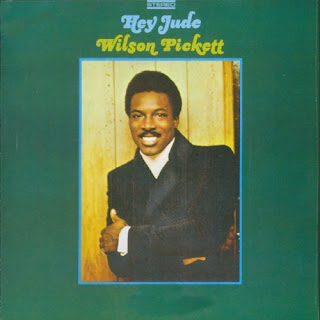
2 Hey Jude (Lennon, McCartney) 4:07
3 Back in Your Arms (Chambers, Jackson, Leakes, Moore) 2:57
4 Toe Hold (Hayes, Porter) 2:50
5 Night Owl (Covay) 2:22
6 My Own Style of Loving (Fame, Jackson, Leakes, Moore) 2:44
7 A Man and a Half (Chambers, Jackson, Leakes, Moore) 2:52 8 Sit Down and Talk This Over (Pickett, Pickett, Womack) 2:21
9 Search Your Heart (Jackson, Moore) 2:46
10 Born to Be Wild (Bonfire) 2:46
11 People Make the World (Womack) 2:46
-----
MUSICIANS
(Tom Dowd Producer)
Duane Allman Guitar
Joe Arnold Saxophone, Sax (Tenor)
Barry Beckett Piano, Keyboards
Roger Hawkins Drums
David Hood Bass
Gerald Jemmott Bass
Jimmy Johnson Guitar
Albert Lowe Guitar
Gene Miller Trumpet
James Mitchell Sax (Baritone)
Jack Peck Trumpet
Wilson Pickett Vocals
The Sweet Inspirations Vocals, Vocals (bckgr)
Marvell Thomas Organ
Aaron Varnell Saxophone, Sax (Tenor)
Hey Jude LP Download
TRACKS
1 Save Me (Greer, Jackson) 2:37
2 Hey Jude (Lennon, McCartney) 4:07
3 Back in Your Arms (Chambers, Jackson, Leakes, Moore) 2:57
4 Toe Hold (Hayes, Porter) 2:50
5 Night Owl (Covay) 2:22
6 My Own Style of Loving (Fame, Jackson, Leakes, Moore) 2:44
7 A Man and a Half (Chambers, Jackson, Leakes, Moore) 2:52 8 Sit Down and Talk This Over (Pickett, Pickett, Womack) 2:21
9 Search Your Heart (Jackson, Moore) 2:46
10 Born to Be Wild (Bonfire) 2:46
11 People Make the World (Womack) 2:46
-----
MUSICIANS
(Tom Dowd Producer)
Duane Allman Guitar
Joe Arnold Saxophone, Sax (Tenor)
Barry Beckett Piano, Keyboards
Roger Hawkins Drums
David Hood Bass
Gerald Jemmott Bass
Jimmy Johnson Guitar
Albert Lowe Guitar
Gene Miller Trumpet
James Mitchell Sax (Baritone)
Jack Peck Trumpet
Wilson Pickett Vocals
The Sweet Inspirations Vocals, Vocals (bckgr)
Marvell Thomas Organ
Aaron Varnell Saxophone, Sax (Tenor)
Hey Jude LP Download

10/30/09
Alabama Soul
Sorry sorry..just had to upload this.
I guess you know the history of how Eric Clapton had heard of Duane....Anyways it was this rockin' guitar solo at the end of Picketts cover of "Hey Jude" that first impressed good ol' EC so much.
This was just one of the amazing Muscle Shoals recordings at Fame studios.
The Muscle Shoals Rhythm Section, also known as The Swampers was the band.
 TRACKS
1 Save Me (Greer, Jackson) 2:37
2 Hey Jude (Lennon, McCartney) 4:07
3 Back in Your Arms (Chambers, Jackson, Leakes, Moore) 2:57
4 Toe Hold (Hayes, Porter) 2:50
5 Night Owl (Covay) 2:22
6 My Own Style of Loving (Fame, Jackson, Leakes, Moore) 2:44
7 A Man and a Half (Chambers, Jackson, Leakes, Moore) 2:52 8 Sit Down and Talk This Over (Pickett, Pickett, Womack) 2:21
9 Search Your Heart (Jackson, Moore) 2:46
10 Born to Be Wild (Bonfire) 2:46
11 People Make the World (Womack) 2:46
-----
MUSICIANS
(Tom Dowd Producer)
Duane Allman Guitar
Joe Arnold Saxophone, Sax (Tenor)
Barry Beckett Piano, Keyboards
Roger Hawkins Drums
David Hood Bass
Gerald Jemmott Bass
Jimmy Johnson Guitar
Albert Lowe Guitar
Gene Miller Trumpet
James Mitchell Sax (Baritone)
Jack Peck Trumpet
Wilson Pickett Vocals
The Sweet Inspirations Vocals, Vocals (bckgr)
Marvell Thomas Organ
Aaron Varnell Saxophone, Sax (Tenor)
Hey Jude LP Download
TRACKS
1 Save Me (Greer, Jackson) 2:37
2 Hey Jude (Lennon, McCartney) 4:07
3 Back in Your Arms (Chambers, Jackson, Leakes, Moore) 2:57
4 Toe Hold (Hayes, Porter) 2:50
5 Night Owl (Covay) 2:22
6 My Own Style of Loving (Fame, Jackson, Leakes, Moore) 2:44
7 A Man and a Half (Chambers, Jackson, Leakes, Moore) 2:52 8 Sit Down and Talk This Over (Pickett, Pickett, Womack) 2:21
9 Search Your Heart (Jackson, Moore) 2:46
10 Born to Be Wild (Bonfire) 2:46
11 People Make the World (Womack) 2:46
-----
MUSICIANS
(Tom Dowd Producer)
Duane Allman Guitar
Joe Arnold Saxophone, Sax (Tenor)
Barry Beckett Piano, Keyboards
Roger Hawkins Drums
David Hood Bass
Gerald Jemmott Bass
Jimmy Johnson Guitar
Albert Lowe Guitar
Gene Miller Trumpet
James Mitchell Sax (Baritone)
Jack Peck Trumpet
Wilson Pickett Vocals
The Sweet Inspirations Vocals, Vocals (bckgr)
Marvell Thomas Organ
Aaron Varnell Saxophone, Sax (Tenor)
Hey Jude LP Download
TRACKS
1 Save Me (Greer, Jackson) 2:37
2 Hey Jude (Lennon, McCartney) 4:07
3 Back in Your Arms (Chambers, Jackson, Leakes, Moore) 2:57
4 Toe Hold (Hayes, Porter) 2:50
5 Night Owl (Covay) 2:22
6 My Own Style of Loving (Fame, Jackson, Leakes, Moore) 2:44
7 A Man and a Half (Chambers, Jackson, Leakes, Moore) 2:52 8 Sit Down and Talk This Over (Pickett, Pickett, Womack) 2:21
9 Search Your Heart (Jackson, Moore) 2:46
10 Born to Be Wild (Bonfire) 2:46
11 People Make the World (Womack) 2:46
-----
MUSICIANS
(Tom Dowd Producer)
Duane Allman Guitar
Joe Arnold Saxophone, Sax (Tenor)
Barry Beckett Piano, Keyboards
Roger Hawkins Drums
David Hood Bass
Gerald Jemmott Bass
Jimmy Johnson Guitar
Albert Lowe Guitar
Gene Miller Trumpet
James Mitchell Sax (Baritone)
Jack Peck Trumpet
Wilson Pickett Vocals
The Sweet Inspirations Vocals, Vocals (bckgr)
Marvell Thomas Organ
Aaron Varnell Saxophone, Sax (Tenor)
Hey Jude LP Download

Layla Dissected
(an amazing clip of Layla dissected track by track. I just wonder how the band really felt at the time being directed under a major label's grasp? Sure worked out in the end.)
A man who seemingly fit many lives into one lifetime, Tom Dowd was born on October 20, 1925 in New York City. At a young age he excelled in mathematics and physics, leading to his work from the ages of 16 to 20 on the Manhattan Project at Columbia University. In 1946, as a sergeant in the Army Corps of Engineers, he oversaw a team of radiation detection specialists at the atomic bomb tests in Bikini Atoll. After his discharge from Army, he soon began applying his science background to help revolutionize the process of recording music. While working for Atlantic Records, his pioneering work in binaural stereo recording, and later his design of the eight-track console, modernized the recording industry.
Tom Dowd produced and engineered timeless records for artists including Ray Charles, Aretha Franklin, Otis Redding, John Coltrane, Dizzy Gillespie, Thelonius Monk, Cream, Rod Stewart, Lynyrd Skynyrd, The Allman Brothers Band, Dusty Springfield and countless other celebrated musicians. Dowd also formed both strong professional and personal relationships with many of these artists, including Eric Clapton, starting with Cream and leading to their working partnership on Layla and Other Assorted Loves Songs and collaborations on several of Clapton's finest solo albums.
Tom Dowd passed away on October 27, 2002, one week after his 77th birthday. He will never be forgotten.
10/29/09
Digging Through The Closet.....
 and an urge to headphone at high volumes...
Stranglehold etc.
For You...
After disintegrating the Amboy Dukes in the early '70s, Ted Nugent finally decided to strike out on his own as a solo star.
Even without a recording contract, Nugent toured constantly, built up a fervent following, and created a smoking hard rock quartet with the help of singer/guitarist Derek St. Holmes, bassist Rob Grange, and drummer Cliff Davies.
The band's first release, 1975's Ted Nugent, is a prime slice of testosterone-heavy, raging, unapologetic rock & roll, and along with the band's 1977 release Cat Scratch Fever, it is Nugent's best solo studio album.
by Greg Prato (allmusic.com)
and an urge to headphone at high volumes...
Stranglehold etc.
For You...
After disintegrating the Amboy Dukes in the early '70s, Ted Nugent finally decided to strike out on his own as a solo star.
Even without a recording contract, Nugent toured constantly, built up a fervent following, and created a smoking hard rock quartet with the help of singer/guitarist Derek St. Holmes, bassist Rob Grange, and drummer Cliff Davies.
The band's first release, 1975's Ted Nugent, is a prime slice of testosterone-heavy, raging, unapologetic rock & roll, and along with the band's 1977 release Cat Scratch Fever, it is Nugent's best solo studio album.
by Greg Prato (allmusic.com)
10/27/09
New Samsung Blue Earth Solar-Powered Cell Phone
 Sure, gadgets never stop improving, but Samsung just upped the bar if their new Blue Earth touch phone proves it can handle real-life applications. The phone features a solar panel that provides 10 minutes of talk time per hour of direct sunlight charge. With a Palm Pilot/iPhone-look, the Blue Earth phone is sleek and attractive. One blog ranked the solar product’s color schemes as the best they had ever seen. Eco-hip, here we come.
more....
Sure, gadgets never stop improving, but Samsung just upped the bar if their new Blue Earth touch phone proves it can handle real-life applications. The phone features a solar panel that provides 10 minutes of talk time per hour of direct sunlight charge. With a Palm Pilot/iPhone-look, the Blue Earth phone is sleek and attractive. One blog ranked the solar product’s color schemes as the best they had ever seen. Eco-hip, here we come.
more....
10/23/09

Where the Wild Things Are
 Creating a film adaptation of a beloved work of literature is difficult enough with a novel, even a novella or short story. But how about a 10-line children's book? Spike Jonze took on that challenge in his long battle to bring Maurice Sendak's classic Where the Wild Things Are to the screen. With Sendak's encouragement, Jonze began work on the film in the early part of this decade, with the project then attached to Universal. Many years later, the film-- eventually scripted by Jonze and author/publisher Dave Eggers-- is finally being released in the U.S. via Warner Bros. on October 16.
 Jonze's Where the Wild Things Are is not a children's film, which is to say it's not pandering, or cute, or repetitive, or simplistic. This is instead an art film about childhood, about the feelings and fears and needs of being young. In Jonze's hands, the film's young protagonist, Max, is the product of a broken home, with an overstretched mother, an older sister who has her own life, and a social structure that doesn't include him. These evocative early passages hint at the restlessness, the playfulness, the fright, and the untethered anger of being a child-- the needs for safety, belonging, and community, and the consequences of not getting them.
When Max flees to where the wild things are, these sensations become manifest. Already feeling adrift and unloved, he's thrust into a world populated with wild animals, where he is expected to serve as their king. This situation-- a young person being charged with caretaking, without instruction on how to do so-- draws easy parallels to Eggers' life, as detailed in the memoir, A Heartbreaking Work of Staggering Genius. The wild things themselves, rather than created with CGI, are portrayed by two sets of actors-- physical thesps in suits, and well-known actors doing voice work. As Jonze explains, this decision was to ensure that Max felt in the presence of the wild things-- "that they could hug, and yet he could be eaten at any time."
Jonze's Where the Wild Things Are is not a children's film, which is to say it's not pandering, or cute, or repetitive, or simplistic. This is instead an art film about childhood, about the feelings and fears and needs of being young. In Jonze's hands, the film's young protagonist, Max, is the product of a broken home, with an overstretched mother, an older sister who has her own life, and a social structure that doesn't include him. These evocative early passages hint at the restlessness, the playfulness, the fright, and the untethered anger of being a child-- the needs for safety, belonging, and community, and the consequences of not getting them.
When Max flees to where the wild things are, these sensations become manifest. Already feeling adrift and unloved, he's thrust into a world populated with wild animals, where he is expected to serve as their king. This situation-- a young person being charged with caretaking, without instruction on how to do so-- draws easy parallels to Eggers' life, as detailed in the memoir, A Heartbreaking Work of Staggering Genius. The wild things themselves, rather than created with CGI, are portrayed by two sets of actors-- physical thesps in suits, and well-known actors doing voice work. As Jonze explains, this decision was to ensure that Max felt in the presence of the wild things-- "that they could hug, and yet he could be eaten at any time."
 This potentially odd decision leads to a quintessential Jonze move-- Wild Things is a fantastical film shot in the director's now-familiar hyperrealist way-- even though it grew from necessity. Navigating a world in which a child needs the love and support of monsters is all too common for many kids, and Jonze's rendering of these emotional challenges and obstacles may guarantee Wild Things is neither a blockbuster nor Oscar bait but it helps retain a strong connection to Sendak's original vision. Jonze and Eggers had an almost limitless number of ways in which they could fill in this open-ended story, but rather than simply construct a narrative, they instead dig deeply into the scarred psyche of a young boy-- exploring his imagination, tapping into the heart of his anger and insecurities. It's a brave way to film a largely plot-free tale and it's also true to the spirit of the book.
After a recent screening to benefit 826 National, a collection of non-profits "dedicated to helping students, ages 6-18, with expository and creative writing," we had a brief opportunity to speak with Jonze about his new film and the long road it took to completion.
Pitchfork: I'm not sure if you were in the theater tonight. Do you enjoy watching your art with an audience?
Spike Jonze: When we put out a music video DVD [for the Director's Label series], we would do 90-minute screenings, and those were really fun. Normally when you put it out you don't get to watch different people, so that's just really fun.
Pitchfork: I was trying to think of anything in your past that had any connection to this narrative, and the one thing I could think of was your Daft Punk "Da Funk" video, because it's a mirror image opposite of Where the Wild Things Are-- one animal in a world of humans.
Trailer here;
SJ: Yeah, I never thought about that.
Pitchfork: Obviously, the story itself comes from Maurice Sendak however: How did you end up hooking up with Maurice?
SJ: I had known him for a number of years, because he was producing another movie that didn't end up happening, but through that I got to see him as someone whose work I liked.
It was a book that he had talked to me about over the years a few times, and it was a book that I loved, and when he brought it up to me I was very excited but also very apprehensive, because it was something that I thought was so great and so perfect in its form-- What am I going to add to that? I was so apprehensive to add something just for the sake of adding it, for the sake of a movie, and not really having a reason to make it, basically. But eventually I came up with the idea that you see what you see there, and Maurice was great, he was insistent upon that taking it there.
Pitchfork: He was very generous about allowing you to create your own film?
SJ: Yeah, I really don't think we could have done it without that. I would have been too nervous to make something he wouldn't like. And I didn't want to do that.
We were really nervous with the first script, because we didn't know what he would think. He read it three times in a row. The first time he read it, he was like, "It's not like my book." And then he said, "Oh wait, I told them not to make it like my book." And then he said, "Let me read it again," and he started to be able to feel it. By the third time, he was totally detached from anything before, and was able to feel it for what it was, and he called us up and told us he wanted to do it.
He had script approval, so if he didn't like it, we just wouldn't have done it. So it was a big call to get that call from him telling us that he liked it, and good luck.
Pitchfork: How long was that gap between those readings?
SJ: He read it three times in one day.
Pitchfork: So he called you after the first reading, and said--
SJ: No, luckily he didn't call us then. He went through that process on his own and called us, and then afterward he told me.
Pitchfork: When you first started to imagine it, did you do so in more cinematic terms or narrative terms? It's virtually a picture book, and some of the power of it is that it's less a book someone would read to you as it is a book that a child can get lost in.
SJ: Well, cinematic terms. I knew I wanted it to be live action; I wanted to build the wild things for real. I wanted to be on location. I wanted it to be a real boy with real creatures, in a dangerous, unpredictable environment, where you're with wild animals. But that wasn't enough to make a movie. It was more the idea that gave me confidence that there was a movie there was that the wild creatures were wild emotions, and Max was trying to understand things that were confusing and frightening, and made him anxious-- things being out of control, and him being sort of emotionally wild himself.
Pitchfork: Did you see it as a childhood thing, in terms of the emotions, or are these more just human emotions to you? The adult relationships in the film have the same needs and fears in some ways.
SJ: The emotions I felt were true to a child, were true to what it feels like to be a kid. What the world is like from a nine-year-old's point of view. Like when you're nine, you haven't figured out how to process all this.
My memory is that nothing is explained to you, you've got to try to figure it out, pick up clues from the people around you, try to figure it out from their reactions. And the things that are out of control are scary-- I mean they still are, to me. But I think even more so at that age, when you really have no sense of control of your life.
And so the things that are really out of control, and scary, are emotions-- of people around you, that are unpredictable, or those in yourself which are unpredictable. Like having a tantrum. The thing I remember most about having a tantrum is not the rage during the tantrum, but the being freaked out afterwards, and embarrassed, and guilty. It's scary, to lose control of yourself. We wanted the movie to feel like it was made by a nine-year-old, on some levels. So like you're in the headspace of a nine-year-old, and you're in the world, you're on the island with Max, trying to understand this foreign place. It kind of feels like being a kid, you've just shown up to this place, and there's no road map to it.
Pitchfork: Were there other examples of children's art that you were looking at? Things that were sort of about childhood, rather than for a child?
SJ: It wasn't so much that we looked at them; there's things that we knew did it right, but we didn't reference them, we went back and watched them. Like The Black Stallion, that I loved, in 1981, it's beautiful. My Life as a Dog. The 400 Blows. there are a couple others, just films that feel like they're from a kid's point of view looking at the world.
Pitchfork: How did you and Dave Eggers end up working together?
SJ: Because I had known him for a few years, and I love his writing, and just like him as a person. It just felt right, it was one of those intuitive things, like, "That's who I want to write this with." Just sensibility-wise, his first book, the way he wrote about a young character. I don't know, just the way he writes, and we're very similar, we're the same age, just the way we grew up influenced and in love with Maurice's work. It wasn't even too thought out, it was just like, "That's right."
Pitchfork: Talking about your ages. Do you think there is something about this story that makes it so beloved with our generation specifically?
SJ: I'm not even sure if it's just our generation. I think it might be that if you're five years old and you read that book, you're like, "I recognize that." It's in the language of a kid, of monsters and of things being giant. And it's like when you're a kid, adults really do feel giant. Monsters are a part of your subconscious. You have even less control of your emotions than you do now. I think it's all in the book. And he is really speaking the language and what it feels like at that age.
Pitchfork: So you guys had almost an open-ended structure to build a narrative. Was all that freedom helpful, or more difficult? Did you go a lot of different routes before you got the script you wanted?
SJ: Not a lot of different routes, but we definitely wrote a lot of different drafts. We shot, and then had the footage... the way I work, I like to constantly evolve, and try to find a better way to do something; searching and seeing what else can be discovered. And so yeah, there were many things where we were like "That's an amazing idea!" and that was it for a week and then "No, no this is a better idea!"
Along the way, the things that stay are the things that really deserve to stay. I love that process, of not feeling overly pressured, "this is the movie," and some people can do that, like the Coen brothers, their movies I think they write, the script they write is very, very close to the movie they put out. And they shoot exactly what they need, you know I probably shoot about four times as much film as them. They're like, "Oh, we got it." And I'm like, "Oh, what else can we do? And what if we try it this way?"
You take that leap and you don't know exactly how it's going to turn out, but you know what it is that you're aiming for. You know your goal.
via
Maurice Sendak
This potentially odd decision leads to a quintessential Jonze move-- Wild Things is a fantastical film shot in the director's now-familiar hyperrealist way-- even though it grew from necessity. Navigating a world in which a child needs the love and support of monsters is all too common for many kids, and Jonze's rendering of these emotional challenges and obstacles may guarantee Wild Things is neither a blockbuster nor Oscar bait but it helps retain a strong connection to Sendak's original vision. Jonze and Eggers had an almost limitless number of ways in which they could fill in this open-ended story, but rather than simply construct a narrative, they instead dig deeply into the scarred psyche of a young boy-- exploring his imagination, tapping into the heart of his anger and insecurities. It's a brave way to film a largely plot-free tale and it's also true to the spirit of the book.
After a recent screening to benefit 826 National, a collection of non-profits "dedicated to helping students, ages 6-18, with expository and creative writing," we had a brief opportunity to speak with Jonze about his new film and the long road it took to completion.
Pitchfork: I'm not sure if you were in the theater tonight. Do you enjoy watching your art with an audience?
Spike Jonze: When we put out a music video DVD [for the Director's Label series], we would do 90-minute screenings, and those were really fun. Normally when you put it out you don't get to watch different people, so that's just really fun.
Pitchfork: I was trying to think of anything in your past that had any connection to this narrative, and the one thing I could think of was your Daft Punk "Da Funk" video, because it's a mirror image opposite of Where the Wild Things Are-- one animal in a world of humans.
Trailer here;
SJ: Yeah, I never thought about that.
Pitchfork: Obviously, the story itself comes from Maurice Sendak however: How did you end up hooking up with Maurice?
SJ: I had known him for a number of years, because he was producing another movie that didn't end up happening, but through that I got to see him as someone whose work I liked.
It was a book that he had talked to me about over the years a few times, and it was a book that I loved, and when he brought it up to me I was very excited but also very apprehensive, because it was something that I thought was so great and so perfect in its form-- What am I going to add to that? I was so apprehensive to add something just for the sake of adding it, for the sake of a movie, and not really having a reason to make it, basically. But eventually I came up with the idea that you see what you see there, and Maurice was great, he was insistent upon that taking it there.
Pitchfork: He was very generous about allowing you to create your own film?
SJ: Yeah, I really don't think we could have done it without that. I would have been too nervous to make something he wouldn't like. And I didn't want to do that.
We were really nervous with the first script, because we didn't know what he would think. He read it three times in a row. The first time he read it, he was like, "It's not like my book." And then he said, "Oh wait, I told them not to make it like my book." And then he said, "Let me read it again," and he started to be able to feel it. By the third time, he was totally detached from anything before, and was able to feel it for what it was, and he called us up and told us he wanted to do it.
He had script approval, so if he didn't like it, we just wouldn't have done it. So it was a big call to get that call from him telling us that he liked it, and good luck.
Pitchfork: How long was that gap between those readings?
SJ: He read it three times in one day.
Pitchfork: So he called you after the first reading, and said--
SJ: No, luckily he didn't call us then. He went through that process on his own and called us, and then afterward he told me.
Pitchfork: When you first started to imagine it, did you do so in more cinematic terms or narrative terms? It's virtually a picture book, and some of the power of it is that it's less a book someone would read to you as it is a book that a child can get lost in.
SJ: Well, cinematic terms. I knew I wanted it to be live action; I wanted to build the wild things for real. I wanted to be on location. I wanted it to be a real boy with real creatures, in a dangerous, unpredictable environment, where you're with wild animals. But that wasn't enough to make a movie. It was more the idea that gave me confidence that there was a movie there was that the wild creatures were wild emotions, and Max was trying to understand things that were confusing and frightening, and made him anxious-- things being out of control, and him being sort of emotionally wild himself.
Pitchfork: Did you see it as a childhood thing, in terms of the emotions, or are these more just human emotions to you? The adult relationships in the film have the same needs and fears in some ways.
SJ: The emotions I felt were true to a child, were true to what it feels like to be a kid. What the world is like from a nine-year-old's point of view. Like when you're nine, you haven't figured out how to process all this.
My memory is that nothing is explained to you, you've got to try to figure it out, pick up clues from the people around you, try to figure it out from their reactions. And the things that are out of control are scary-- I mean they still are, to me. But I think even more so at that age, when you really have no sense of control of your life.
And so the things that are really out of control, and scary, are emotions-- of people around you, that are unpredictable, or those in yourself which are unpredictable. Like having a tantrum. The thing I remember most about having a tantrum is not the rage during the tantrum, but the being freaked out afterwards, and embarrassed, and guilty. It's scary, to lose control of yourself. We wanted the movie to feel like it was made by a nine-year-old, on some levels. So like you're in the headspace of a nine-year-old, and you're in the world, you're on the island with Max, trying to understand this foreign place. It kind of feels like being a kid, you've just shown up to this place, and there's no road map to it.
Pitchfork: Were there other examples of children's art that you were looking at? Things that were sort of about childhood, rather than for a child?
SJ: It wasn't so much that we looked at them; there's things that we knew did it right, but we didn't reference them, we went back and watched them. Like The Black Stallion, that I loved, in 1981, it's beautiful. My Life as a Dog. The 400 Blows. there are a couple others, just films that feel like they're from a kid's point of view looking at the world.
Pitchfork: How did you and Dave Eggers end up working together?
SJ: Because I had known him for a few years, and I love his writing, and just like him as a person. It just felt right, it was one of those intuitive things, like, "That's who I want to write this with." Just sensibility-wise, his first book, the way he wrote about a young character. I don't know, just the way he writes, and we're very similar, we're the same age, just the way we grew up influenced and in love with Maurice's work. It wasn't even too thought out, it was just like, "That's right."
Pitchfork: Talking about your ages. Do you think there is something about this story that makes it so beloved with our generation specifically?
SJ: I'm not even sure if it's just our generation. I think it might be that if you're five years old and you read that book, you're like, "I recognize that." It's in the language of a kid, of monsters and of things being giant. And it's like when you're a kid, adults really do feel giant. Monsters are a part of your subconscious. You have even less control of your emotions than you do now. I think it's all in the book. And he is really speaking the language and what it feels like at that age.
Pitchfork: So you guys had almost an open-ended structure to build a narrative. Was all that freedom helpful, or more difficult? Did you go a lot of different routes before you got the script you wanted?
SJ: Not a lot of different routes, but we definitely wrote a lot of different drafts. We shot, and then had the footage... the way I work, I like to constantly evolve, and try to find a better way to do something; searching and seeing what else can be discovered. And so yeah, there were many things where we were like "That's an amazing idea!" and that was it for a week and then "No, no this is a better idea!"
Along the way, the things that stay are the things that really deserve to stay. I love that process, of not feeling overly pressured, "this is the movie," and some people can do that, like the Coen brothers, their movies I think they write, the script they write is very, very close to the movie they put out. And they shoot exactly what they need, you know I probably shoot about four times as much film as them. They're like, "Oh, we got it." And I'm like, "Oh, what else can we do? And what if we try it this way?"
You take that leap and you don't know exactly how it's going to turn out, but you know what it is that you're aiming for. You know your goal.
via
Maurice Sendak
10/22/09
A Devil Wind Post of an Extreme Concept Rock LP
 THIS IS NOT A ALBUM FROM THE DEVIL!!
Aphrodite's Child was a Greek rock band formed in 1967, by Vangelis Papathanassiou (keyboards); Demis Roussos (bass guitar and vocals), Loukas Sideras (drums and vocals), and Anargyros "Silver" Koulouris (guitar). This band and especialy this album made vangelis be know by his skills at the keyboard,and he had been invited by Jon Anderson from Yes to replace Rick Wakeman when he left the band.
666 (The Apocalypse of John, 13/18) is a double album by psychedelic/progressive and it is one of the early cult albums in rock history,and is still popular among fans today.It was published in 1972,but was suppose to be released previosly but they had a fight with the record company because of the song '' Infinity'' that was too much ''Unpropried''.
It had a minor Album Oriented Radio hit in "The Four Horsemen," and a nearly pop hit with "Break." The album was ostensibly an adaptation of Biblical passages to discribe the society in many ways.It is very experimental in lyrics and composition, including a curious piece of performance art in which Irene Papas is struggling to chant a mantra while coming to climax.
Disc one
1 - "System" - 00:23
2 - "Babylon" - 2:47
3 - "Loud, Loud, Loud" - 2:42
4 - "The Four Horsemen" - 5:53
5 - "The Lamb" - 4:34
6 - "The Seventh Seal" - 1:30
7 - "Aegian Sea" - 5:22
8 - "Seven Bowls" - 1:28
9 - "The Wakening Beast" - 1:11
10 - "Lament" - 2:45
11 - "The Marching Beast" - 2:00
12 - "The Battle Of The Locusts" - 00:56
13 - "Do It" - 1:44
14 - "Tribulation" - 00:32
15 - "The Beast" - 2:26
16 - "Ofis" - 00:14
Disc two
1 - "Seven Trumpets" - 00:35
2 - "Altamont" - 4:33
3 - "The Wedding of the Lamb" - 3:38
4 - "The Capture of the Beast" - 2:17
5 - "Infinity" - 5:15
6 - "Hic and Nunc" - 2:55
7 - "All the Seats Were Occupied" - 19:21
8 - "Break" - 2:59
Link:
via
note; this is a must have for any space rockin', concept lovin' and anyone who just loves GOOD rock on a big scale.
Also there are certain tracks that scream for a surf soundtrack. (Agean Sea, as well as All The Seats Were Occupied)
THIS IS NOT A ALBUM FROM THE DEVIL!!
Aphrodite's Child was a Greek rock band formed in 1967, by Vangelis Papathanassiou (keyboards); Demis Roussos (bass guitar and vocals), Loukas Sideras (drums and vocals), and Anargyros "Silver" Koulouris (guitar). This band and especialy this album made vangelis be know by his skills at the keyboard,and he had been invited by Jon Anderson from Yes to replace Rick Wakeman when he left the band.
666 (The Apocalypse of John, 13/18) is a double album by psychedelic/progressive and it is one of the early cult albums in rock history,and is still popular among fans today.It was published in 1972,but was suppose to be released previosly but they had a fight with the record company because of the song '' Infinity'' that was too much ''Unpropried''.
It had a minor Album Oriented Radio hit in "The Four Horsemen," and a nearly pop hit with "Break." The album was ostensibly an adaptation of Biblical passages to discribe the society in many ways.It is very experimental in lyrics and composition, including a curious piece of performance art in which Irene Papas is struggling to chant a mantra while coming to climax.
Disc one
1 - "System" - 00:23
2 - "Babylon" - 2:47
3 - "Loud, Loud, Loud" - 2:42
4 - "The Four Horsemen" - 5:53
5 - "The Lamb" - 4:34
6 - "The Seventh Seal" - 1:30
7 - "Aegian Sea" - 5:22
8 - "Seven Bowls" - 1:28
9 - "The Wakening Beast" - 1:11
10 - "Lament" - 2:45
11 - "The Marching Beast" - 2:00
12 - "The Battle Of The Locusts" - 00:56
13 - "Do It" - 1:44
14 - "Tribulation" - 00:32
15 - "The Beast" - 2:26
16 - "Ofis" - 00:14
Disc two
1 - "Seven Trumpets" - 00:35
2 - "Altamont" - 4:33
3 - "The Wedding of the Lamb" - 3:38
4 - "The Capture of the Beast" - 2:17
5 - "Infinity" - 5:15
6 - "Hic and Nunc" - 2:55
7 - "All the Seats Were Occupied" - 19:21
8 - "Break" - 2:59
Link:
via
note; this is a must have for any space rockin', concept lovin' and anyone who just loves GOOD rock on a big scale.
Also there are certain tracks that scream for a surf soundtrack. (Agean Sea, as well as All The Seats Were Occupied)
10/21/09


Wide Angle - Marine Life


 Self-taught plastics mensch Dale Kobetich is a household name in surf photography circles. His one-off designs were sculptural, functional, and absolutely purpose-built for capturing surfing moments from the water. Chances are, your favorite period water shot was taken with one of his glass-and-epoxy creations. During the 1980s, he all but held a monopoly on the custom waterproof housing market. But when you mention his name to any working surf shooter today, it ’s not his housings that they think of first…
via the SJ feature; Volume 14 NO. 3 - Summer '05
Dale Kobetich Profile
also see the macro panoramas here
Self-taught plastics mensch Dale Kobetich is a household name in surf photography circles. His one-off designs were sculptural, functional, and absolutely purpose-built for capturing surfing moments from the water. Chances are, your favorite period water shot was taken with one of his glass-and-epoxy creations. During the 1980s, he all but held a monopoly on the custom waterproof housing market. But when you mention his name to any working surf shooter today, it ’s not his housings that they think of first…
via the SJ feature; Volume 14 NO. 3 - Summer '05
Dale Kobetich Profile
also see the macro panoramas here
10/20/09
Off The Menu

 Taking the chance on a freak location can sometimes be fruitful. Usually not.
It's a matter of many failures until, eventually the planets do align, your timing is
right and a new taste immerses the palette.
Taking the chance on a freak location can sometimes be fruitful. Usually not.
It's a matter of many failures until, eventually the planets do align, your timing is
right and a new taste immerses the palette.
Classic Cover Albums (series #1)
 One day in a Chicago record store I picked up my first Bryan Ferry solo album, Let's Stick Together, a 1976 collection of mostly solo singles and B-sides from the preceding years that signalled the band's first breakup/hiatus. Although it's a patchwork collection of recordings, over the years I have found this album to be as coherent as any original album involving Ferry.
This was a better purchase than I could have imagined. I was beginning to develop my stance that I preferred Ferry's warbling croon to Bowie's, and I liked the cover shot. I was also curious to hear why Ferry thought it necessary to cover five Roxy Music songs. My friend never played me this album - I don't think he even owned it! Maybe this would be my chance to teach my master a lesson.
I couldn't wait to get back to my dorm room and check out this album. Before I had a chance to ponder Ferry's Roxy Music covers with the originals, however, I was pumping my fist to the fat pinky rock of the title track. With goonish drummer Paul Thompson, Roxy Music was always able to tap into The Power and Glory of Rock, but never before had they so fully tapped into the Meat and Potatoes of Rock. With Phil Manzanera, the funniest guitarist in rock; Andy MacKay on woodwinds; and Eno or Eddie Jobson, Roxy Music could push well past the edges of Thompson's charging beats, but the band's attempts at more soulful, chugging rock, like "Do the Strand," couldn't help but be something gloriously wrong. With Thomspon drumming on Let's Stick Together and Chris Spedding the primary guitarist (King Crimson buddies John Wetton and Mel Collins fill out most of the bass and sax responsibilities, respectively, with contributions by Manzanera, Jobson, early Roxy guitarist David O'List, and a number of non-official Roxy bassists) Ferry is able to live out seemingly every British rocker's dream as an honest-to-goodness soul man.
text via...
Listen to samples on podcast y yootoob>>>>
One day in a Chicago record store I picked up my first Bryan Ferry solo album, Let's Stick Together, a 1976 collection of mostly solo singles and B-sides from the preceding years that signalled the band's first breakup/hiatus. Although it's a patchwork collection of recordings, over the years I have found this album to be as coherent as any original album involving Ferry.
This was a better purchase than I could have imagined. I was beginning to develop my stance that I preferred Ferry's warbling croon to Bowie's, and I liked the cover shot. I was also curious to hear why Ferry thought it necessary to cover five Roxy Music songs. My friend never played me this album - I don't think he even owned it! Maybe this would be my chance to teach my master a lesson.
I couldn't wait to get back to my dorm room and check out this album. Before I had a chance to ponder Ferry's Roxy Music covers with the originals, however, I was pumping my fist to the fat pinky rock of the title track. With goonish drummer Paul Thompson, Roxy Music was always able to tap into The Power and Glory of Rock, but never before had they so fully tapped into the Meat and Potatoes of Rock. With Phil Manzanera, the funniest guitarist in rock; Andy MacKay on woodwinds; and Eno or Eddie Jobson, Roxy Music could push well past the edges of Thompson's charging beats, but the band's attempts at more soulful, chugging rock, like "Do the Strand," couldn't help but be something gloriously wrong. With Thomspon drumming on Let's Stick Together and Chris Spedding the primary guitarist (King Crimson buddies John Wetton and Mel Collins fill out most of the bass and sax responsibilities, respectively, with contributions by Manzanera, Jobson, early Roxy guitarist David O'List, and a number of non-official Roxy bassists) Ferry is able to live out seemingly every British rocker's dream as an honest-to-goodness soul man.
text via...
Listen to samples on podcast y yootoob>>>>
 Download Lets Stick Together
10/19/09
The Flaming Lips - Embryonic (2009)
 Over its seven-year gestation, Christmas on Mars had come to represent everything wonderful and frustrating about the Flaming Lips. As much as we loved the idea of Wayne Coyne producing a sci-fi flick in his backyard with hardware-store materials, the Lips' musical production became less frequent-- and less consistent-- during its making. 2006's scattershot At War With the Mystics tried to cut down on the lightness of their two previous landmark albums but was largely overwhelmed by cloying singles ("The Yeah Yeah Yeah Song", "Free Radicals") that felt like little more than excuses to shoot off their confetti cannons. The trio's desire to produce crowd-pleasing spectacle-- whether on stage or on film-- had seemingly taken priority over their desire to be a band.
But when Christmas on Mars finally surfaced in late 2008, it came with a peace offering to fans longing for a return to the band's bizarro roots: a full-length soundtrack of unsettling instrumentals that conjured the film's icy desolation. Now, rather than close a chapter on this seven-year saga, the Flaming Lips have taken a dramatic left turn with their Mystics follow-up-- the double album Embryonic is the band's most audacious undertaking since 1997's Zaireeka. The sprawling 70-minute marathon ruminates on themes of madness, isolation, and hallucinogenic horror, translating them into an unrelentingly paranoid, static-soaked acid-rock epic. Embryonic actually feels like it was produced in one of Christmas on Mars' hermetic space-station labs, with squelching equipment that takes a few moments to warm up and frequent instructional studio chatter that gives the impression of a subject under observation.
There's a raw directness to Embryonic that's been largely absent from Lips records since the mid-90s. For the first time in years, they've made an album that actually sounds like a band playing live together in a small room. In light of Mystics' overly processed, grab-bag quality, the holistic, audio-vérité approach on display here is remarkable-- the record is extremely dense, initially overwhelming, but unusually rewarding upon repeat listens. Like the double-disc, high-concept rock epics of yore (think Physical Graffiti or Bitches Brew), it captures them at their most sprawling and ambitious, boldly pushing themselves towards more adventurous horizons.
Musically, too, Embryonic leans heavily on the Lips' formative 60s/70s psych-rock influence (like In a Priest Driven Ambulance's "Take Meta Mars" before it, Embryonic's formidable opener "Convinced of the Hex" grooves heavily on Can's "Mushroom"), but never before has the band recorded an album so unwaveringly sinister, or so devoid of pop-song levity. (Hell, even Zaireeka had "The Big Ol' Bug Is the New Baby Now".) Wayne Coyne no longer assumes the role of the endearingly creaky, puppet-toting crooner. Instead, he's a world-weary fatalist describing scenes of environmental holocaust in a chillingly unaffected monotone on the rampaging "See the Leaves". Or he's a cult leader deviously summoning his minions on "Sagittarius Silver Announcement", before leading them to a fiery demise on the monstrous, stoner-metal onslaught of "Worm Mountain" (featuring fuzzbox-stomping assistance from MGMT). The atmosphere of dread reaches its fever pitch in the album's spellbinding seven-minute centerpiece "Powerless", where, over top a coolly ominous bass riff, Coyne's nervous verses yield to a Syd Barrett-on-Mandrax guitar freak out.
There are brief respites amid Embryonic's thundering eruptions, but even these carry a calm-before-the-storm unease: On paper, "I Can Be a Frog" reads like another of Coyne's animal-populated nursery rhymes, but the foreboding orchestration and giggly background squawks (courtesy of Karen O) render it too creepy for kindergarten. And the vocoderized lullaby "The Impulse" serves only to make the screaming intro to strobe-lit freakout "Silver Trembling Hands" all the more startling. True to an album named Embryonic, there are tracks that aren't fully formed (namely, the drunken Bonham stumble of "Your Bats" or the free-psych splatter of "Scorpio Swords"), but even in its slighter moments, Embryonic exhibits a renewed sense of fearless freakery for a band who so recently threatened to lapse into stagy routine.
"I wish I could go back, go back in time," Coyne sings on "Evil", Embryonic's most conventionally Lips-ian ballad, but the nostalgic impulse is immediately undercut by the admission that "no one really ever can." Perhaps Coyne is anticipating the confused reactions of recent Lips converts expecting more life-affirming anthems along the lines of "Do You Realize??" or "Race for the Prize". But given the band's history, Embryonic's sea change arrives right on time to herald a new Flaming Lips for a new decade. Back in 1990, In a Priest Driven Ambulance signaled the Lips' transformation from garage-punk misfits into a splendorous, kaleidoscopic rock outfit; 1999's The Soft Bulletin reconfigured them once again into a sophisticated, sincere symphonic-pop troupe bestowed with increasing commercial acclaim and street-naming ceremonies in their honor. We can only hope that, as we enter the 2010s, Embryonic portends yet another new phase for the Flaming Lips-- one that's equally as improbable and rewarding as the ones that have preceded it.
via
download here;
my note;
Thank god they got away from being so zany and silly, because these 3 are very talented with a perfect understanding of good psychedelic music, strong songwriting and this one has the best production they have done to this day.
my new favorite contemporary LP!
Over its seven-year gestation, Christmas on Mars had come to represent everything wonderful and frustrating about the Flaming Lips. As much as we loved the idea of Wayne Coyne producing a sci-fi flick in his backyard with hardware-store materials, the Lips' musical production became less frequent-- and less consistent-- during its making. 2006's scattershot At War With the Mystics tried to cut down on the lightness of their two previous landmark albums but was largely overwhelmed by cloying singles ("The Yeah Yeah Yeah Song", "Free Radicals") that felt like little more than excuses to shoot off their confetti cannons. The trio's desire to produce crowd-pleasing spectacle-- whether on stage or on film-- had seemingly taken priority over their desire to be a band.
But when Christmas on Mars finally surfaced in late 2008, it came with a peace offering to fans longing for a return to the band's bizarro roots: a full-length soundtrack of unsettling instrumentals that conjured the film's icy desolation. Now, rather than close a chapter on this seven-year saga, the Flaming Lips have taken a dramatic left turn with their Mystics follow-up-- the double album Embryonic is the band's most audacious undertaking since 1997's Zaireeka. The sprawling 70-minute marathon ruminates on themes of madness, isolation, and hallucinogenic horror, translating them into an unrelentingly paranoid, static-soaked acid-rock epic. Embryonic actually feels like it was produced in one of Christmas on Mars' hermetic space-station labs, with squelching equipment that takes a few moments to warm up and frequent instructional studio chatter that gives the impression of a subject under observation.
There's a raw directness to Embryonic that's been largely absent from Lips records since the mid-90s. For the first time in years, they've made an album that actually sounds like a band playing live together in a small room. In light of Mystics' overly processed, grab-bag quality, the holistic, audio-vérité approach on display here is remarkable-- the record is extremely dense, initially overwhelming, but unusually rewarding upon repeat listens. Like the double-disc, high-concept rock epics of yore (think Physical Graffiti or Bitches Brew), it captures them at their most sprawling and ambitious, boldly pushing themselves towards more adventurous horizons.
Musically, too, Embryonic leans heavily on the Lips' formative 60s/70s psych-rock influence (like In a Priest Driven Ambulance's "Take Meta Mars" before it, Embryonic's formidable opener "Convinced of the Hex" grooves heavily on Can's "Mushroom"), but never before has the band recorded an album so unwaveringly sinister, or so devoid of pop-song levity. (Hell, even Zaireeka had "The Big Ol' Bug Is the New Baby Now".) Wayne Coyne no longer assumes the role of the endearingly creaky, puppet-toting crooner. Instead, he's a world-weary fatalist describing scenes of environmental holocaust in a chillingly unaffected monotone on the rampaging "See the Leaves". Or he's a cult leader deviously summoning his minions on "Sagittarius Silver Announcement", before leading them to a fiery demise on the monstrous, stoner-metal onslaught of "Worm Mountain" (featuring fuzzbox-stomping assistance from MGMT). The atmosphere of dread reaches its fever pitch in the album's spellbinding seven-minute centerpiece "Powerless", where, over top a coolly ominous bass riff, Coyne's nervous verses yield to a Syd Barrett-on-Mandrax guitar freak out.
There are brief respites amid Embryonic's thundering eruptions, but even these carry a calm-before-the-storm unease: On paper, "I Can Be a Frog" reads like another of Coyne's animal-populated nursery rhymes, but the foreboding orchestration and giggly background squawks (courtesy of Karen O) render it too creepy for kindergarten. And the vocoderized lullaby "The Impulse" serves only to make the screaming intro to strobe-lit freakout "Silver Trembling Hands" all the more startling. True to an album named Embryonic, there are tracks that aren't fully formed (namely, the drunken Bonham stumble of "Your Bats" or the free-psych splatter of "Scorpio Swords"), but even in its slighter moments, Embryonic exhibits a renewed sense of fearless freakery for a band who so recently threatened to lapse into stagy routine.
"I wish I could go back, go back in time," Coyne sings on "Evil", Embryonic's most conventionally Lips-ian ballad, but the nostalgic impulse is immediately undercut by the admission that "no one really ever can." Perhaps Coyne is anticipating the confused reactions of recent Lips converts expecting more life-affirming anthems along the lines of "Do You Realize??" or "Race for the Prize". But given the band's history, Embryonic's sea change arrives right on time to herald a new Flaming Lips for a new decade. Back in 1990, In a Priest Driven Ambulance signaled the Lips' transformation from garage-punk misfits into a splendorous, kaleidoscopic rock outfit; 1999's The Soft Bulletin reconfigured them once again into a sophisticated, sincere symphonic-pop troupe bestowed with increasing commercial acclaim and street-naming ceremonies in their honor. We can only hope that, as we enter the 2010s, Embryonic portends yet another new phase for the Flaming Lips-- one that's equally as improbable and rewarding as the ones that have preceded it.
via
download here;
my note;
Thank god they got away from being so zany and silly, because these 3 are very talented with a perfect understanding of good psychedelic music, strong songwriting and this one has the best production they have done to this day.
my new favorite contemporary LP!
A Psychological Fantasy Adventure Featuring The Flaming Lips
Christmas on Mars is a film written and directed by Flaming Lips frontman Wayne Coyne. It features the entire band and many of their associates as actors (including Steve Burns,Adam Goldberg, and Fred Armisen).It started development in 2001. Filming was completed in October 2005, and the film premiered on May 25, 2008 at the Sasquatch Music Festival.
The film tells the story of the experiences of Major Syrtis during the first Christmas on a newly-colonized Mars. Coyne has described the film as "Maybe Eraserhead or Dead Man crossed with some kind of fantasy and space aspects, like The Wizard of Oz and maybe A Space Odyssey, and set at Christmas-time.
The main character, Major Syrtis (played by Steven Drozd, the band's multi-instrumentalist and arranger/composer), is trying to organise a Christmas pageant to celebrate the birth of the first colonist baby. Coyne explains that this birth is also special for other reasons, "The hype they've added to this Mars mission is that this beautiful woman is giving birth to this sort of artificial impregnation from this bubble that she wears on her stomach, which is the way infants are gonna be born in the future. It's all scientifically timed so she gives birth to this baby the second it hits midnight on Christmas. So it's symbolically the beginning of a new civilization. But instead of being born from religious ideas it's born from a science idea."
2008 Christmas on Mars Interview video;
and....
"Against a background of descending madness, Major Syrtis is trying to use the pageant to provide hope amongst the colonists, and the film tells the story of his struggle. You see his humiliation and his self-doubt because there are all these haphazard things that keep getting in the way of his determination to celebrate this first Christmas on Mars. A lot of the people are committing suicide, and one of them is this sort of Santa Claus that's supposed to preside over this big celebration. He dies right at the beginning and this presents Steven's character with several problems." Fortunately, Major Syrtis finds an unlikely ally in Coyne's strange and mysterious character, a "Martian that lands, but the Martian isn't really perceived as a Martian. People just sort of think he's another crazy guy who's flipped and turned himself green. They can't find a quick replacement for Santa so they just use this Martian guy. So the Martian guy becomes the Martian and Santa Claus at the same time."
via
download soundtrack;
 related note;
Pitchfork says; According to an L.A. Times report, the Flaming Lips are set to follow-up their life- (and death)-affirming LP Embryonic with a full-album redo of Pink Floyd's gazillion-selling 1973 psych-rock classic Dark Side of the Moon.
Hmmmmm? taking on a religious cult of die hard classic rockers. good for them.
I'm betting, it won't be spoof, yet an homage with the Lips' signature.
related note;
Pitchfork says; According to an L.A. Times report, the Flaming Lips are set to follow-up their life- (and death)-affirming LP Embryonic with a full-album redo of Pink Floyd's gazillion-selling 1973 psych-rock classic Dark Side of the Moon.
Hmmmmm? taking on a religious cult of die hard classic rockers. good for them.
I'm betting, it won't be spoof, yet an homage with the Lips' signature.
 related note;
Pitchfork says; According to an L.A. Times report, the Flaming Lips are set to follow-up their life- (and death)-affirming LP Embryonic with a full-album redo of Pink Floyd's gazillion-selling 1973 psych-rock classic Dark Side of the Moon.
Hmmmmm? taking on a religious cult of die hard classic rockers. good for them.
I'm betting, it won't be spoof, yet an homage with the Lips' signature.
related note;
Pitchfork says; According to an L.A. Times report, the Flaming Lips are set to follow-up their life- (and death)-affirming LP Embryonic with a full-album redo of Pink Floyd's gazillion-selling 1973 psych-rock classic Dark Side of the Moon.
Hmmmmm? taking on a religious cult of die hard classic rockers. good for them.
I'm betting, it won't be spoof, yet an homage with the Lips' signature.
10/18/09
John Lennon & Yoko Ono and Frank Zappa & The Mothers of Invention - June 5, 1971
 Live At The Fillmore East, June 5, 1971
Lennon's Mix & Zappa's Mix, Side By Side
Live At The Fillmore East, June 5, 1971
Lennon's Mix & Zappa's Mix, Side By Side
 RE-UPPED It stands as John Lennon's most daring live performance, the night he and Yoko Ono stepped onstage with Frank Zappa's Mothers during the final days of the Fillmore East. Lennon released the tapes on Sometime in New York City in 1972. Zappa re-edited the material 20 years later for his own Playground Psychotics. Both mixes differ and have their own strengths. Either version of Lennon & The Mothers' hair-raising opening cover, the Cavern Club-era "Well (Baby Please Don't Go)," can be considered one of John Lennon's finest live recordings (acting as a reminder of how good Lennon could be with a great band behind him). Yoko detractors routinely dismiss this entire show because of her equal presence. Instead... it might be her shining hour, marked by her effective timing, fearless vocal punctuation and 2-ton balls. It would be decades before Sonic Youth and Yamatsuka Eye would make this show's raw guitar feedback and genre-shattering vocals appear cool, though... this history witnessing crowd seemed to get it OK.
via
RE-UPPED It stands as John Lennon's most daring live performance, the night he and Yoko Ono stepped onstage with Frank Zappa's Mothers during the final days of the Fillmore East. Lennon released the tapes on Sometime in New York City in 1972. Zappa re-edited the material 20 years later for his own Playground Psychotics. Both mixes differ and have their own strengths. Either version of Lennon & The Mothers' hair-raising opening cover, the Cavern Club-era "Well (Baby Please Don't Go)," can be considered one of John Lennon's finest live recordings (acting as a reminder of how good Lennon could be with a great band behind him). Yoko detractors routinely dismiss this entire show because of her equal presence. Instead... it might be her shining hour, marked by her effective timing, fearless vocal punctuation and 2-ton balls. It would be decades before Sonic Youth and Yamatsuka Eye would make this show's raw guitar feedback and genre-shattering vocals appear cool, though... this history witnessing crowd seemed to get it OK.
via
 - LENNON'S MIX (Sometime In New York City 1972)
Well (Baby Please Don't Go) taste link (4:40)
Jamrag (5:36)
Scumbag (4:28)
Au (8:02)
- ZAPPA'S MIX (Playground Psychotics 1992)
Well (4:43)
Say Please (0:57)
Aaawk (2:59)
Scumbag (5:54)
A Small Eternity With Yoko Ono (6:07)
download
- LENNON'S MIX (Sometime In New York City 1972)
Well (Baby Please Don't Go) taste link (4:40)
Jamrag (5:36)
Scumbag (4:28)
Au (8:02)
- ZAPPA'S MIX (Playground Psychotics 1992)
Well (4:43)
Say Please (0:57)
Aaawk (2:59)
Scumbag (5:54)
A Small Eternity With Yoko Ono (6:07)
download
10/17/09

Ideas for a Personal Change

 1980 Mercedes-Benz 300 TD with only 29,000 original miles just completed a minor mechanical restoration including upgrading all the fuel hoses and filters for use with Bio-Diesel.
 1979 Ford Courier est milage 26 city. 34 HWY
 same...
 1979 Honda Civic Wagon
sorry 4 lack of research as i was in a hurry. more to follow....
check out this history chart for the mazda's and fuel economy. here
1979 Honda Civic Wagon
sorry 4 lack of research as i was in a hurry. more to follow....
check out this history chart for the mazda's and fuel economy. here
10/16/09


Mr. and Mrs. Troup
Robert William "Bobby" Troup Jr. was an American actor, jazz pianist and songwriter. He is best known for writing the popular standard "(Get Your Kicks On) Route 66", and for his role as Dr. Joe Early in the 1970s US TV series Emergency with his wife and Hollywood chaunteus / actor.
 On tv, they were working close an in studio for music as well which was the main focus.
Even though you have the stale white breaded corruptions of real jazz, there was a charm, a place for this music wit thee best musicians at the time. (Barney Kessel etc)
Cry Me A Download....
Cry Me a river is my favorite track with plenty of delicious space in performance.
(actually the only track i even listen too as the rest just go too far. River carries lonesome and wandering feel which made me such a fan.
see wiki for more.
On tv, they were working close an in studio for music as well which was the main focus.
Even though you have the stale white breaded corruptions of real jazz, there was a charm, a place for this music wit thee best musicians at the time. (Barney Kessel etc)
Cry Me A Download....
Cry Me a river is my favorite track with plenty of delicious space in performance.
(actually the only track i even listen too as the rest just go too far. River carries lonesome and wandering feel which made me such a fan.
see wiki for more.
 On tv, they were working close an in studio for music as well which was the main focus.
Even though you have the stale white breaded corruptions of real jazz, there was a charm, a place for this music wit thee best musicians at the time. (Barney Kessel etc)
Cry Me A Download....
Cry Me a river is my favorite track with plenty of delicious space in performance.
(actually the only track i even listen too as the rest just go too far. River carries lonesome and wandering feel which made me such a fan.
see wiki for more.
On tv, they were working close an in studio for music as well which was the main focus.
Even though you have the stale white breaded corruptions of real jazz, there was a charm, a place for this music wit thee best musicians at the time. (Barney Kessel etc)
Cry Me A Download....
Cry Me a river is my favorite track with plenty of delicious space in performance.
(actually the only track i even listen too as the rest just go too far. River carries lonesome and wandering feel which made me such a fan.
see wiki for more.
10/11/09
Eine Symphonie Des Grauens
translation... 'The Symphony of Horror.'
An independent single by The Monochrome Set in 1980. just another underrated GREAT band with amazing lyrics. Get it below.
AllMusic says:
"When the British art-school punk band the B-Sides changed their name and direction to become Adam & the Ants, guitarist/vocalist Bid and guitarist Lester Square opted out to form their own group, the Monochrome Set. Founded in London in 1978, the band (also comprised of ex-Gloria Mundi and Mean Street bassist Jeremy Harrington and former Art Attacks drummer J.D. Crowe) was quickly snapped up by the Rough Trade label, and during 1979 issued three singles -- "He's Frank," "Eine Symphonie des Grauens," and their signature number, "Monochrome Set" -- all completely different in content and stylistic approach.
After former B-Sides bassist Andy Warren grew tired of life in Adam & the Ants, he rejoined bandmates Bid and Square, replacing Harrington. In 1980 the Monochrome Set released their debut album, the cabaret-flavored Strange Boutique, followed later that year by the singles "405 Lines" and "Apocalypso" as well as another, more accessible full-length effort, Love Zombies. Complete with new guitarist Foz, keyboardist Caroline Booth, and drummer Nick Wesolowski, they returned in 1982 with a cleaner, more melodic sound on the LP Eligible Bachelors; "The Jet Set Junta," a satiric jab at the Falklands Islands conflict, became a significant hit the next year.
Following the depatrure of Square, the Monochrome Set veered even closer to light pop fare on singles like 1985's "Jacob's Ladder; " the sound subsquently crystallized on the nostalgically-themed LP The Lost Weekend. When the record met with dismal commercial response, the group disbanded, only to reform in 1989 around the nucleus of Bid, Square, and Warren along with new keyboaridst Orson Presence. The 1990 album Dante's Casino did little to raise the Monochrome Set's chart visibility, but the band soldiered on, releasing Charade in 1993, Misere in 1994 and Trinity Road in 1995."
Download The Independent singles Collection for a comprehensive look at the band. This collection really makes sense with this band as I believe they were all about the single.
10/9/09
Everyone Loves the Circus


 Whitey...not to be left out.
Unknowingly sealing his fate and
coming soon to a Marineland near you.
Sunset Beach — On October 3, 2009 Randy Wright of Horizon's West Surf Shop, Santa Monica, was kayaking 320 yards off Sunset Beach. It was 9:00 AM and he had been on the water 1.5 hours. He was using a Wilderness Tarpon Kayak, 10 feet in length, as a anchored stable platform, and a Canon 40d camera with a 24-105 mm lens inside an SPL Waterhousing. Sea conditions were flat with a measured water depth of 27 feet and 5 – 8 feet of visibility. There was a mild offshore breeze with air and water temperatures estimated at 70 and 68 degrees Fahrenheit, respectively. Several Dolphins were observed in the area in addition to schools of baitfish.
Wright reported the following; “Doing volunteer field research for the SRC, I paddled my kayak out in the same area where Brian Moore, Gerry Wallfesh, Kim Welsh and many others have seen shark, believed to be GWS, breaching. My intent was to photograph the breaching shark for research purposes. I anchored about 50 feet farther out from the buoy. I did not chum nor throw anything in the water. At 8.47 AM, I heard a large swooshing noise just east of my position in the direction of the Bel Air Bay Club. I grabbed my camera and turned to try and capture what I was vaguely seeing. What appeared to be a large animal splashing into the water about 60 feet away from me. Since I did not see it initially, I only caught a glimpse of it as it re-entered the water, noticing a lot of white on it body, but I could not tell what it was. Now I knew something was out there, but I did not
believe it to be a Dolphin, since I noticed no Dolphins surface and breathe in my vicinity. Keeping my camera ready, level, pre-focused, and my finger on the shutter trigger, I continuously scanned different sections of the water. At 8:56 AM, looking towards the point, I noticed 2 guys on SUP's paddling past Chris Rozsa, who was halibut fishing in his small boat. Still looking towards the point area, at 9:00 AM exactly, I noticed some movement towards my left and quickly turned the camera and fired off 4 shots of something, I wasn't sure, airborne and then splashing. As I was not originally looking in the same exact direction, I did not see what it was, it happened so fast, but I assumed this was a shark, since I did not see any dolphins in the area surface and breathe afterwards. A local resident, Blake paddled up to me on a SUP and we conversed about what I thought I had photographed. Deciding to try and capture a photo of one of these animals with the land as a back ground, I pulled anchor and paddled 75 feet farther, dropped anchor and waited. At exactly 10:00 AM I heard another splash on my starboard side, towards the Bel Air Bay Club, but missed the animal breach, but shot the remnants of the splash. I did not see any other breaching by the time I left at 11:23 AM arriving back at Horizon's West Surf Shop at noon. Two friends, Carlos Pires and Paige Heatherington watched me unload my camera from the SPL Waterhousing and download and go over the photo's I shot that morning over the 4 hour period that I spent observing. Our jaws literally dropped when image #73, 74, 75, 76 appeared, for his was the legendary breaching shark in mid-air! This was what I saw and luckily captured.” Randy has been, and continues to be, a valued SRC supporter and field observer. Based on dorsal coloration, the gray and white pattern on the pelvic fin, shape and color of the caudal fin, location and shapes of the dorsal and pectoral fins, snout and eye, the pictured animal is a White Shark, with an estimated length of 8 – 10 feet. From May 17, 2009, to today's observation, there have been more than 20 reports forwarded to the SRC of a shark breaching at Sunset Beach. Please report any shark sighting, encounter, or attack to the Shark Research Committee.
Whitey...not to be left out.
Unknowingly sealing his fate and
coming soon to a Marineland near you.
Sunset Beach — On October 3, 2009 Randy Wright of Horizon's West Surf Shop, Santa Monica, was kayaking 320 yards off Sunset Beach. It was 9:00 AM and he had been on the water 1.5 hours. He was using a Wilderness Tarpon Kayak, 10 feet in length, as a anchored stable platform, and a Canon 40d camera with a 24-105 mm lens inside an SPL Waterhousing. Sea conditions were flat with a measured water depth of 27 feet and 5 – 8 feet of visibility. There was a mild offshore breeze with air and water temperatures estimated at 70 and 68 degrees Fahrenheit, respectively. Several Dolphins were observed in the area in addition to schools of baitfish.
Wright reported the following; “Doing volunteer field research for the SRC, I paddled my kayak out in the same area where Brian Moore, Gerry Wallfesh, Kim Welsh and many others have seen shark, believed to be GWS, breaching. My intent was to photograph the breaching shark for research purposes. I anchored about 50 feet farther out from the buoy. I did not chum nor throw anything in the water. At 8.47 AM, I heard a large swooshing noise just east of my position in the direction of the Bel Air Bay Club. I grabbed my camera and turned to try and capture what I was vaguely seeing. What appeared to be a large animal splashing into the water about 60 feet away from me. Since I did not see it initially, I only caught a glimpse of it as it re-entered the water, noticing a lot of white on it body, but I could not tell what it was. Now I knew something was out there, but I did not
believe it to be a Dolphin, since I noticed no Dolphins surface and breathe in my vicinity. Keeping my camera ready, level, pre-focused, and my finger on the shutter trigger, I continuously scanned different sections of the water. At 8:56 AM, looking towards the point, I noticed 2 guys on SUP's paddling past Chris Rozsa, who was halibut fishing in his small boat. Still looking towards the point area, at 9:00 AM exactly, I noticed some movement towards my left and quickly turned the camera and fired off 4 shots of something, I wasn't sure, airborne and then splashing. As I was not originally looking in the same exact direction, I did not see what it was, it happened so fast, but I assumed this was a shark, since I did not see any dolphins in the area surface and breathe afterwards. A local resident, Blake paddled up to me on a SUP and we conversed about what I thought I had photographed. Deciding to try and capture a photo of one of these animals with the land as a back ground, I pulled anchor and paddled 75 feet farther, dropped anchor and waited. At exactly 10:00 AM I heard another splash on my starboard side, towards the Bel Air Bay Club, but missed the animal breach, but shot the remnants of the splash. I did not see any other breaching by the time I left at 11:23 AM arriving back at Horizon's West Surf Shop at noon. Two friends, Carlos Pires and Paige Heatherington watched me unload my camera from the SPL Waterhousing and download and go over the photo's I shot that morning over the 4 hour period that I spent observing. Our jaws literally dropped when image #73, 74, 75, 76 appeared, for his was the legendary breaching shark in mid-air! This was what I saw and luckily captured.” Randy has been, and continues to be, a valued SRC supporter and field observer. Based on dorsal coloration, the gray and white pattern on the pelvic fin, shape and color of the caudal fin, location and shapes of the dorsal and pectoral fins, snout and eye, the pictured animal is a White Shark, with an estimated length of 8 – 10 feet. From May 17, 2009, to today's observation, there have been more than 20 reports forwarded to the SRC of a shark breaching at Sunset Beach. Please report any shark sighting, encounter, or attack to the Shark Research Committee.
10/7/09


Every Bit of Big Star
 Just Got my Box and ^&$%^&*()())*%$#! i like it.
 Comes in an old type 1/4 tape sized container and filled with top notch goodies.
Best layout of Box set packaging I've seen.
Comes in an old type 1/4 tape sized container and filled with top notch goodies.
Best layout of Box set packaging I've seen.
 Oh, and the music?
 If yer a fan.....you be in heaven! (all the demos, live shows, alt. mixes and unreleased tracks you could want
 I will not....
 even bother to....
 make this a free DL because the true fan will get the box and for those who are new listeners, I recommend starting from the beginning at #1 Record and or Radio City.
Try this Alt mix of Thirteen(originally from #1 Record) and see if you ....get it!
make this a free DL because the true fan will get the box and for those who are new listeners, I recommend starting from the beginning at #1 Record and or Radio City.
Try this Alt mix of Thirteen(originally from #1 Record) and see if you ....get it!
Subscribe to:
Posts (Atom)